From Theory to Practice
Behavioral psychology isn't just academic—it's a practical toolkit for improving life, work, and health. In this eighth part of our series, we apply everything we've learned to real-world contexts.
Key Insight
The best behavioral interventions combine multiple principles: make behavior easy (friction reduction), attractive (rewards), social (norms), and timely (prompts).
Behavioral Psychology Mastery
Foundations of Behavior
Core principles, conditioning, behavioral loopHabit Formation & Breaking
Habit loops, building & breaking habitsDecision-Making Psychology
Biases, dual-system thinking, behavioral economicsMotivation & Drive
Intrinsic vs extrinsic, theories, goal psychologyNudge Theory & Choice Architecture
Defaults, framing, behavioral designBehavior Change Models
COM-B, Fogg, transtheoretical modelSocial Influence & Persuasion
Conformity, authority, Cialdini's principlesPractical Applications
Personal, workplace, business, healthBehavioral Neuroscience Basics
Dopamine, stress, habit circuitryBehavioral Research Methods
Experiments, RCTs, field studiesApplied Behavioral Therapy
CBT, exposure therapy, reinforcementPersonal Productivity
Applying behavioral science to personal productivity means designing systems that work with your psychology, not against it.
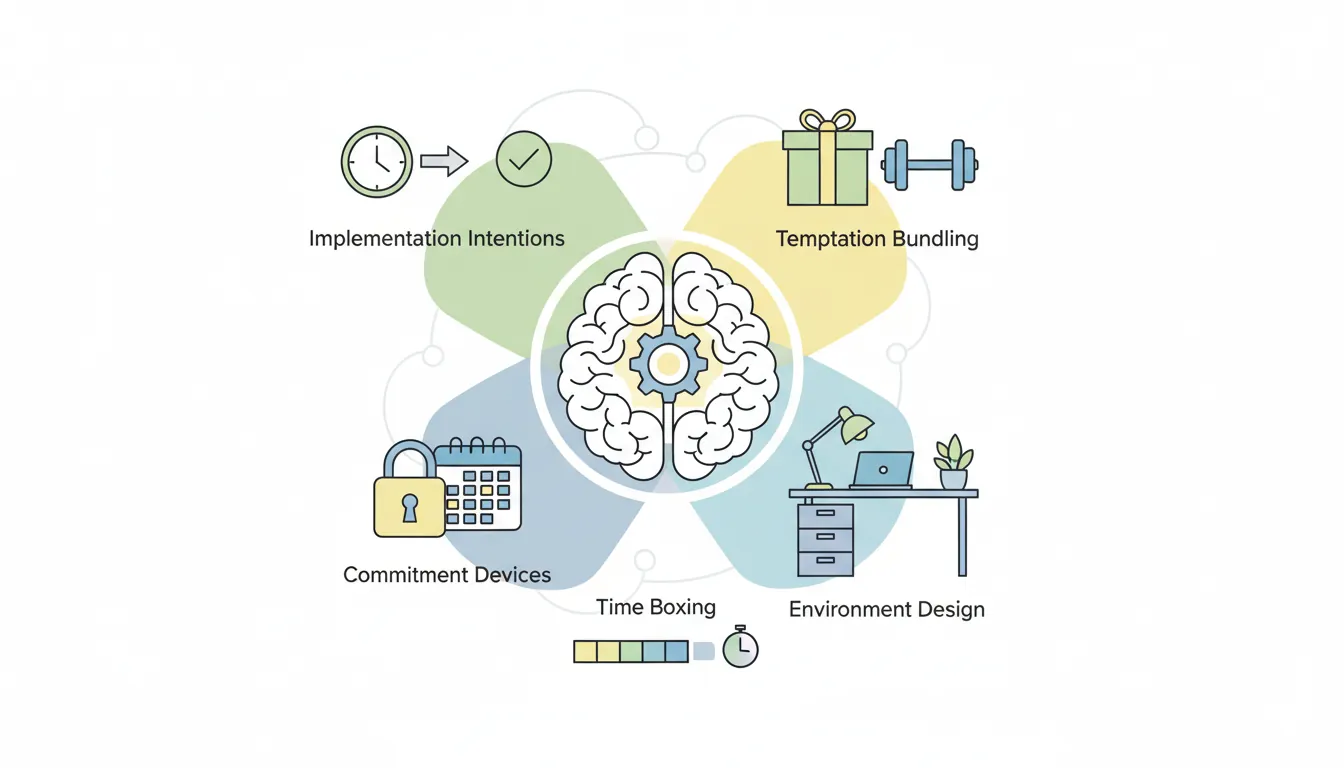
Productivity Techniques Based on Behavioral Science
| Technique | Psychological Principle | How to Apply |
|---|---|---|
| Implementation Intentions | Pre-commit decisions to reduce willpower | "After my morning coffee, I will write for 30 minutes" |
| Temptation Bundling | Pair wanted with needed behaviors | Only listen to favorite podcast while exercising |
| Commitment Devices | Remove future choice to prevent weakness | Website blockers, prepaid gym sessions, public deadlines |
| Environment Design | Make good behaviors easy, bad ones hard | Phone in another room, healthy food at eye level |
| Time Boxing | Leverage Parkinson's Law (work expands to fill time) | Set specific time limits for tasks |
Procrastination: A Behavioral View
Why We Procrastinate (and How to Fix It)
Procrastination isn't laziness—it's a present-bias problem. The brain discounts future rewards, making immediate comfort more appealing than distant success.
Solutions:
- Make future rewards more vivid (visualize success)
- Make starting easier (two-minute rule)
- Add immediate rewards to delayed-reward tasks
- Increase the cost of procrastination (accountability partners)
Workplace Applications
Organizations can dramatically improve performance by applying behavioral principles to management and culture.
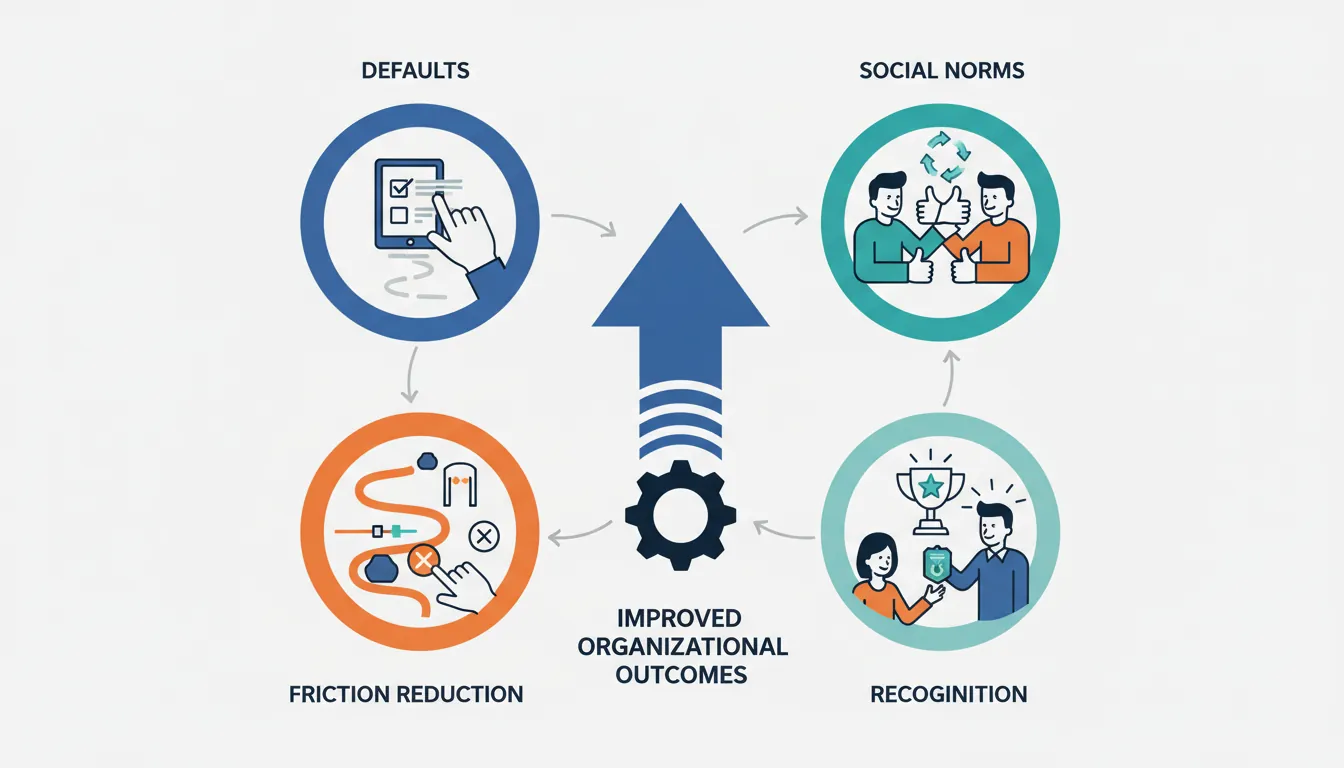
Workplace Behavioral Interventions
| Challenge | Behavioral Solution | Principle |
|---|---|---|
| Low retirement savings | Auto-enrollment with opt-out | Defaults |
| Poor meeting attendance | Social proof ("92% attend on time") | Social norms |
| Slow expense reports | Simplified forms + weekly reminder | Friction reduction + timely prompts |
| Diversity in hiring | Blind resume review + structured interviews | Removing bias triggers |
| Knowledge sharing | Public recognition for contributors | Social rewards + reciprocity |
Feedback That Works
Behavioral Feedback Principles
- Immediate: Feedback is most effective close to the behavior
- Specific: "Your presentation structure was clear" vs "Good job"
- Growth-oriented: Focus on improvement, not just assessment
- Effort-focused: Praise process, not just outcomes (growth mindset)
Health & Fitness
Health behavior change is notoriously difficult—but behavioral science provides proven strategies.
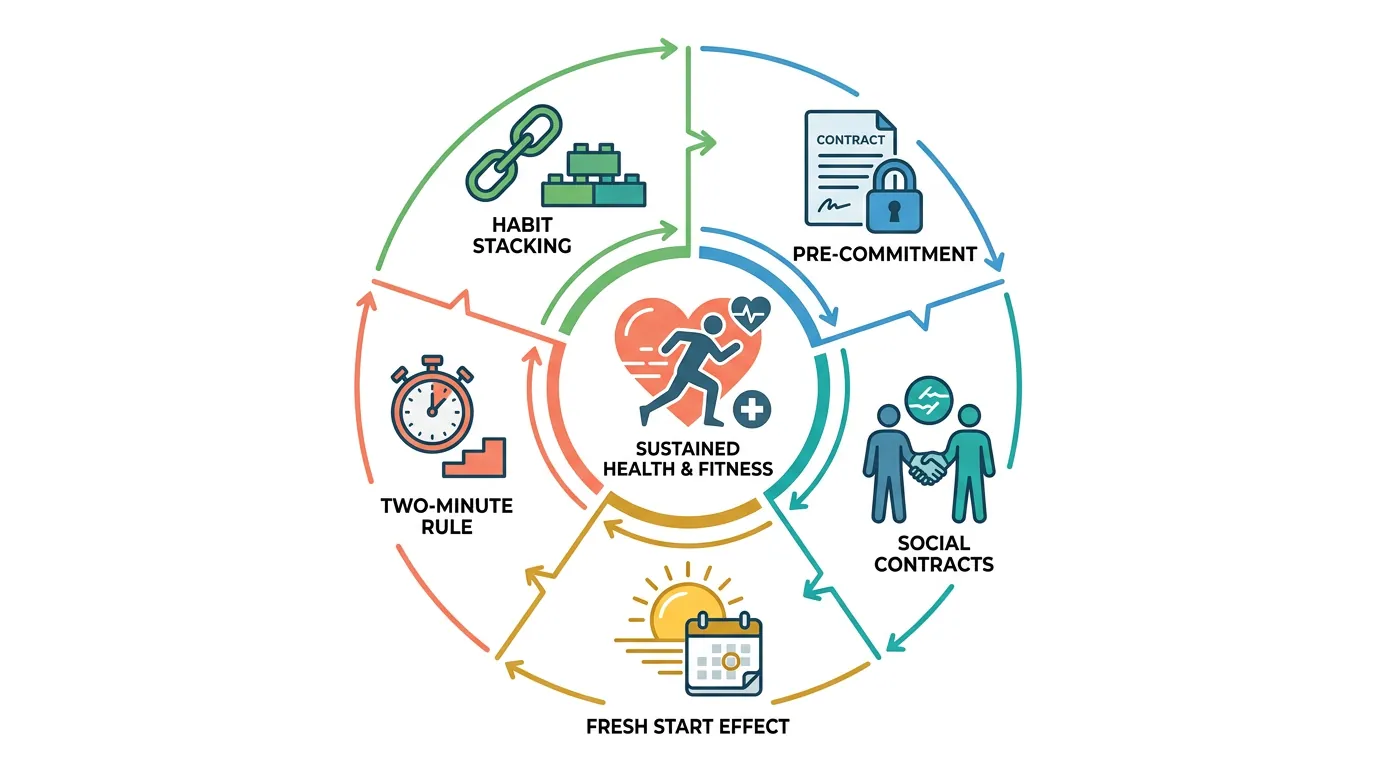
Exercise Adherence Strategies
| Strategy | Application | Research Support |
|---|---|---|
| Habit stacking | "After I pour coffee, I do 10 pushups" | Links new behavior to established cue |
| Pre-commitment | Schedule workouts, pay in advance | Increases follow-through by 90% |
| Social contract | Workout partner, public goals | Accountability doubles success rates |
| Fresh start effect | Start on Monday, January 1, birthday | Temporal landmarks increase motivation |
| Two-minute rule | Just put on workout clothes | Starting is the hardest part |
Nutrition Behavior Change
Evidence-Based Nutrition Nudges
- Smaller plates: Reduce portions without feeling deprived
- Healthy defaults: Put fruit at eye level, hide snacks
- Pre-portioning: Package snacks in single servings
- Don't shop hungry: Decisions made in "hot" states differ from "cold"
- Meal planning: Pre-commitment reduces in-the-moment temptation
Business & Marketing
Behavioral economics has transformed marketing from persuasion to behavioral design.
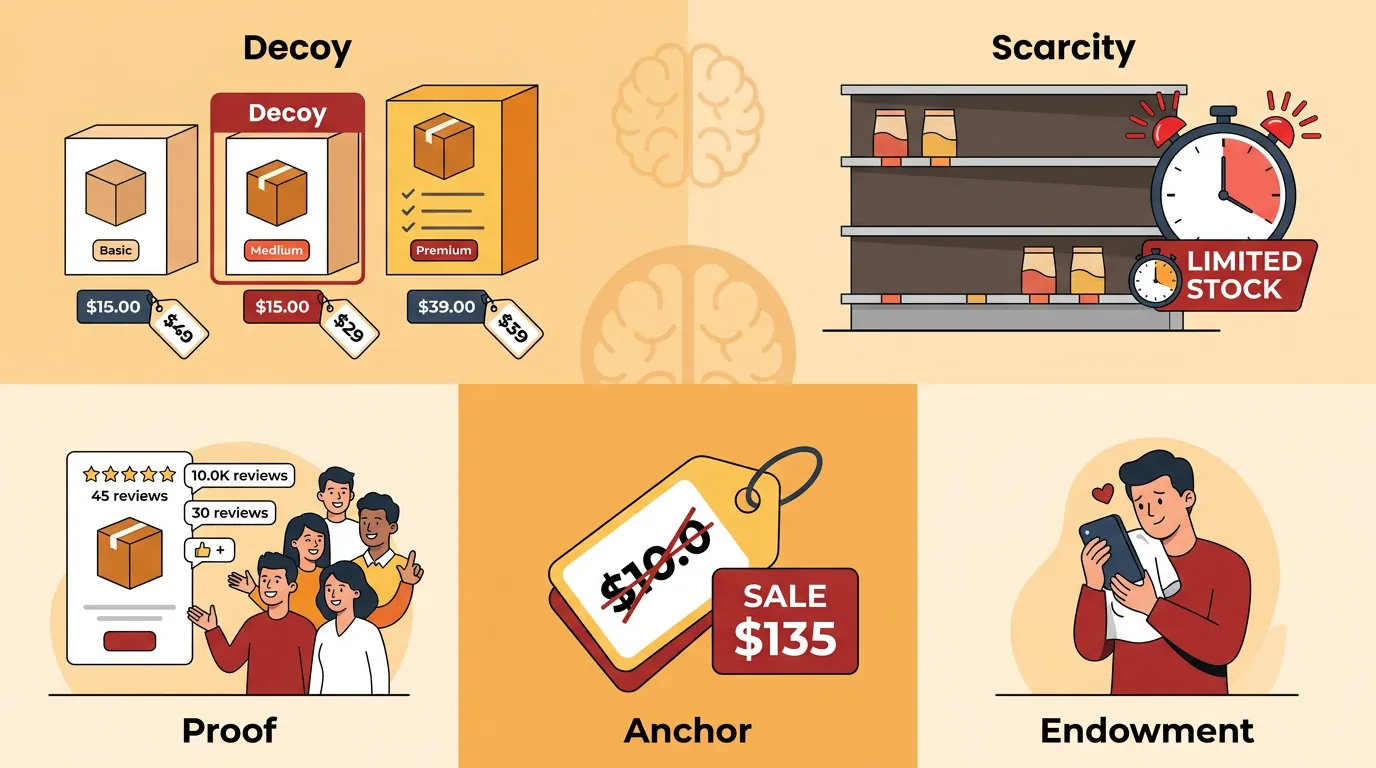
Behavioral Marketing Techniques
| Technique | Principle | Example |
|---|---|---|
| Decoy pricing | Asymmetric dominance | Small $3, Medium $6.50, Large $7 (medium becomes decoy) |
| Scarcity messaging | Loss aversion | "Only 3 left!" increases urgency |
| Social proof | Conformity | "10,000 customers trust us" |
| Anchoring | Reference point bias | Show "was $100, now $60" |
| Free trials | Endowment effect + defaults | People keep what they already "have" |
UX & Product Design
Digital products are behavioral interventions—every design choice shapes user behavior.
Behavioral UX Patterns
| Pattern | Behavioral Principle | Application |
|---|---|---|
| Progress bars | Goal gradient effect | Show "Profile 70% complete"—completion accelerates near end |
| Smart defaults | Default effect | Pre-select recommended options |
| Variable rewards | Intermittent reinforcement | Pull-to-refresh gives unpredictable content |
| Loss framing | Loss aversion | "Don't miss out" vs "Get access" |
| Friction for safety | Slow down System 1 | Confirmation dialogs before deletion |
Dark Patterns: The Ethical Line
Behavioral design can be manipulative. Dark patterns exploit psychology against users: hidden unsubscribe buttons, guilt-tripping language ("No, I don't want to save money"), forced continuity (hard-to-cancel subscriptions). Ethical designers use behavioral insights to help users achieve their goals, not manipulate them.
Education & Learning
Learning is behavior—and behavioral science offers powerful techniques for educators and self-learners.
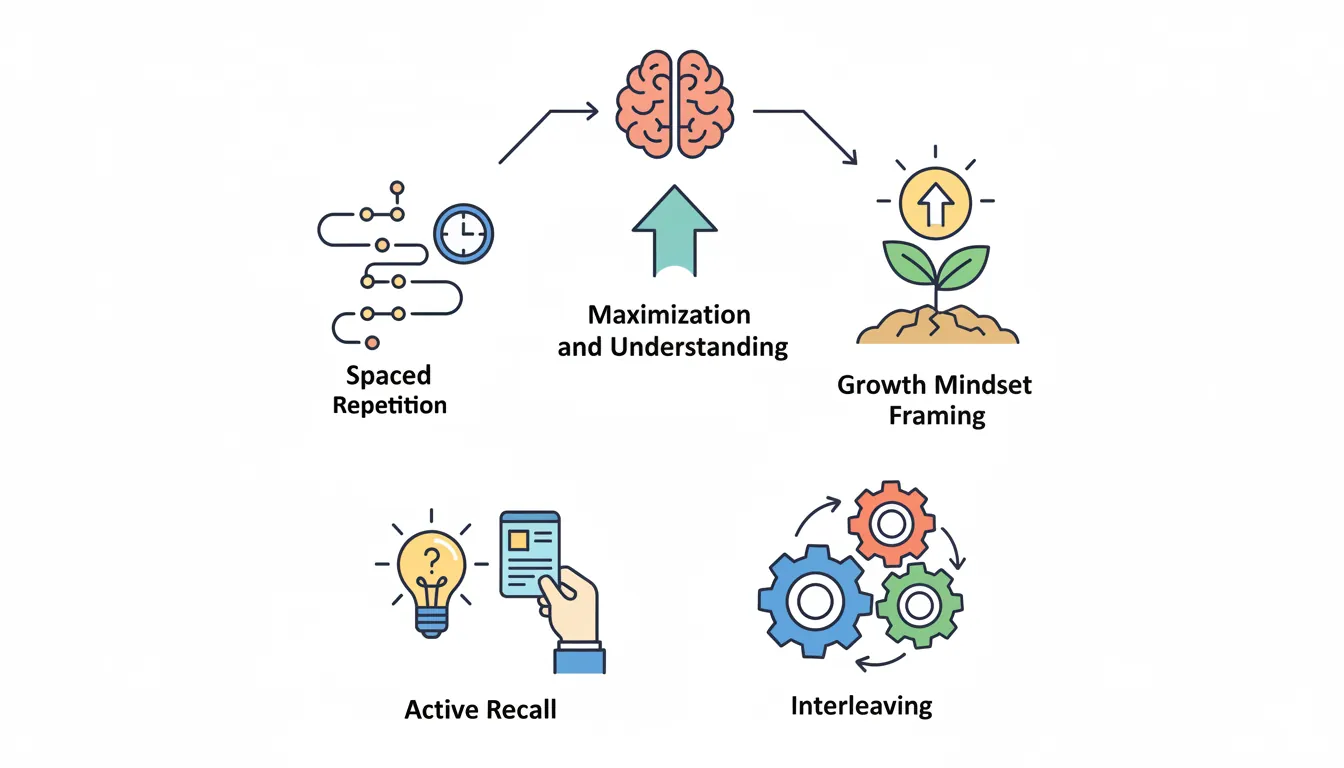
Evidence-Based Learning Strategies
| Strategy | Why It Works | How to Apply |
|---|---|---|
| Spaced repetition | Memory consolidation requires time | Review material at increasing intervals (1 day, 3 days, 7 days...) |
| Active recall | Retrieval strengthens memory more than re-reading | Test yourself instead of re-reading notes |
| Interleaving | Mixing topics improves discrimination | Alternate between different subjects/problems |
| Growth mindset framing | Beliefs about ability affect effort | "You worked hard" vs "You're smart" |
Practical Exercise: Design Your Behavioral System
Try This
Pick one area (productivity, health, or learning) and design a complete behavioral system:
- Define the behavior: What specific action do you want?
- Diagnose barriers: Is it a Capability, Opportunity, or Motivation problem?
- Design the environment: How can you make the behavior easier?
- Create the cue: What will trigger the behavior?
- Add a reward: What immediate feedback reinforces it?
- Build social support: Who will hold you accountable?
Conclusion & Next Steps
You've now seen behavioral psychology applied across domains:
- Productivity: Implementation intentions, environment design, commitment devices
- Workplace: Defaults, feedback, behavioral nudges for culture change
- Health: Habit stacking, pre-commitment, fresh starts
- Business: Anchoring, scarcity, social proof, decoy pricing
- UX: Progress bars, defaults, variable rewards (ethically!)
- Education: Spaced repetition, active recall, growth mindset