Social Influence Basics
Humans are fundamentally social beings—our behaviors, beliefs, and decisions are profoundly shaped by others. In this seventh part of our series, we explore the science of social influence and persuasion.
Key Insight
Social influence operates through three main routes: compliance (behavioral change), identification (wanting to be like someone), and internalization (genuine belief change).
Behavioral Psychology Mastery
Foundations of Behavior
Core principles, conditioning, behavioral loopHabit Formation & Breaking
Habit loops, building & breaking habitsDecision-Making Psychology
Biases, dual-system thinking, behavioral economicsMotivation & Drive
Intrinsic vs extrinsic, theories, goal psychologyNudge Theory & Choice Architecture
Defaults, framing, behavioral designBehavior Change Models
COM-B, Fogg, transtheoretical modelSocial Influence & Persuasion
Conformity, authority, Cialdini's principlesPractical Applications
Personal, workplace, business, healthBehavioral Neuroscience Basics
Dopamine, stress, habit circuitryBehavioral Research Methods
Experiments, RCTs, field studiesApplied Behavioral Therapy
CBT, exposure therapy, reinforcementConformity
Conformity is adjusting behavior or thinking to match a group standard. It operates through two processes:
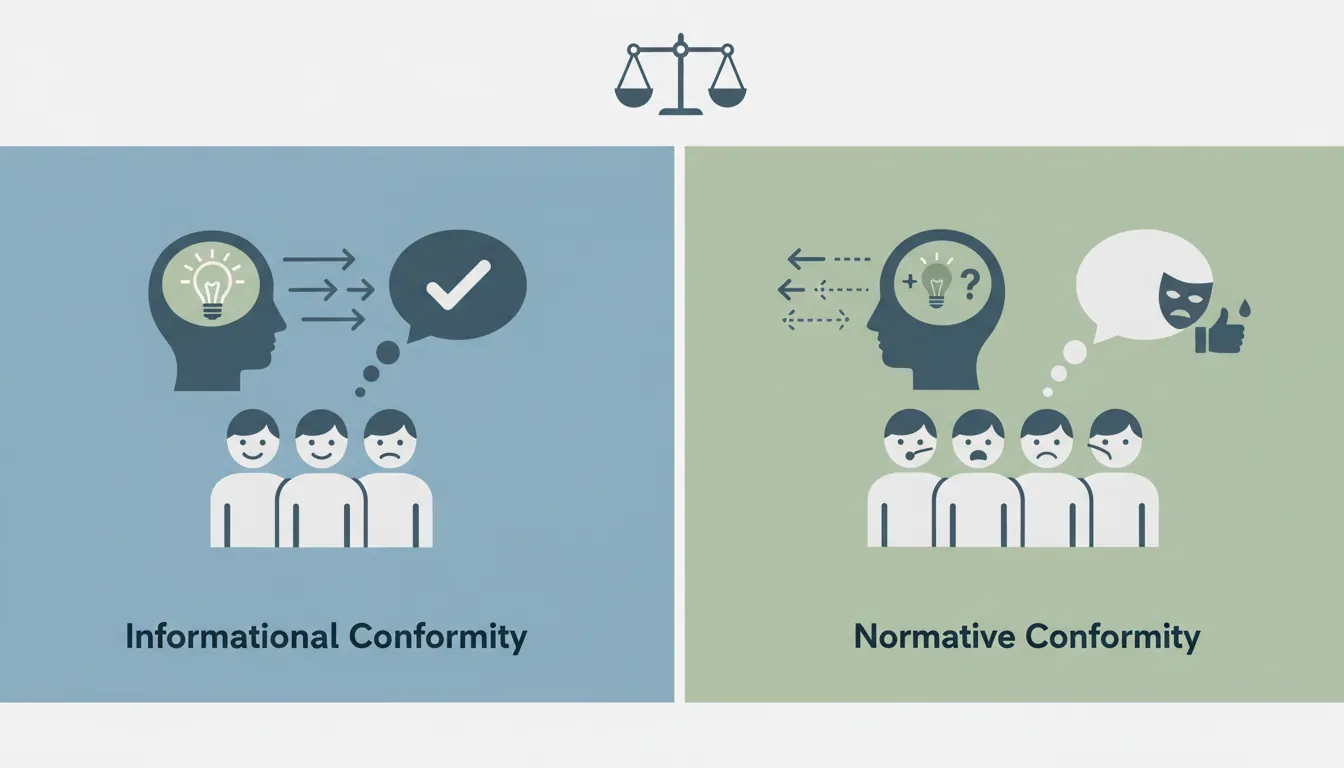
Two Types of Conformity
| Informational | Normative |
|---|---|
| "They must know something I don't" | "I want them to accept me" |
| Genuine belief change | Public compliance, private disagreement |
| Strong in ambiguous situations | Strong when being watched |
| Persists after group leaves | Often reverts when alone |
Classic Study: Asch Line Experiments
Setup: Participants judged which of three lines matched a standard line. Easy task—the correct answer was obvious. But confederates (actors) unanimously gave wrong answers on some trials.
Results:
- 75% conformed at least once to clearly wrong answers
- 32% conformed on the majority of trials
- One dissenting confederate reduced conformity to 5%
Lesson: Even a single ally dramatically reduces social pressure's power.
Factors Affecting Conformity
What Increases/Decreases Conformity
| Increases Conformity | Decreases Conformity |
|---|---|
| Larger unanimous group (up to 5) | One dissenter present |
| Public response | Private/anonymous response |
| Task difficulty/ambiguity | Clear correct answer |
| High status group members | Low credibility group |
| Collectivist culture | Individualist culture |
| Prior commitment to group | No relationship with group |
Obedience to Authority
Obedience is compliance with direct commands from an authority figure—different from conformity's peer pressure.
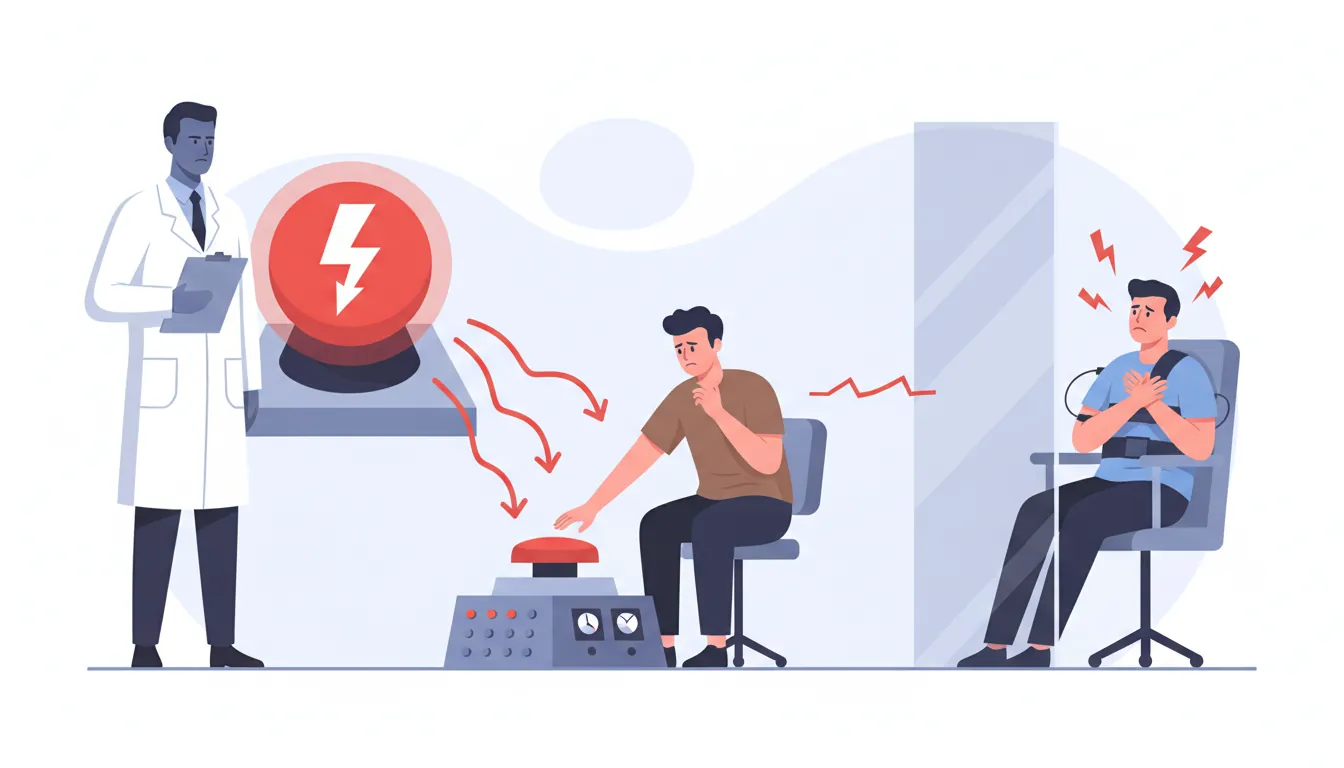
Classic Study: Milgram Obedience Experiments
Setup: Participants were told to administer increasingly severe electric shocks to a "learner" (actor) for wrong answers, ranging from 15 to 450 volts ("XXX - Danger").
Results:
- 65% went to maximum 450 volts
- All participants continued to at least 300 volts
- Results replicated worldwide with similar rates
Disturbing lesson: Ordinary people will harm others when directed by perceived authority, even against their own moral judgment.
Why Did They Obey?
Psychological Mechanisms
- Agentic state: Seeing yourself as an agent of authority, not responsible for actions
- Gradual escalation: Small steps build commitment (foot-in-the-door)
- Legitimacy: Yale setting and lab coats implied expertise
- Proximity: Obedience dropped when learner was visible/touchable
Cialdini's Six Principles of Influence
Robert Cialdini identified six universal principles that drive compliance:
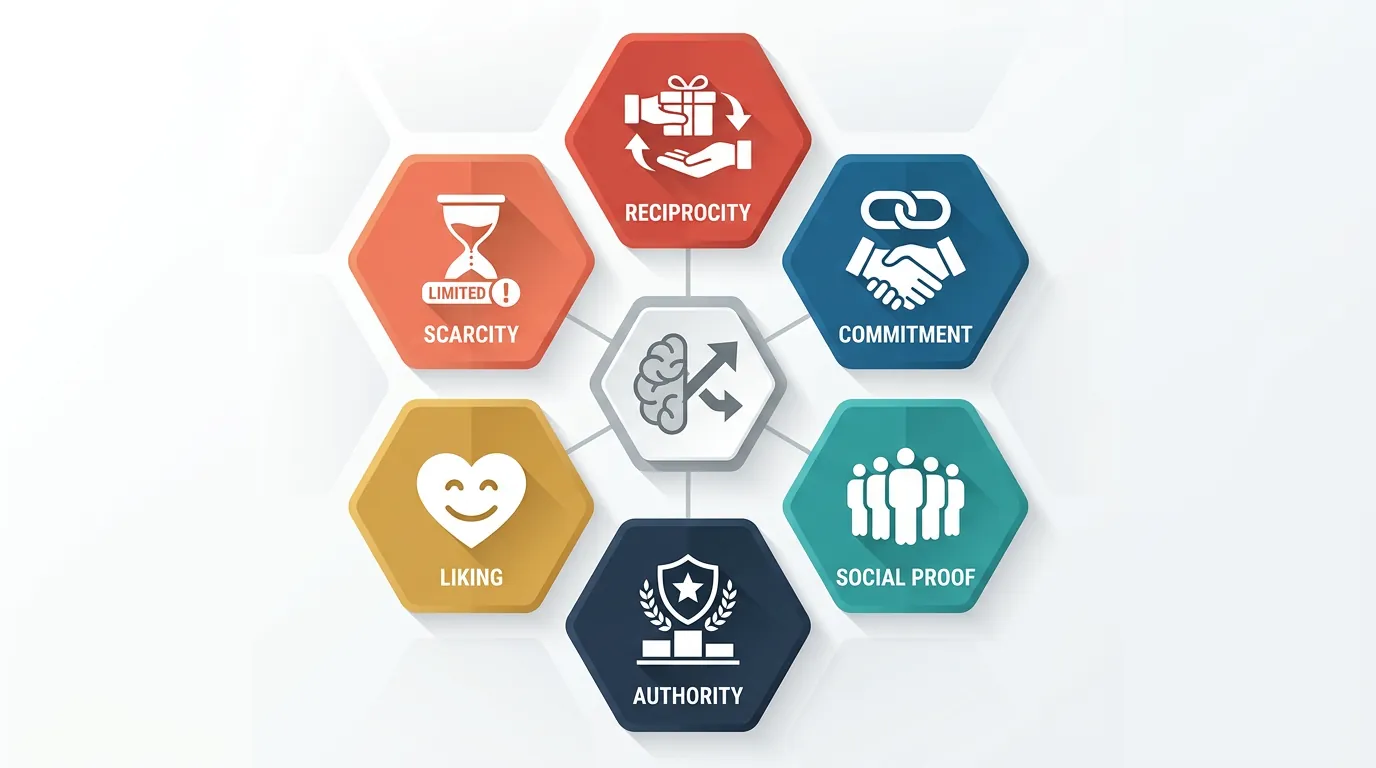
The Six Principles
| Principle | Mechanism | Example |
|---|---|---|
| 1. Reciprocity | We feel obligated to repay favors | Free samples create obligation to buy |
| 2. Commitment/Consistency | We honor commitments and act consistently | Writing down goals increases follow-through |
| 3. Social Proof | We look to others for correct behavior | "Most popular" labels increase sales |
| 4. Authority | We defer to experts and credentials | Doctors' endorsements on products |
| 5. Liking | We comply with people we like | Sales through friend referrals |
| 6. Scarcity | We value what's rare or disappearing | "Only 3 left!" increases urgency |
Principle Deep Dives
Reciprocity: The Power of Giving First
A waiter who gives a mint increases tips by 3%. Two mints: 14%. Two mints, then returning with a third "just for you": 23%. The personalized, unexpected gift triggers strong reciprocity.
Commitment: Start Small
Foot-in-the-door technique: A small initial commitment dramatically increases compliance with larger requests. Signing a petition makes people more likely to later display a large lawn sign for the same cause.
Social Proof in Action
Social proof is especially powerful in situations of uncertainty—when we don't know the "correct" behavior.
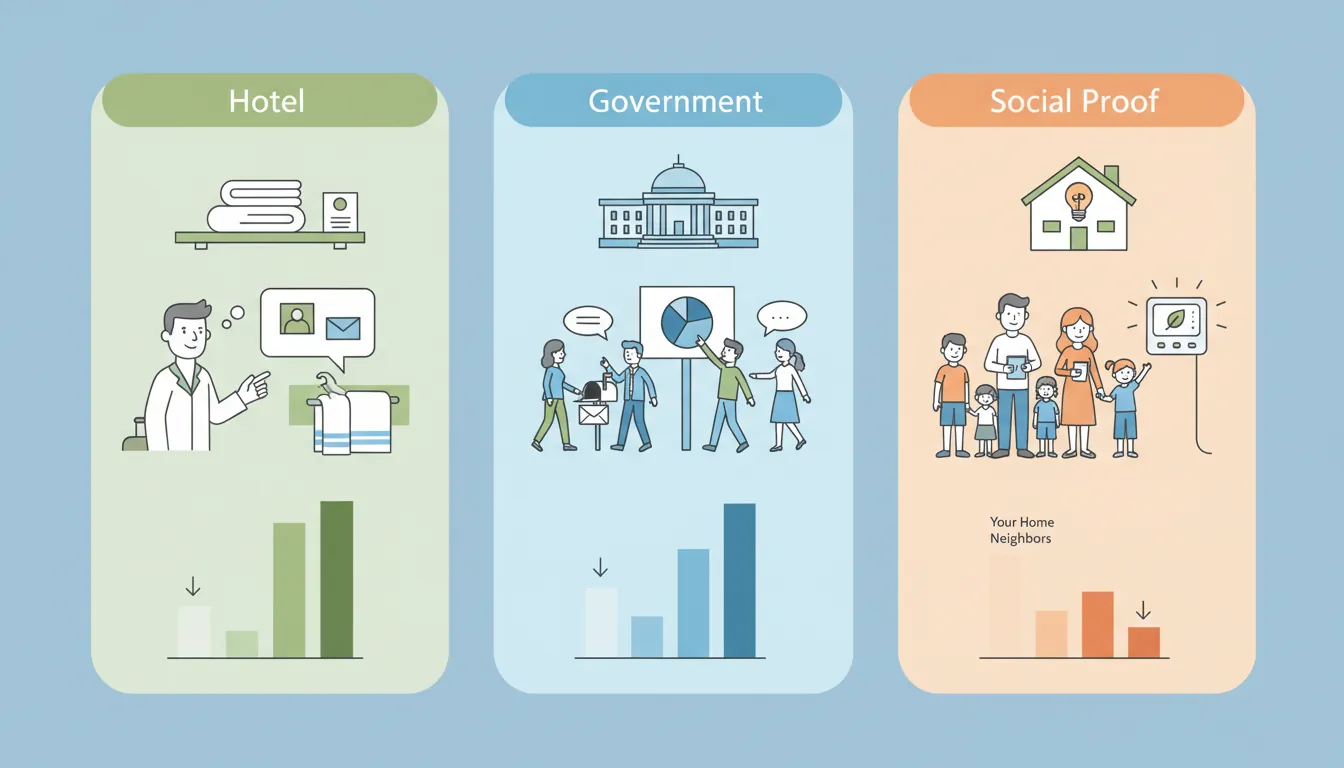
Real-World Social Proof Effects
| Context | Social Proof Intervention | Effect |
|---|---|---|
| Hotel towel reuse | "75% of guests reuse their towels" | +26% reuse vs generic environmental appeal |
| Tax compliance (UK) | "9 out of 10 people pay on time" | +15% timely payments |
| Energy use | Comparing to "efficient neighbors" | -2% energy use in high consumers |
| Restaurant menus | "Most popular" labels | +17-20% orders for labeled items |
When Social Proof Backfires
The Boomerang Effect
Be careful with social proof messaging. Telling people "Many people litter here" increased littering—it normalized the behavior. Only use social proof when the norm is desirable. For undesirable behaviors, emphasize injunctive norms (what people should do), not descriptive norms (what people actually do).
Resisting Influence
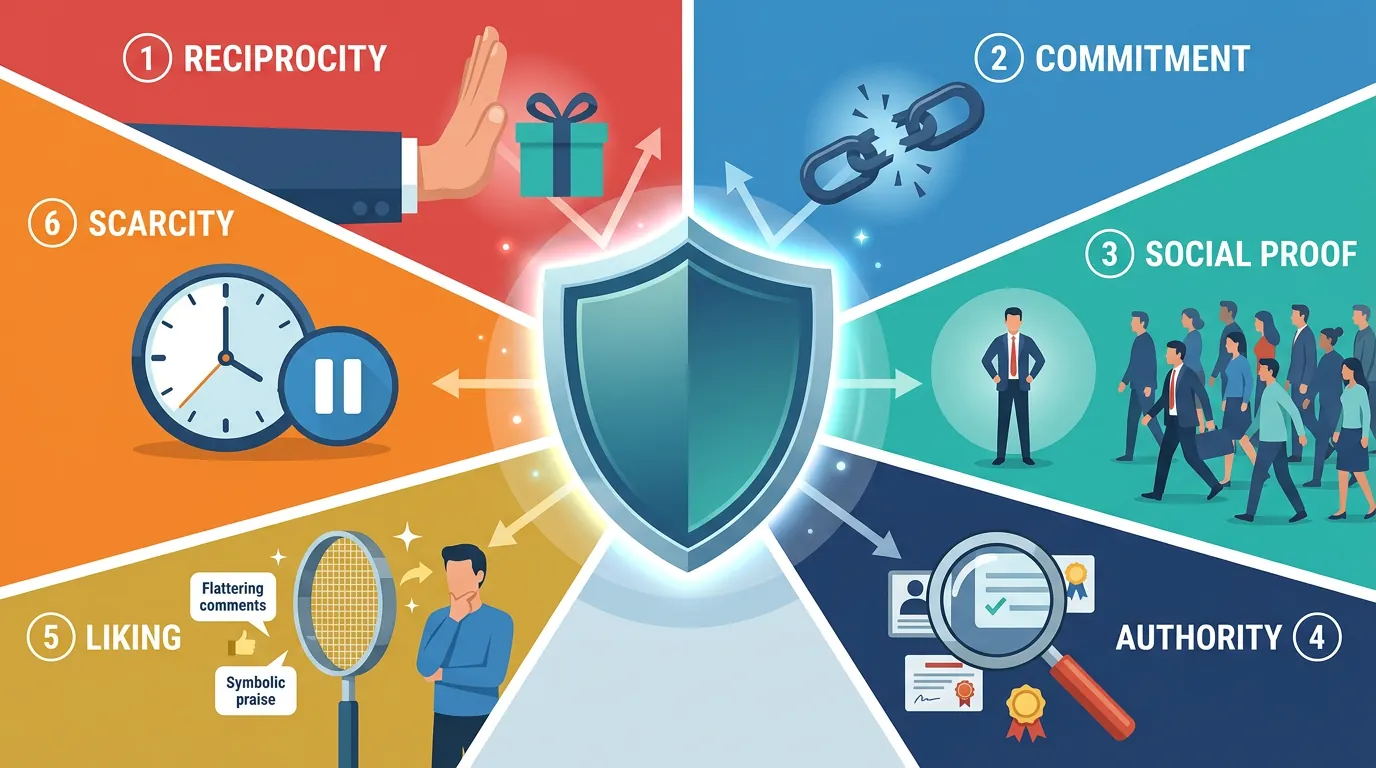
Understanding influence techniques is the first step to resisting manipulation.
Defense Strategies
| Technique | Counter-Strategy |
|---|---|
| Reciprocity | Recognize "gifts" as manipulation; accept but don't feel obligated |
| Commitment | Ask: "Knowing what I know now, would I make this commitment again?" |
| Social Proof | Consider whether the "crowd" represents people like you |
| Authority | Question: Are they a genuine expert in this specific domain? |
| Liking | Separate your feelings about the person from the decision itself |
| Scarcity | Ask: "Do I want this because it's scarce, or because it's valuable?" |
Inoculation Theory
Like a vaccine, you can build resistance to persuasion by exposing yourself to weakened versions of arguments:
- Learn about manipulation techniques before encountering them
- Practice refuting weak counterarguments to your beliefs
- Develop critical thinking habits for evaluating claims
Ethical Persuasion
Influence techniques can be used ethically or manipulatively. The distinction matters.
Ethical vs Manipulative Persuasion
| Ethical Persuasion | Manipulation |
|---|---|
| Honest information | Deception or omission |
| Benefits both parties | Benefits persuader at target's expense |
| Respects autonomy | Exploits vulnerabilities |
| Transparent intentions | Hidden agenda |
| Evidence-based claims | Emotional manipulation |
Practical Exercise: Influence Audit
Try This
Over the next week, notice influence attempts in your life:
- Identify which of Cialdini's six principles are being used
- Note whether the persuasion feels ethical or manipulative
- Practice pausing before automatically complying
- Ask: "Would I make this choice if no influence technique were present?"
Conclusion & Next Steps
You've now mastered the science of social influence:
- Conformity: We adjust to group standards (informational and normative)
- Obedience: We comply with authority, sometimes dangerously
- Cialdini's six principles: Reciprocity, Commitment, Social Proof, Authority, Liking, Scarcity
- Defense: Awareness is the first step to resistance
- Ethics: Persuasion is a tool—how you use it matters