Ethics & Moral Philosophy Series Part 4: Virtue Ethics & Aristotle
January 25, 2026Wasil Zafar22 min read
Master Aristotle's virtue ethics and the path to human flourishing. Learn about character, the virtues, the golden mean, and eudaimonia—what it truly means to live a good life.
Series Overview: This is Part 4 of our 6-part Ethics & Moral Philosophy Series. After exploring consequentialism and deontology, we now turn to the oldest ethical tradition: virtue ethics.
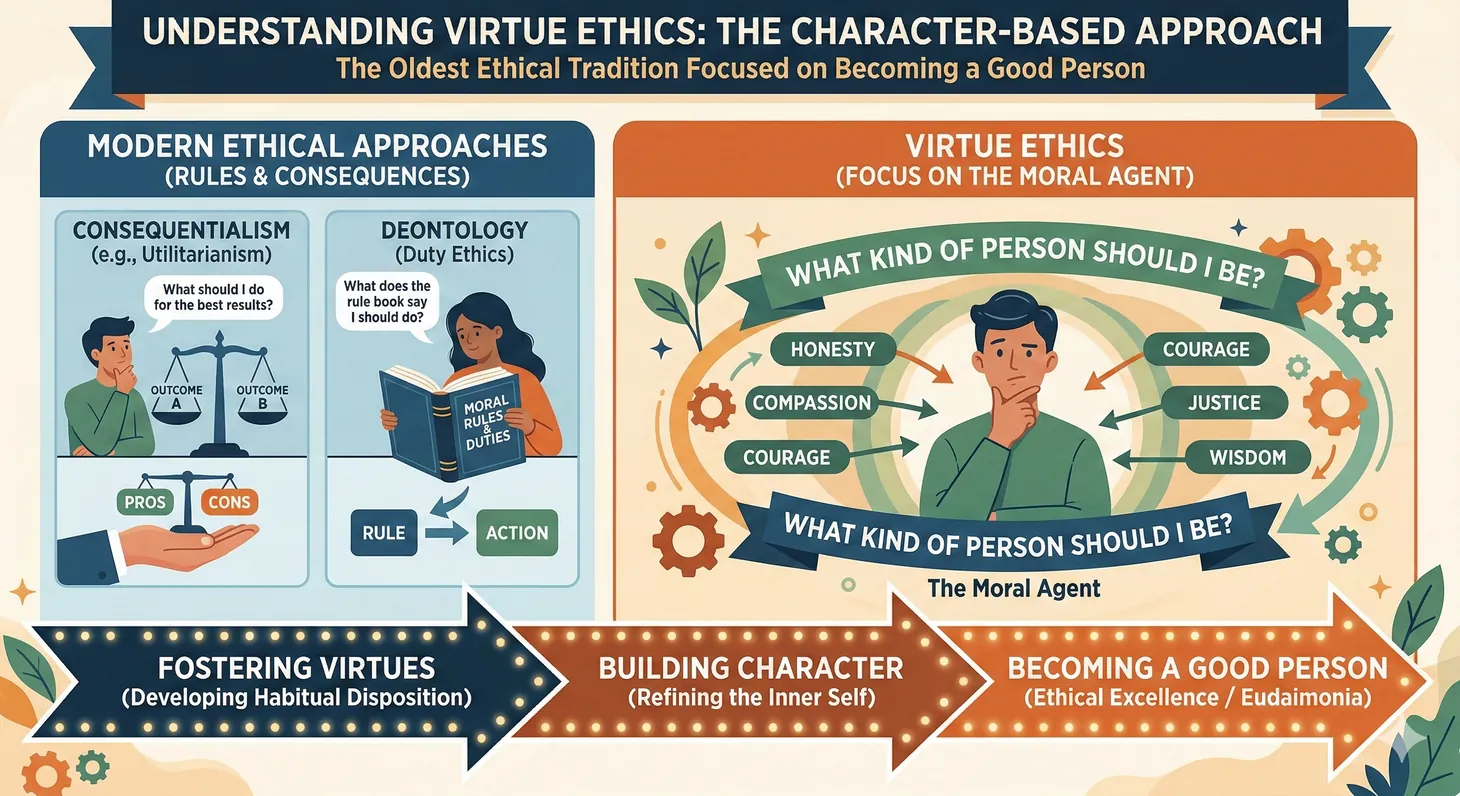
Virtue ethics focuses not on rules or consequences, but on the character of the moral agent. The central question is not "What should I do?" but "What kind of person should I be?"
Key Insight: For virtue ethicists, being a good person is more fundamental than following good rules or maximizing good outcomes. Good actions flow naturally from good character—a virtuous person does the right thing because that's who they are.
Virtue ethics is the oldest ethical tradition in Western philosophy, originating with Socrates, Plato, and especially Aristotle. After being marginalized during the modern period (dominated by consequentialism and deontology), it experienced a dramatic revival in the 20th century, triggered by Elizabeth Anscombe's influential 1958 paper "Modern Moral Philosophy."
Virtue ethics: the oldest ethical tradition focused on becoming a good person
The Role Model Test
Thought Experiment
You face a difficult moral decision. Instead of calculating consequences or consulting rules, you ask: "What would a person I admire do?"
This intuitive appeal to role models reflects virtue ethics' core insight: morality is fundamentally about character. We learn ethics not primarily through abstract reasoning but by observing and emulating virtuous people.
Aristotle: "We become just by doing just acts, temperate by doing temperate acts, brave by doing brave acts."
Focus on Character
While consequentialism asks "What action produces the best results?" and deontology asks "What is my duty?", virtue ethics asks fundamentally different questions:
The Three Questions of Virtue Ethics
Core Framework
What kind of person should I be? (character)
What constitutes a good human life? (flourishing)
How do I develop good character? (moral education)
Key Shift: The focus moves from acts to the agent, from individual decisions to overall patterns of living, from rules to practical wisdom.
Virtue Ethics vs. Other Theories
Comparison Table
Three Traditions
Consequentialism
Deontology
Virtue Ethics
Primary Question
What should I do?
What is my duty?
Who should I be?
Focus
Outcomes
Rules/Duties
Character
Right Action
Maximizes good
Follows moral law
What a virtuous person would do
Moral Development
Learn to calculate
Learn the rules
Cultivate virtues through practice
Role Models
Less central
Less central
Essential—learn by example
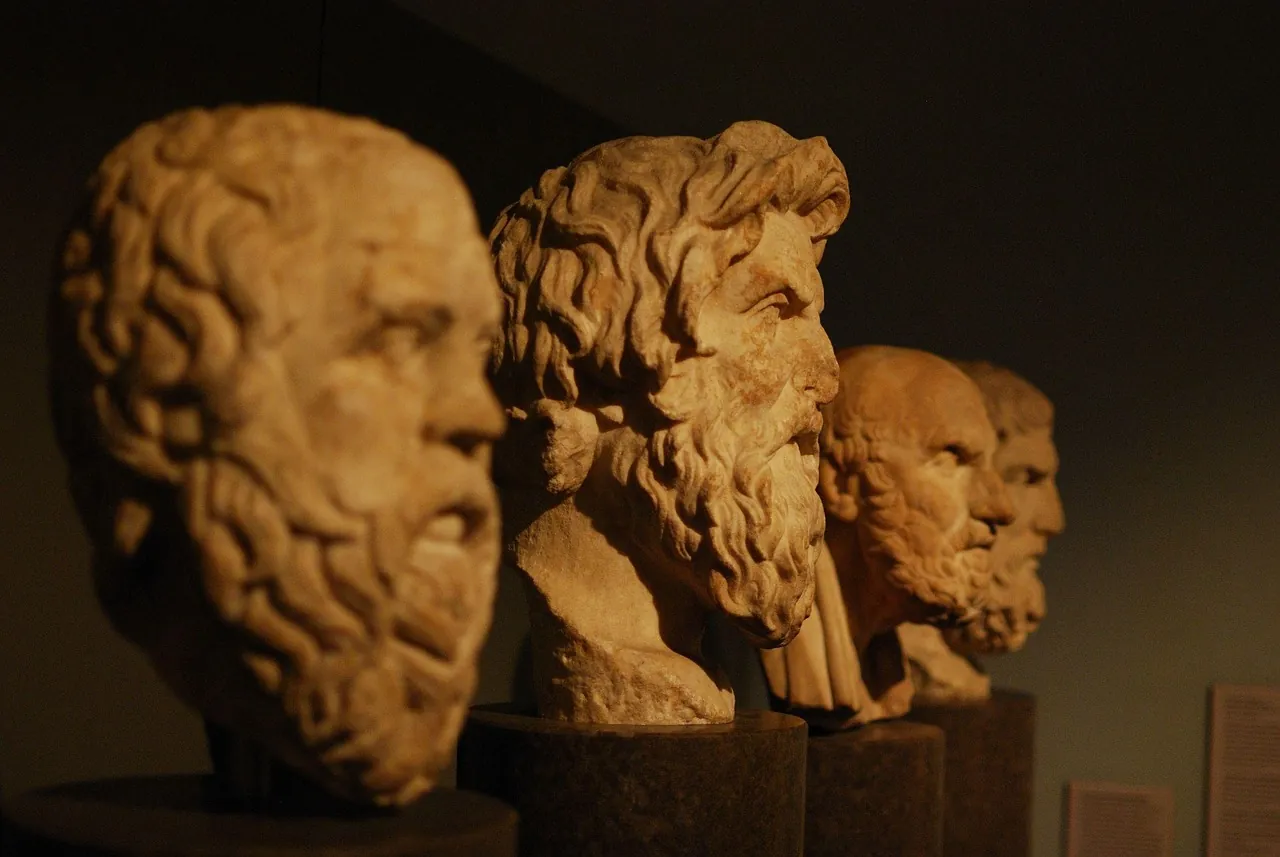
Aristotle (384-322 BCE)
Aristotle is the founding figure of virtue ethics. His Nicomachean Ethics (named after his son Nicomachus) remains the most influential work in the tradition. Aristotle was Plato's student and later tutor to Alexander the Great.
Aristotle's vision: the virtuous life as the path to eudaimonia (human flourishing)
Aristotle's Goal: Unlike modern ethics which often asks "What is morally required?", Aristotle asked "What is the best life for a human being?" Ethics for him was about living well, achieving the highest human good.
Eudaimonia: Human Flourishing
The Highest Good
Central Concept
Eudaimonia (often translated as "happiness," "well-being," or "flourishing") is the ultimate goal of human life—the thing we seek for its own sake, while everything else is sought for the sake of it.
Why "flourishing" is better than "happiness":
Happiness (in English) suggests a subjective feeling—you could feel happy while living poorly
Eudaimonia is objective—it's about actually living well and doing well, regardless of how you feel
A flourishing plant is one that develops according to its nature; likewise, a flourishing human actualizes their potential
Aristotle: "Eudaimonia is an activity of soul in accordance with virtue... in a complete life."
Not Pleasure: Aristotle explicitly rejects the idea that the good life is simply a life of pleasure. "The many, the most vulgar, seem to conceive the good and happiness as pleasure, and hence they also like the life of gratification. Here they appear completely slavish, since the life they decide on is a life for grazing animals."
The Function Argument
Aristotle's most famous argument for his ethics is the function argument (or "ergon argument"):
What is the Human Function?
Aristotle's Argument
Premise 1: Everything with a function achieves its good by performing that function excellently
A good knife cuts well
A good eye sees clearly
A good musician plays beautifully
Premise 2: Humans have a distinctive function—something we do that nothing else does in the same way
Not merely living (plants do that)
Not merely sensing (animals do that)
Rather: rational activity—living according to reason
Conclusion: Human flourishing consists in performing our rational function excellently—which means living according to virtue (excellence of character)
The Human Function: "The function of a human being is an activity of soul in accordance with reason, or not apart from reason... [and] the function of a good human being is the good and fine performance of these."
The Virtues
A virtue (Greek: arete) is an excellence of character—a stable disposition to think, feel, and act in certain ways. Virtues are not innate; they are developed through practice and habituation.
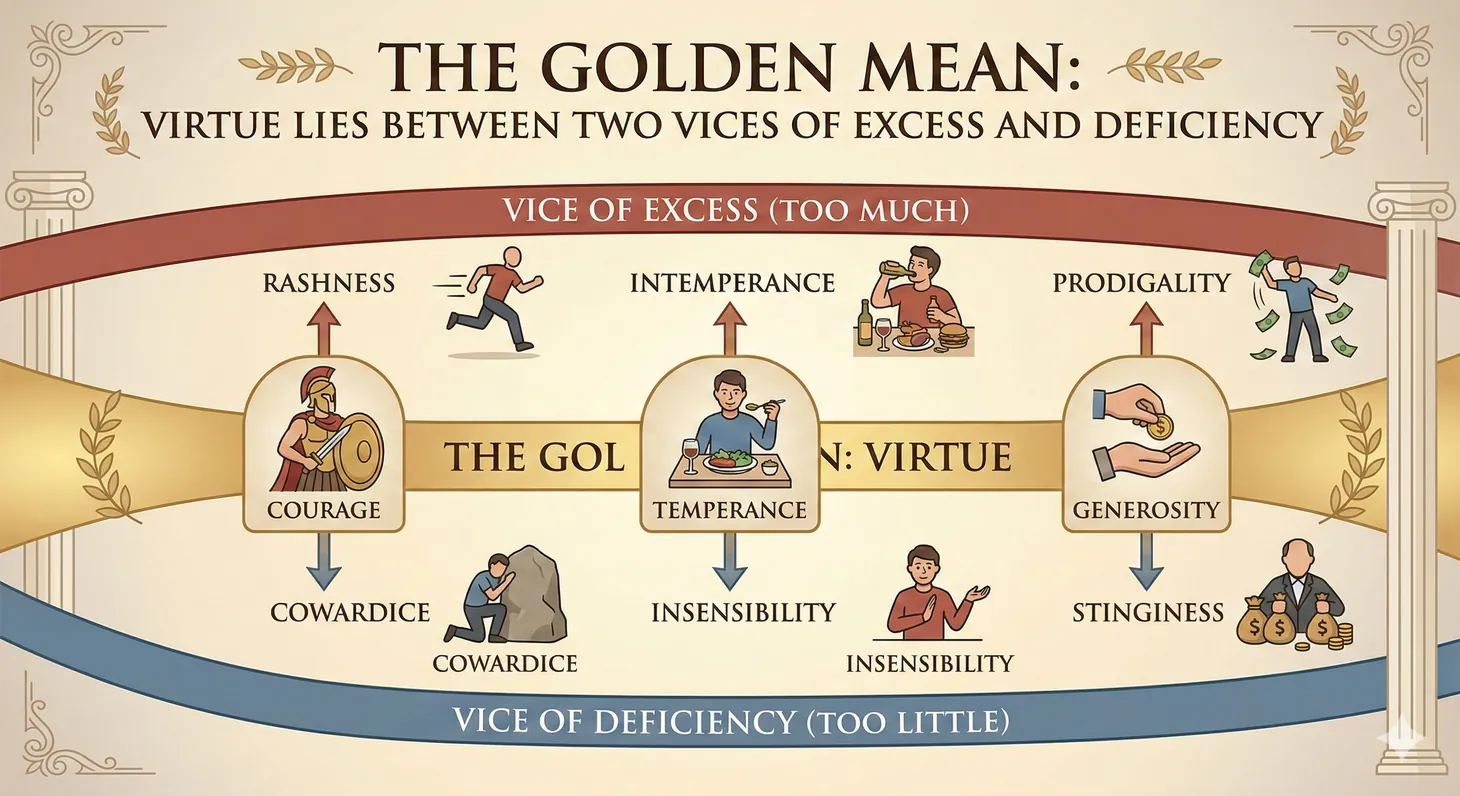
The golden mean: every virtue lies between two vices of excess and deficiency
Aristotle: "Virtue is a state of character concerned with choice, lying in a mean... determined by reason and in the way in which the man of practical wisdom would determine it."
The Golden Mean (Doctrine of the Mean)
Virtue as the Mean Between Extremes
Key Doctrine
Every virtue lies between two vices—one of excess and one of deficiency:
Deficiency (Vice)
Mean (Virtue)
Excess (Vice)
Cowardice
Courage
Recklessness
Insensibility
Temperance
Self-indulgence
Stinginess
Generosity
Prodigality
Self-deprecation
Proper pride
Vanity
Untruthfulness (understating)
Truthfulness
Boastfulness
Boorishness
Wit
Buffoonery
Important: The mean is not mathematical mediocrity—it's the right amount for the situation. Courage doesn't mean moderate fear; it means the right amount of fear in the right circumstances.
Intellectual Virtues
Virtues of the Mind
Intellectual Excellence
Aristotle distinguishes intellectual virtues (excellences of the rational part of the soul) from moral virtues:
Nous (Intuitive Reason): Grasping first principles and fundamental truths
Episteme (Scientific Knowledge): Demonstrative knowledge of necessary truths
Techne (Art/Craft): Skill in making things—production
Phronesis (Practical Wisdom): Knowing how to live well—the master virtue (see below)
Moral Virtues
Virtues of Character
Moral Excellence
Moral virtues are developed through practice and habituation. Key examples:
Courage (Andreia): The right response to fear and confidence; facing danger when appropriate
Temperance (Sophrosyne): Moderation in pleasures, especially bodily pleasures
Justice (Dikaiosyne): Giving others what they are due; fairness in dealings
Generosity (Eleutheriotes): Giving appropriately—neither stingy nor wasteful
Magnificence: Generosity on a grand scale; appropriate for great occasions
Proper Pride (Megalopsychia): Appropriate self-assessment; neither arrogant nor self-deprecating
Good Temper: The mean regarding anger; not too quick nor too slow to anger
Friendliness: The right amount of agreeableness in social situations
Truthfulness: Honesty about oneself; neither boastful nor understating
Practical Wisdom (Phronesis)
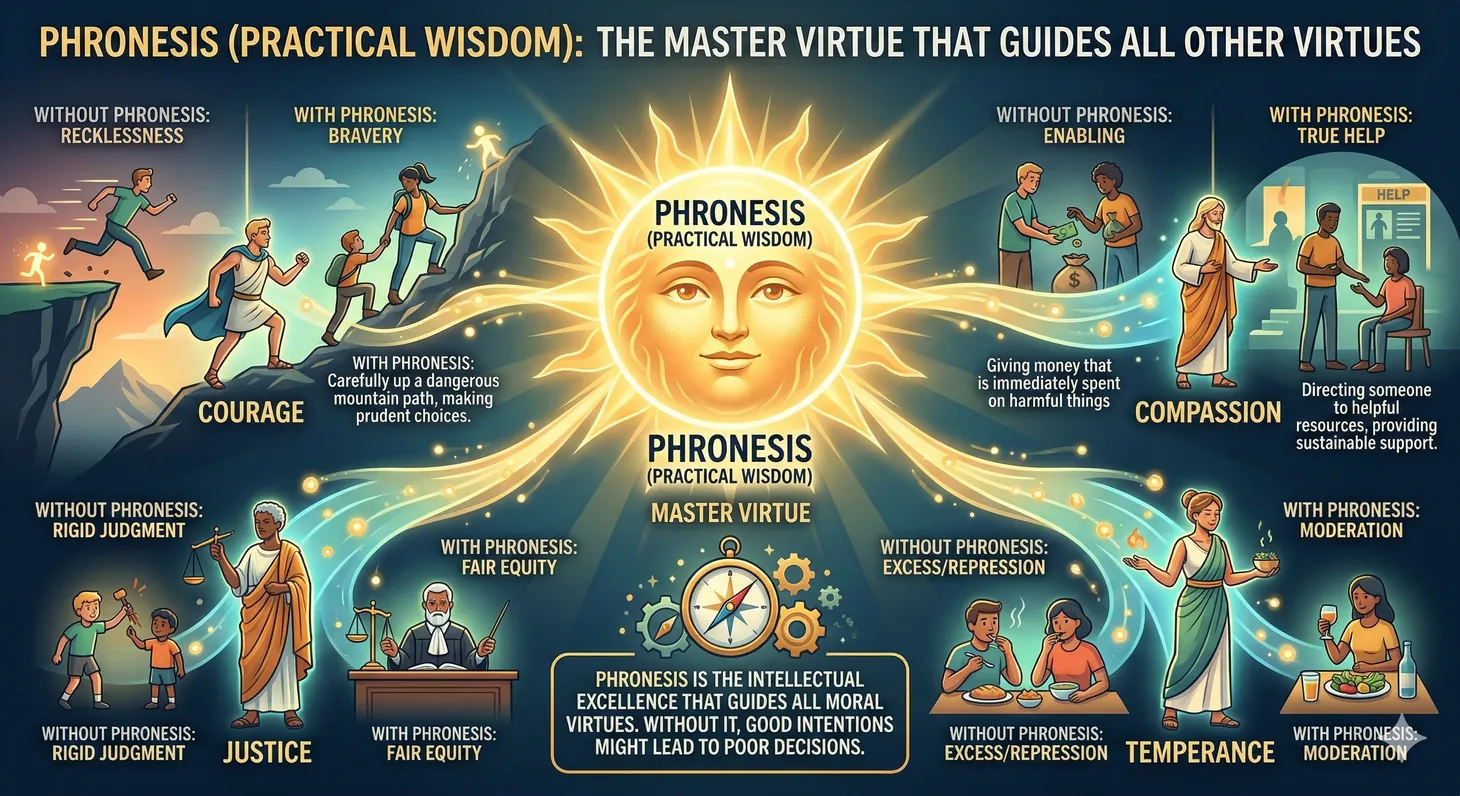
Phronesis (practical wisdom) is the master virtue—the intellectual excellence that guides all the moral virtues. Without phronesis, you might have good intentions but make poor decisions.
Phronesis (practical wisdom): the master virtue that guides all other virtues
Key Insight: Practical wisdom is not mere cleverness. Cleverness can serve any end; phronesis is the ability to discern the good and the right means to achieve it. It involves both ends and means.
What Practical Wisdom Involves
Components of Phronesis
Perception: Recognizing the morally relevant features of a situation
Deliberation: Thinking well about what to do in particular circumstances
Judgment: Making good decisions about the right action
Experience: Drawing on past situations to inform present choices
Particulars: Grasping the specifics of this situation (not just abstract rules)
Aristotle: "Practical wisdom is concerned with action; hence one should have both forms of it, or this one [knowledge of particulars] more than the other."
The Unity of the Virtues
Controversial Thesis
Aristotle held that the virtues are unified—you can't fully have one without having all of them:
True courage requires wisdom to know what's worth risking
Generosity requires temperance to know when giving becomes harmful
Justice requires all virtues to discern what each person is due
Why? Practical wisdom—which you need to have any virtue fully—guides all the virtues. Without it, "courage" becomes recklessness, "generosity" becomes foolish giving.
Objections & Responses
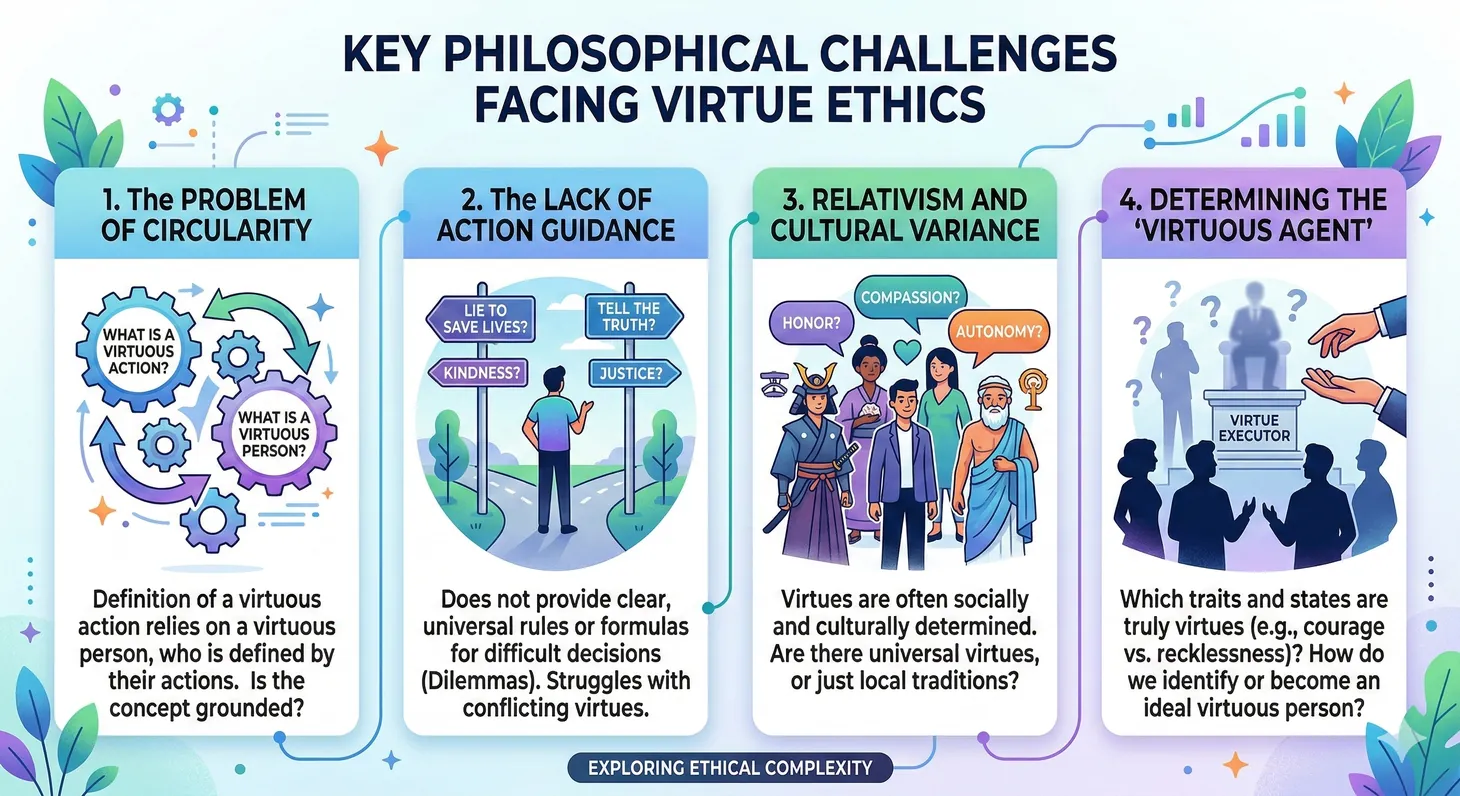
Virtue ethics faces several important challenges that have shaped contemporary debates.
Key philosophical challenges facing virtue ethics
The Cultural Relativism Objection
Major Challenge
Objection: Different cultures have different conceptions of virtue. Warrior societies admire different traits than commercial societies. How can we say which virtues are correct?
Responses:
Universal human nature: Despite cultural variation, humans share fundamental needs and capacities. The virtues can be grounded in these universal features.
Core virtues overlap: Most cultures admire justice, courage, practical wisdom—even if specific applications vary.
Room for variation: The doctrine of the mean allows that what courage requires may vary by context, while courage itself remains a virtue.
The Action-Guidance Objection
Practical Concern
Objection: Virtue ethics doesn't provide clear action-guidance. "Do what a virtuous person would do" is unhelpful if you don't know what that is. Consequentialism and deontology at least give you a decision procedure.
Responses:
Look at the details: Each virtue provides guidance (be honest, be courageous, be temperate)
Role models: We can learn by observing virtuous people
The objection applies to all theories: Utilitarians can't really calculate all consequences; Kantians disagree about universalizability. Ethics is irreducibly complex.
Virtue is about becoming, not just acting: The goal is to develop character that makes good judgment natural
The Circularity Objection
Logical Concern
Objection: Virtue ethics seems circular:
What is a right action? What a virtuous person would do.
What is a virtuous person? One who does right actions.
Responses:
Ground virtues in flourishing: Virtues are traits that enable human flourishing. This provides an independent standard.
The circle is not vicious: We can identify virtuous people through their overall patterns of life and recognize virtues through their contribution to good living.
Contemporary Virtue Ethics
Modern Developments
20th-21st Century
Elizabeth Anscombe (1958): "Modern Moral Philosophy" criticized rule-based ethics and called for a return to virtue
Alasdair MacIntyre:After Virtue (1981) argued that modern ethics has lost coherence and only virtue ethics can restore it
Philippa Foot: Developed a naturalistic virtue ethics grounding virtues in human needs
Rosalind Hursthouse:On Virtue Ethics (1999) systematically developed and defended the theory
Julia Annas: Connected virtue ethics to skill acquisition and moral development
Next Steps in the Series
What You've Learned:
Virtue ethics focuses on character, asking "What kind of person should I be?"
Eudaimonia (flourishing) is the ultimate goal—living well as a human being
The function argument: human excellence lies in excellent rational activity
Virtues are means between excess and deficiency, developed through practice
Phronesis (practical wisdom) is the master virtue guiding all others
We've now surveyed the three major ethical traditions: consequentialism (judge actions by outcomes), deontology (judge by duties), and virtue ethics (focus on character). Next, we'll examine radical challenges to the idea that there are objective moral truths at all.