1. Introduction
Entrepreneurship doesn't happen in isolation. This guide covers how to navigate the broader startup ecosystem—from accelerators to government programs—and build the relationships that accelerate your success.
Complete Startup Journey
Ideation & Opportunity Recognition
Problem discovery, market gaps, idea generation frameworksIdea Validation & MVP Prototyping
Customer discovery, landing pages, prototype testingBusiness Models & Canvas
BMC, lean canvas, revenue models, value propositionsLean Startup Methodology
Build-measure-learn, pivoting, validated learningFundraising & Financial Modeling
VC, angels, SAFE notes, cap tables, financial projectionsBuilding Your Founding Team
Co-founder selection, equity splits, team dynamicsHiring & Company Culture
Recruiting, culture building, OKRs, team scalingScaling Operations & Growth Hacking
Growth loops, viral mechanics, operational scalingMarketing Campaigns & Digital Growth
CAC/LTV, digital marketing, positioning, channelsLegal, Financial & Risk Foundations
Entity structure, IP, compliance, burn rate managementData-Driven Decision Making
SaaS metrics, NPS, analytics dashboards, A/B testingExit Strategies & Investor Pitches
Valuations, pitch decks, M&A, IPO preparationStartup Ecosystem & Networking
Accelerators, mentors, communities, ecosystem mappingInnovation, Technology & Future Trends
Emerging tech, AI/ML, deep tech, future marketsCapstone Projects & Portfolio
Comprehensive startup plan, portfolio presentation2. Accelerators & Incubators
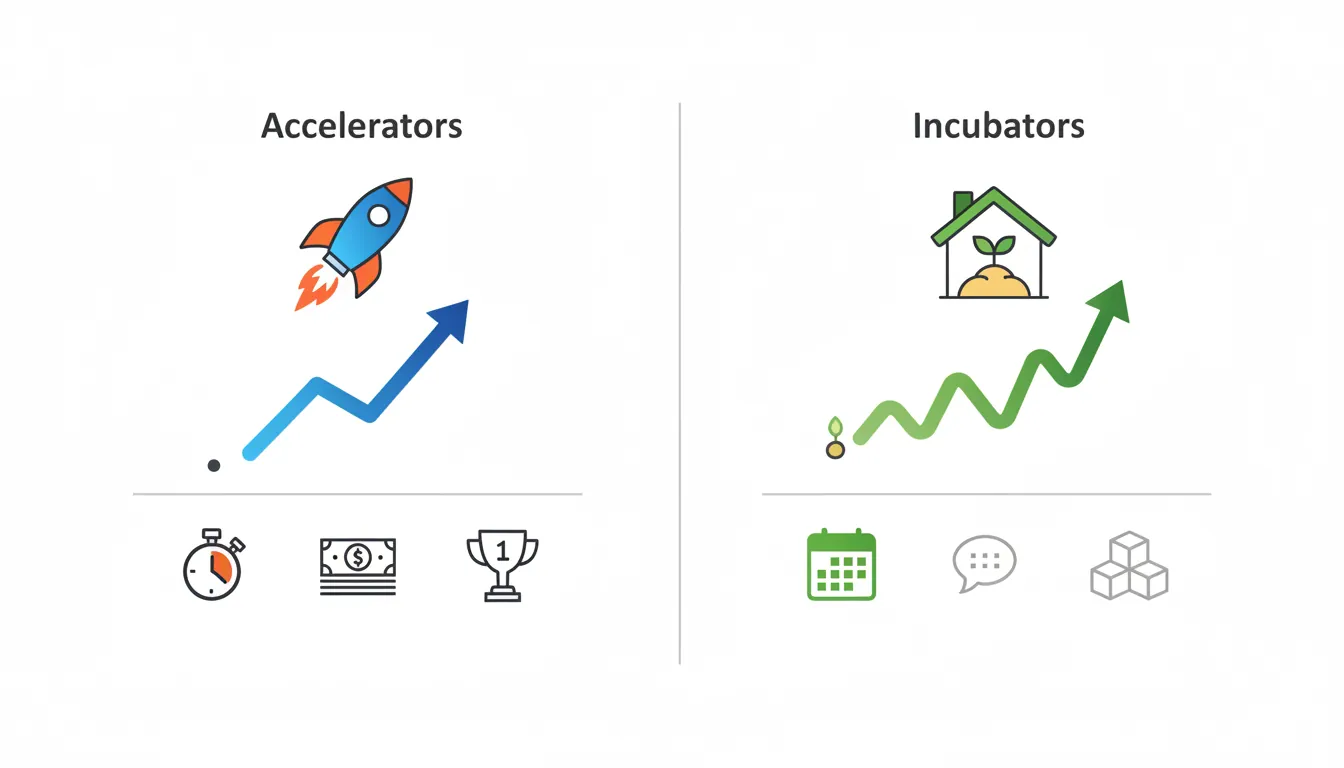
Accelerators and incubators provide structured support, but they serve different purposes and stages. Understanding the difference helps you choose the right program.
| Feature | Accelerator | Incubator |
|---|---|---|
| Duration | 3-6 months (fixed) | 1-5 years (flexible) |
| Stage | Post-idea, early traction | Idea stage, research phase |
| Investment | Usually yes ($25K-500K for 5-10%) | Rarely (grants, subsidies) |
| Structure | Cohort-based, intensive curriculum | Individual, self-paced |
| End Goal | Demo Day, ready for next funding | Launch product, find PMF |
| Examples | Y Combinator, Techstars, 500 Global | University incubators, research parks |
Top Accelerators Worldwide
TIER 1 (Global, Most Competitive)
├── Y Combinator (YC) - San Francisco
│   $500K, 7% equity, 3 months
│   Alumni: Airbnb, Stripe, Dropbox, Reddit
│   Acceptance: ~1.5%
│
├── Techstars - Multiple locations
│   $120K, 6% equity, 3 months
│   Strong mentor network
│   Industry-specific programs
│
├── 500 Global - Multiple locations
│   $150K, 6% equity, 4 months
│   Strong international presence
│
└── Antler - 27 locations
    Pre-team, helps find co-founders
    $100K+ investment

TIER 2 (Strong Regional/Sector Focus)
├── Alchemist - Enterprise B2B
├── HAX - Hardware
├── IndieBio - Biotech
├── Plug and Play - Corporate partnerships
├── StartX - Stanford-affiliated (no equity)
└── ERA - NYC-focused

CORPORATE ACCELERATORS
├── Google for Startups
├── Microsoft for Startups
├── AWS Activate
├── Nvidia Inception
└── Apple Entrepreneur Camp
Accelerator Fit Assessment
Rate your startup on key dimensions to assess readiness for accelerator programs.
All data stays in your browser. Nothing is sent to or stored on any server.
Is an Accelerator Right for You?
• You have a working product and early traction
• You need structured mentorship and accountability
• Network and credibility would unlock opportunities
• You can relocate for 3 months and work intensively
• You're still validating the idea (too early)
• You have strong existing network and funding
• Equity cost (5-10%) isn't worth the value for you
• You can't commit to the intensive program format
3. Professional Networking
In startups, your network is your net worth. The right connection can mean an introduction to your first customer, investor, or co-founder.
Venture Capital Networks
Building VC Relationships (Before You Need Money)

THE WARM INTRO GAME
├── VCs prefer warm introductions (2-5x response rate)
├── Best intro sources: Founders they've backed, angels they co-invest with
├── Second best: Lawyers, accountants, executives they know
└── Cold emails can work but need exceptional hook

TIMELINE FOR VC RELATIONSHIPS:
Month 0-6:   Research target VCs, understand thesis
Month 6-12:  Meet for advice (not money), share updates
Month 12+:   When raising, you're already known

HOW TO MEET VCs WITHOUT PITCHING:
├── Attend their events, office hours
├── Engage thoughtfully on Twitter/LinkedIn
├── Get intros from portfolio founders
├── Share insights they'd find valuable
├── Ask for advice on a specific topic
└── Send occasional updates (even before investing)

WHAT VCs TRACK:
├── How quickly you execute
├── Quality of your questions
├── How you handle feedback
├── Your integrity and judgment
└── Whether you follow through
Mentorship & Advisory Boards
| Role | Time Commitment | Compensation | Best For |
|---|---|---|---|
| Informal Mentor | Ad-hoc calls | None (pay it forward) | General guidance, sounding board |
| Formal Advisor | 2-4 hours/month | 0.25-1% equity (4-year vest) | Specific expertise, introductions |
| Board Member | Monthly meetings + availability | 0.5-2% equity (varies) | Governance, strategic decisions |
| Executive Coach | Weekly/biweekly sessions | $300-1,000/session | Leadership development |
Founder Communities
Valuable Founder Communities:

ONLINE COMMUNITIES
├── YC Founder Community (YC alumni only)
├── First Round Capital Network
├── Indie Hackers - Bootstrappers
├── Hacker News - Tech generalist
├── Twitter/X Startup Community
└── Reddit r/startups, r/entrepreneur

IN-PERSON COMMUNITIES
├── Founder meetups in your city
├── Co-working spaces (WeWork, Station F)
├── Industry conferences
├── University alumni networks
└── Angel investor groups (as observer)

PAID COMMUNITIES
├── Hampton (revenue >$1M founders)
├── Chief (women executives)
├── Pavilion (go-to-market leaders)
├── YPO (established entrepreneurs)
└── On Deck (career transitions)

BUILDING YOUR OWN
├── Start a dinner series (8-10 founders)
├── Create a Slack/Discord for your niche
├── Host virtual roundtables
└── Curate quality > scale
4. Strategic Partnerships & Alliances
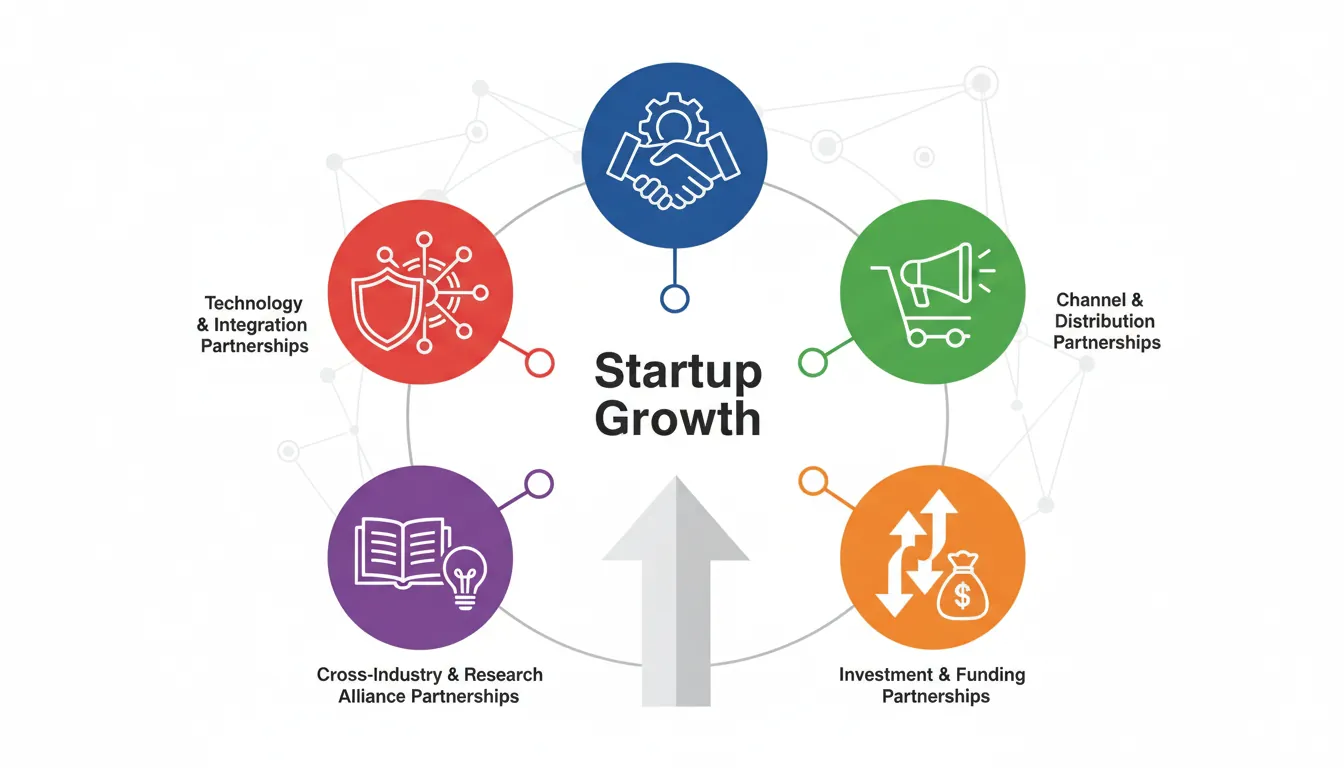
Strategic partnerships can provide distribution, credibility, and capabilities that would take years to build alone. But they're hard to get right.
Partnership Types
| Type | Value for Startup | Value for Partner | Example |
|---|---|---|---|
| Distribution | Access to customers | Product to offer customers | Salesforce AppExchange listing |
| Technology | APIs, infrastructure | Ecosystem growth | Stripe integrations |
| Co-Marketing | Brand exposure | Content, leads | Joint webinars, case studies |
| OEM/Reseller | Revenue at scale | White-label solution | Software embedded in hardware |
| Investment | Capital + strategic support | Innovation access, optionality | Corporate venture arms |
• Partner wants exclusivity without commitment
• Long sales cycles with no decision maker access
• "Innovation theater" without budget or authority
• Partnership team has no influence in org
• You'd be completely dependent on partner's success
5. Government Programs & Grants
Non-dilutive funding (grants, tax credits) preserves equity while providing capital. Many founders overlook these opportunities.

Major Government Programs:

UNITED STATES
├── SBIR/STTR Grants ($50K-2M+)
│   Federal agencies fund R&D
│   No equity given up
│   Focus: Deep tech, defense, health
│
├── R&D Tax Credit
│   Credit against payroll taxes
│   Up to $500K/year for startups
│
├── State Programs
│   California: CalCompetes, iHub
│   New York: NYSTAR, START-UP NY
│   Texas: CPRIT (cancer research)
│
└── SBA Loans
    7(a) loans, microloans
    Disaster loans

EUROPEAN UNION
├── Horizon Europe (~€95B total)
├── European Innovation Council
│   Up to €2.5M grant + €15M equity
├── National Programs
│   UK: Innovate UK
│   Germany: EXIST
│   France: BPIfrance

OTHER REGIONS
├── Canada: SR&ED tax credit, IRAP
├── Singapore: Enterprise SG, IMDA
├── Israel: Innovation Authority
└── Australia: R&D Tax Incentive
6. Global Entrepreneurship Hubs
While you can build a startup anywhere, certain ecosystems provide advantages in talent, capital, customers, and community.

| Hub | Strengths | Best For | Considerations |
|---|---|---|---|
| Silicon Valley | VC density, talent, network effects | Tech, deep tech, scale ambitions | High cost, competitive talent market |
| New York | Finance, media, enterprise customers | Fintech, adtech, B2B SaaS | High cost, diverse industries |
| London | Fintech, access to Europe | Fintech, international expansion | Brexit implications, high cost |
| Tel Aviv | Cybersecurity, deep tech, exits | Security, enterprise, deeptech | Small domestic market |
| Singapore | Gateway to Asia, government support | Southeast Asia expansion | Small local market, talent costs |
| Berlin | Affordable, international talent | B2C, marketplaces | Less VC than US, language |
| Bangalore | Engineering talent, cost efficiency | India market, outsourcing | Infrastructure challenges |
Post-2020, many startups build distributed teams from day one. Benefits: Access global talent, lower costs, flexibility. Challenges: Culture building, time zones, legal complexity. Best for: Digital products, experienced teams, async-friendly work.
Exercise: Map Your Ecosystem
Build your startup ecosystem map:
- List 10 VCs who invest in your space (stage + sector fit)
- Identify 3 accelerator programs you could apply to
- Find 5 potential mentors/advisors and research their backgrounds
- Join 2-3 founder communities (online or in-person)
- Research 3 government grants you might qualify for
Bonus: Create a relationship tracker (Notion, Airtable) to manage your network systematically
7. Conclusion & Next Steps
With a strong network in place, you're ready to explore the cutting edge—emerging technologies and trends that will shape the future of entrepreneurship.