1. Introduction
Every startup journey has an endpoint. This guide covers the full spectrum of exit strategies and how to pitch your company effectively to investors and acquirers.
Complete Startup Journey
Ideation & Opportunity Recognition
Problem discovery, market gaps, idea generation frameworksIdea Validation & MVP Prototyping
Customer discovery, landing pages, prototype testingBusiness Models & Canvas
BMC, lean canvas, revenue models, value propositionsLean Startup Methodology
Build-measure-learn, pivoting, validated learningFundraising & Financial Modeling
VC, angels, SAFE notes, cap tables, financial projectionsBuilding Your Founding Team
Co-founder selection, equity splits, team dynamicsHiring & Company Culture
Recruiting, culture building, OKRs, team scalingScaling Operations & Growth Hacking
Growth loops, viral mechanics, operational scalingMarketing Campaigns & Digital Growth
CAC/LTV, digital marketing, positioning, channelsLegal, Financial & Risk Foundations
Entity structure, IP, compliance, burn rate managementData-Driven Decision Making
SaaS metrics, NPS, analytics dashboards, A/B testingExit Strategies & Investor Pitches
Valuations, pitch decks, M&A, IPO preparationStartup Ecosystem & Networking
Accelerators, mentors, communities, ecosystem mappingInnovation, Technology & Future Trends
Emerging tech, AI/ML, deep tech, future marketsCapstone Projects & Portfolio
Comprehensive startup plan, portfolio presentation2. Exit Planning
An "exit" is how founders and investors convert their equity into cash. Planning for exit early shapes strategic decisions, even if the exit is years away.
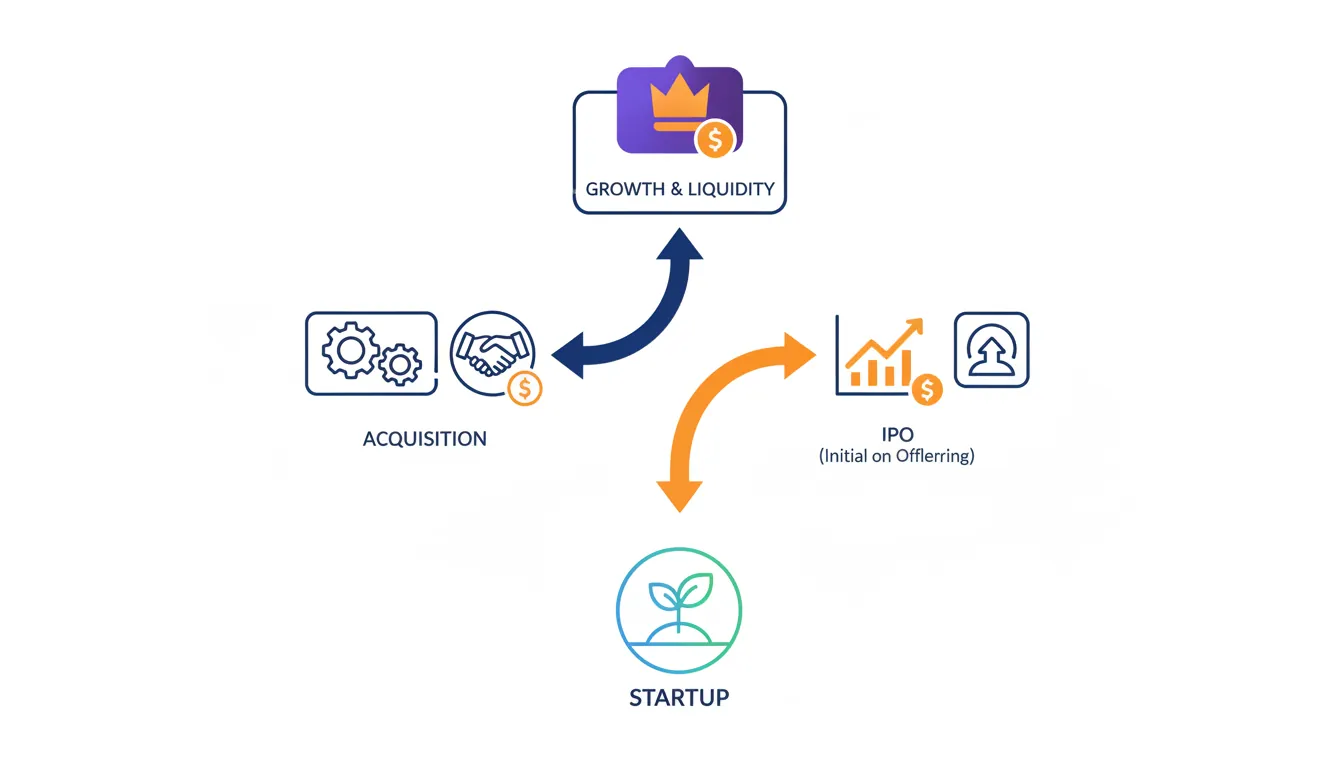
flowchart TD
    READY{"Exit
Ready?"}

    READY -->|"Not yet"| BUILD["Build Value
Revenue, team, IP,
competitive moat"]
    BUILD --> READY

    READY -->|"Yes"| TYPE{"Exit
Type?"}

    TYPE --> ACQ["Acquisition
Strategic buyer or PE"]
    TYPE --> IPO["IPO
Public markets"]
    TYPE --> SEC["Secondary Sale
Sell shares privately"]
    TYPE --> MGMT["Management
Buyout (MBO)"]

    ACQ --> DD["Due Diligence
Legal, financial, tech"]
    IPO --> DD
    DD --> CLOSE["Close Deal
Earn-out, escrow,
reps & warranties"]

    style READY fill:#132440,stroke:#132440,color:#fff
    style ACQ fill:#e8f4f4,stroke:#3B9797
    style IPO fill:#f0f4f8,stroke:#16476A
The best exits often come to founders who aren't trying to exit. Build a great company, and exit opportunities will find you.
Acquisition (M&A)
90%+ of startup exits are acquisitions. Large companies buy startups for talent, technology, customers, or competitive defense.
Acquisition Types:

STRATEGIC ACQUISITION (Most Common)
├── Buyer: Large company in your industry
├── Motivation: Technology, market share, talent
├── Premium: Often 3-10x revenue
├── Examples: Facebook→Instagram, Google→YouTube, Microsoft→LinkedIn
│
ACQUI-HIRE
├── Buyer: Companies needing talent
├── Motivation: Team, not product
├── Premium: $1-3M per engineer typically
├── Product often shut down
│
PRIVATE EQUITY (PE) BUYOUT
├── Buyer: PE firms (KKR, Vista, Thoma Bravo)
├── Motivation: Financial returns, operational improvement
├── Premium: Based on EBITDA multiples
├── More common for profitable, mature startups
│
MERGER
├── Buyer: Peer company of similar size
├── Motivation: Scale, market power, cost synergies
├── Structure: Stock swap, new combined entity
├── Founders may stay in leadership
Making Your Company Acquirable
| Acquirer's Priority | What They Look For | How to Position |
|---|---|---|
| Technology | Proprietary tech, patents, hard problems solved | Document technical moats, file patents, build defensibility |
| Customers | User base, distribution, network effects | Grow engagement metrics, prove retention, show growth |
| Talent | Engineering team, domain experts | Hire exceptional people, build reputation |
| Market Position | Category leadership, brand | Be #1 or #2 in your niche, own the narrative |
| Strategic Fit | Fills gap in acquirer's roadmap | Understand potential acquirers' strategies |
Initial Public Offering (IPO)
Going public means selling shares on a stock exchange. It's the dream exit but achievable by very few startups (<0.1%).
IPO Readiness Checklist:

FINANCIAL REQUIREMENTS
├── Revenue: Typically $100M+ ARR minimum
├── Growth: 30%+ YoY revenue growth
├── Path to profitability: Visible, even if not yet profitable
├── Predictability: Consistent, forecastable results
└── Scale: Operating at a level that justifies public costs

OPERATIONAL REQUIREMENTS
├── Management team: Experienced, public-company ready
├── Board: Independent directors with public experience
├── Finance: SOX-compliant controls, audit-ready
├── Legal: Clean cap table, no litigation issues
└── Systems: ERP, strong reporting infrastructure

MARKET REQUIREMENTS
├── Story: Compelling narrative for public investors
├── Category: Large, growing addressable market
├── Timing: Favorable market conditions
├── Comparables: Public peers trading at good multiples
IPO Alternatives
| Option | Description | Pros | Cons |
|---|---|---|---|
| Traditional IPO | Investment banks underwrite, roadshow | Most capital raised, marketing support | Expensive (7% fee), underpricing risk |
| Direct Listing | List existing shares, no new capital raised | No dilution, no lock-up, lower fees | No new capital, more volatile first day |
| SPAC Merger | Merge with blank-check company | Faster, more price certainty | Dilution from sponsor, regulatory scrutiny |
Secondary Sales
Secondary sales let founders and employees sell shares before a full exit. This provides liquidity without selling the company.
Secondary Sale Options:

TENDER OFFERS
├── Company-organized buyback from investors
├── All shareholders offered chance to sell
├── Common in late-stage funding rounds
├── Typically 10-20% of round is secondary
│
DIRECT SECONDARY SALES
├── Individual shareholders sell to buyers
├── Requires board/company approval (ROFR)
├── Platforms: EquityZen, Forge, Carta
│
CONTINUATION FUNDS
├── VC sells entire position to new fund
├── Provides liquidity without company sale
├── Growing trend in late-stage startups

FOUNDER SECONDARY CONSIDERATIONS:
✓ Take some chips off the table (10-30%)
✓ Align with investor expectations
✓ Don't signal loss of confidence
✗ Don't sell more than investors
✗ Don't sell too early (signals doubt)
3. Valuation Methods
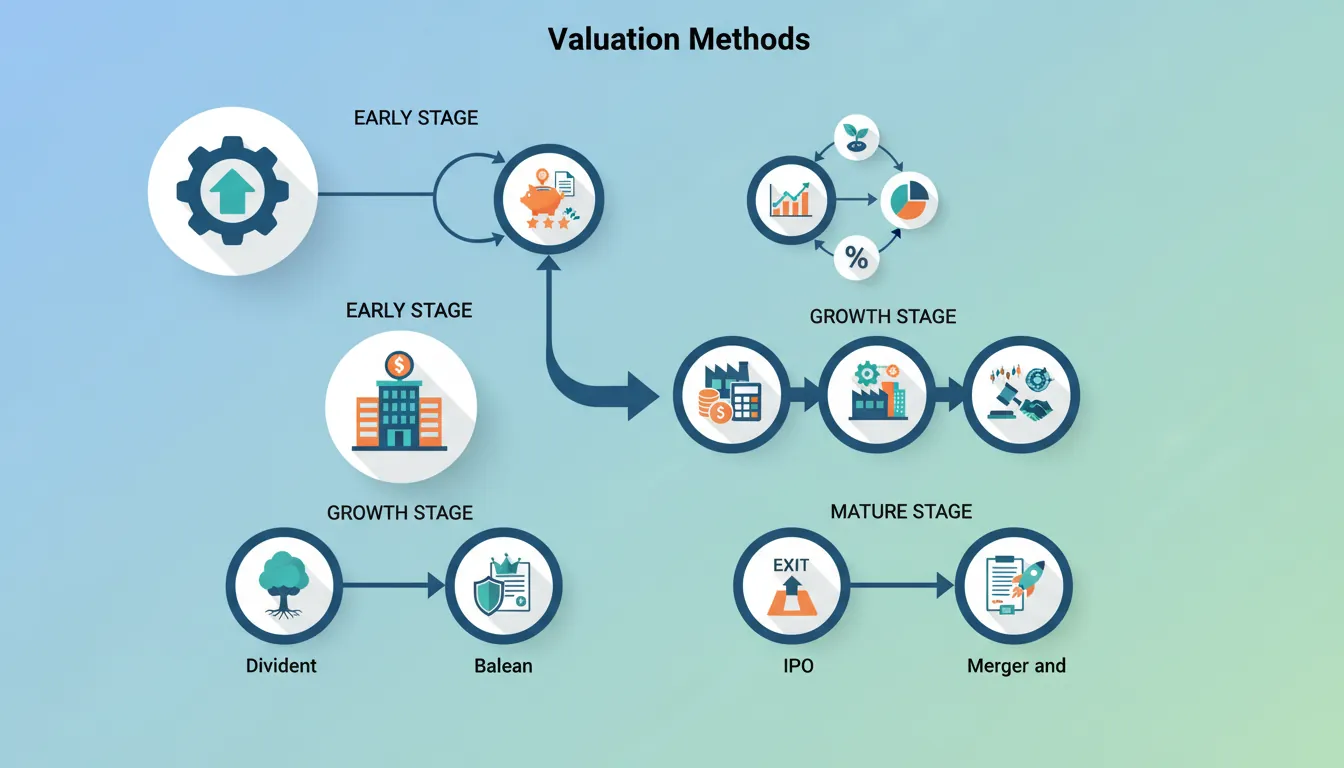
Valuation is part art, part science. Different methods apply at different stages, and the "right" valuation is whatever a willing buyer will pay.
Discounted Cash Flow (DCF)
DCF values a company based on the present value of future cash flows. It's theoretically correct but highly sensitive to assumptions.
DCF Formula:

                    CF₁        CF₂               CFₙ + TV
Enterprise Value = ------ + -------- + ... + ----------
                  (1+r)¹   (1+r)²           (1+r)ⁿ

Where:
CF = Free Cash Flow for each year
r  = Discount rate (WACC, typically 15-30% for startups)
TV = Terminal Value (value beyond projection period)

Example (5-year projection):
Year 1: $1M CF ÷ 1.20 = $0.83M
Year 2: $2M CF ÷ 1.44 = $1.39M
Year 3: $4M CF ÷ 1.73 = $2.31M
Year 4: $6M CF ÷ 2.07 = $2.90M
Year 5: $8M CF ÷ 2.49 = $3.21M
Terminal Value (8M × 15x ÷ 2.49) = $48.2M
─────────────────────────────────────────
Total Enterprise Value ≈ $58.8M

LIMITATIONS FOR STARTUPS:
├── Highly sensitive to discount rate assumption
├── Cash flows may be negative for years
├── Terminal value dominates (often 70%+ of value)
└── Better for mature, predictable businesses
Comparable Company Analysis
Compare your company to similar public companies or recent acquisitions. This is the most common method for startups.
| Metric | Typical Multiple Range | Best For |
|---|---|---|
| Revenue Multiple | 1-20x ARR | High-growth SaaS (varies with growth rate) |
| EBITDA Multiple | 8-15x EBITDA | Profitable, mature companies |
| GMV Multiple | 0.3-1.5x GMV | Marketplaces |
| User Multiple | $20-500 per user | Consumer apps (varies by engagement) |
SaaS Valuation Deep Dive
SaaS Valuation Framework:

BASELINE: Public SaaS median ~6-8x ARR

PREMIUM FACTORS (add to multiple):
├── Growth rate >50% YoY: +2-4x
├── Net Revenue Retention >120%: +2-3x
├── Gross margin >80%: +1-2x
├── Large TAM: +1-2x
├── Category leader: +2-4x
│
DISCOUNT FACTORS (subtract from multiple):
├── Growth rate <20% YoY: -2-3x
├── High churn >5% monthly: -2-4x
├── Gross margin <60%: -1-2x
├── Concentration risk (top 3 = 50%+ revenue): -1-2x

QUICK CALCULATION:
If: $10M ARR, 60% growth, 120% NRR, 75% GM
Base: 7x
+ Growth premium: +3x
+ NRR premium: +2x
= 12x ARR = $120M valuation

"THE RULE OF 40"
Growth Rate + Profit Margin ≥ 40%
Companies above Rule of 40 command premium valuations
Startup Valuation Calculator
Estimate your startup's valuation using multiple methods: Revenue Multiple, DCF, and Berkus.
All data stays in your browser. Nothing is sent to or stored on any server.
4. Due Diligence Preparation
Due diligence is the buyer's investigation of your company. Being prepared accelerates deals and prevents surprises that kill them.
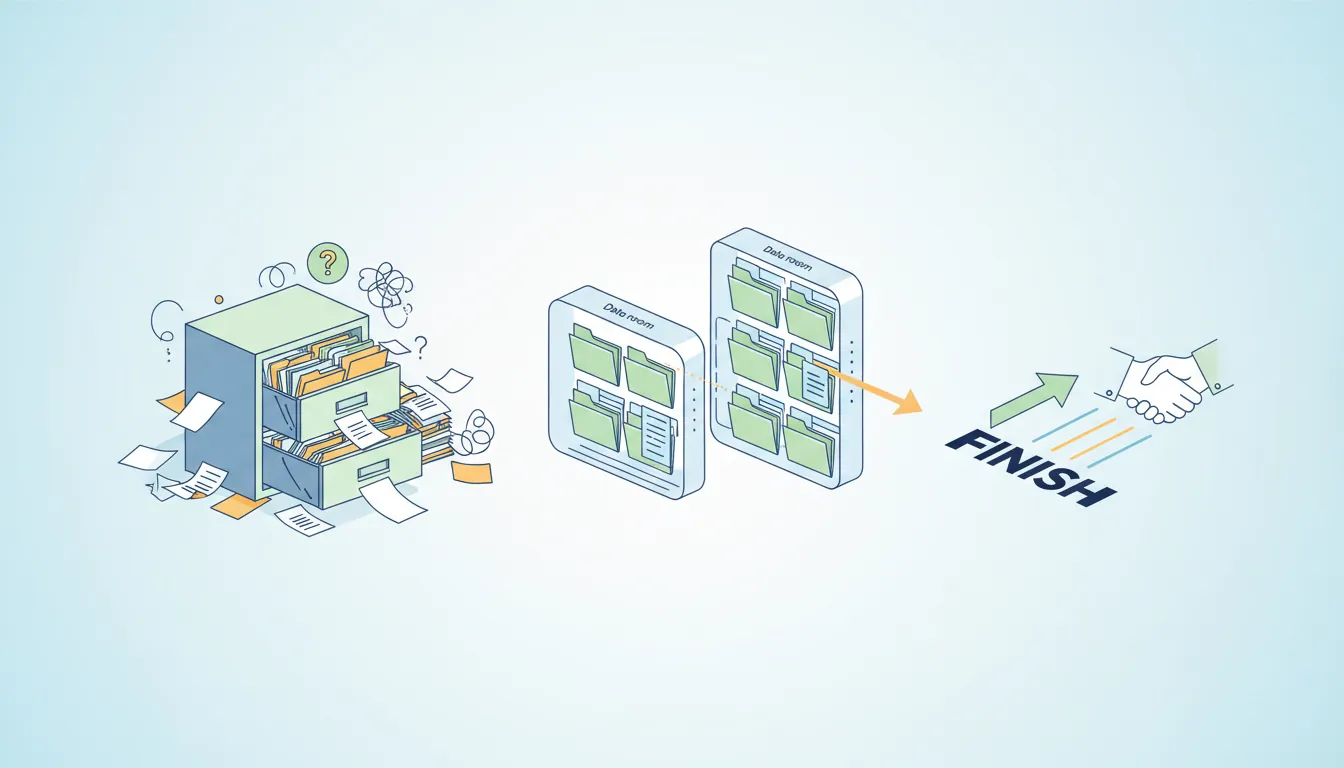
Due Diligence Data Room Checklist
ESSENTIAL DATA ROOM STRUCTURE:

1. CORPORATE
   ├── Certificate of Incorporation, Bylaws
   ├── Cap table (fully diluted)
   ├── Board minutes, consents
   ├── Shareholder agreements
   ├── Option plan documents
   └── Subsidiary documentation

2. FINANCIAL
   ├── Audited financials (3 years if available)
   ├── Monthly financials (24 months)
   ├── Financial model/projections
   ├── Revenue breakdown by customer
   ├── AR aging, bad debt history
   └── Tax returns and filings

3. CUSTOMERS & REVENUE
   ├── Top 20 customer contracts
   ├── Customer concentration analysis
   ├── Cohort retention data
   ├── Churn analysis
   ├── Pipeline and sales metrics
   └── Pricing history

4. LEGAL
   ├── Material contracts (>$100K)
   ├── IP assignments, patents, trademarks
   ├── Litigation history
   ├── Regulatory compliance
   ├── Data privacy compliance (GDPR, CCPA)
   └── Insurance policies

5. TEAM & HR
   ├── Org chart
   ├── Key employee agreements
   ├── Compensation summary
   ├── Benefits overview
   ├── Contractor agreements
   └── Equity grants by employee

6. TECHNOLOGY
   ├── System architecture diagram
   ├── Security audit results
   ├── Third-party dependencies
   ├── Technical debt assessment
   └── Development roadmap
• IP issues: Missing founder IP assignments, open source violations
• Financial surprises: Undisclosed liabilities, revenue misstatements
• Customer risk: Undisclosed churn, contract issues
• Compliance gaps: GDPR violations, unlicensed software
• Key person risk: Critical employees without agreements
5. Pitch Deck Creation & Storytelling
A pitch deck is your visual story. It should be clear enough to stand alone but compelling enough to earn a meeting.
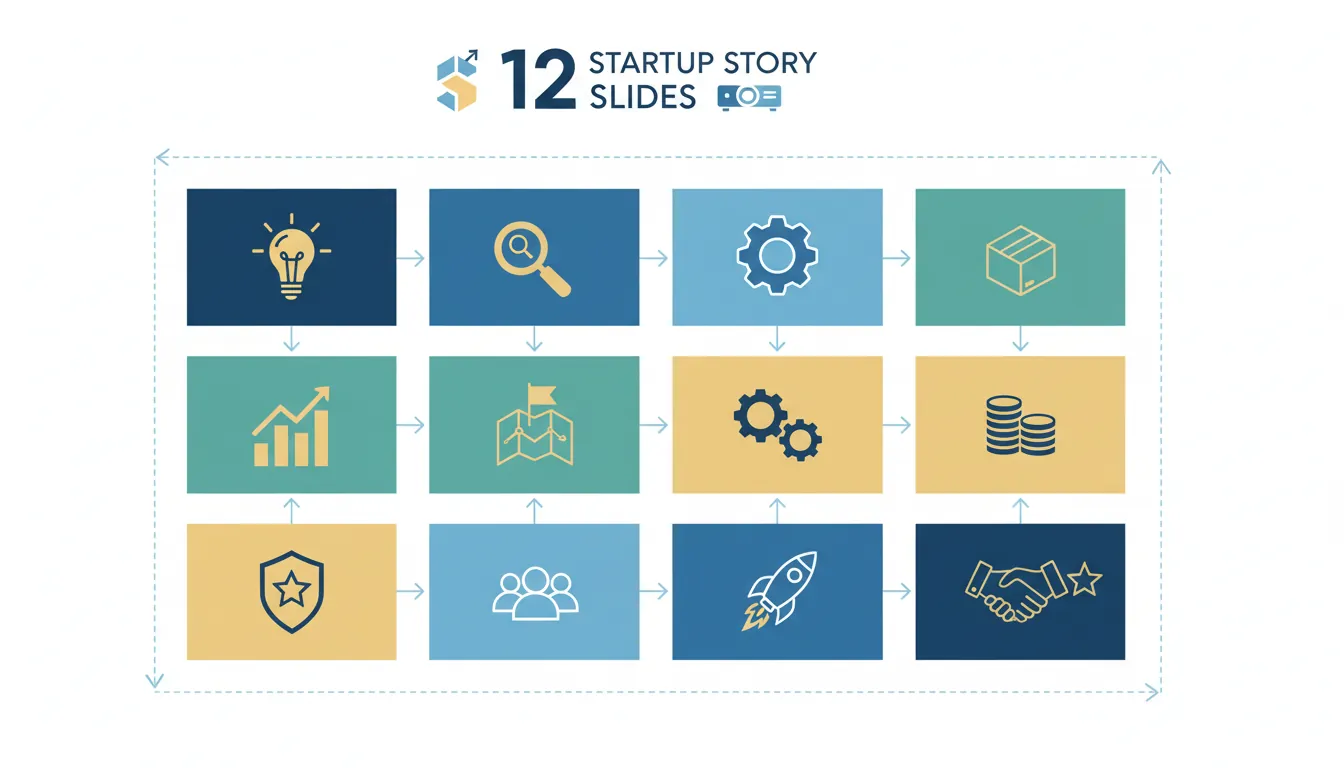
The 12-Slide Pitch Deck Framework
PITCH DECK STRUCTURE:

1. TITLE SLIDE
   Company name, tagline, your name
   "What we do in one sentence"

2. PROBLEM
   Pain point you're solving
   Make it visceral, relatable

3. SOLUTION
   Your product/service
   Keep it simple—no feature dump

4. WHY NOW
   Market timing, technology shifts
   Why this couldn't exist 5 years ago

5. MARKET SIZE
   TAM → SAM → SOM
   Bottom-up calculation preferred

6. PRODUCT
   Screenshots, demo highlights
   Show, don't tell

7. TRACTION
   Revenue, users, growth rate
   Cohort retention, key metrics

8. BUSINESS MODEL
   How you make money
   Unit economics (CAC, LTV)

9. COMPETITION
   Market landscape
   Your differentiation

10. TEAM
    Founders + key hires
    Why you'll win (relevant experience)

11. FINANCIALS
    Revenue history, projections
    Use of funds

12. THE ASK
    How much you're raising
    What you'll achieve with it
Pitch Deck Outline Generator
Fill in key talking points for each slide. Download a structured pitch deck outline to build from.
All data stays in your browser. Nothing is sent to or stored on any server.
Storytelling Techniques
| Technique | How to Apply | Example |
|---|---|---|
| The Hook | Start with surprising stat or story | "$50B is wasted annually on X..." |
| Customer Hero | Frame customer as the hero, you as guide | "Meet Sarah. She struggled with Y until..." |
| The Aha Moment | Show transformation | Before/after comparison, demo moment |
| Social Proof | Let others validate you | Logos, testimonials, press mentions |
| Inevitable Vision | Show the future you're building | "In 5 years, every company will..." |
6. Investor Relations & Communication
Good investor relations builds trust that pays dividends in future raises, introductions, and crisis support.
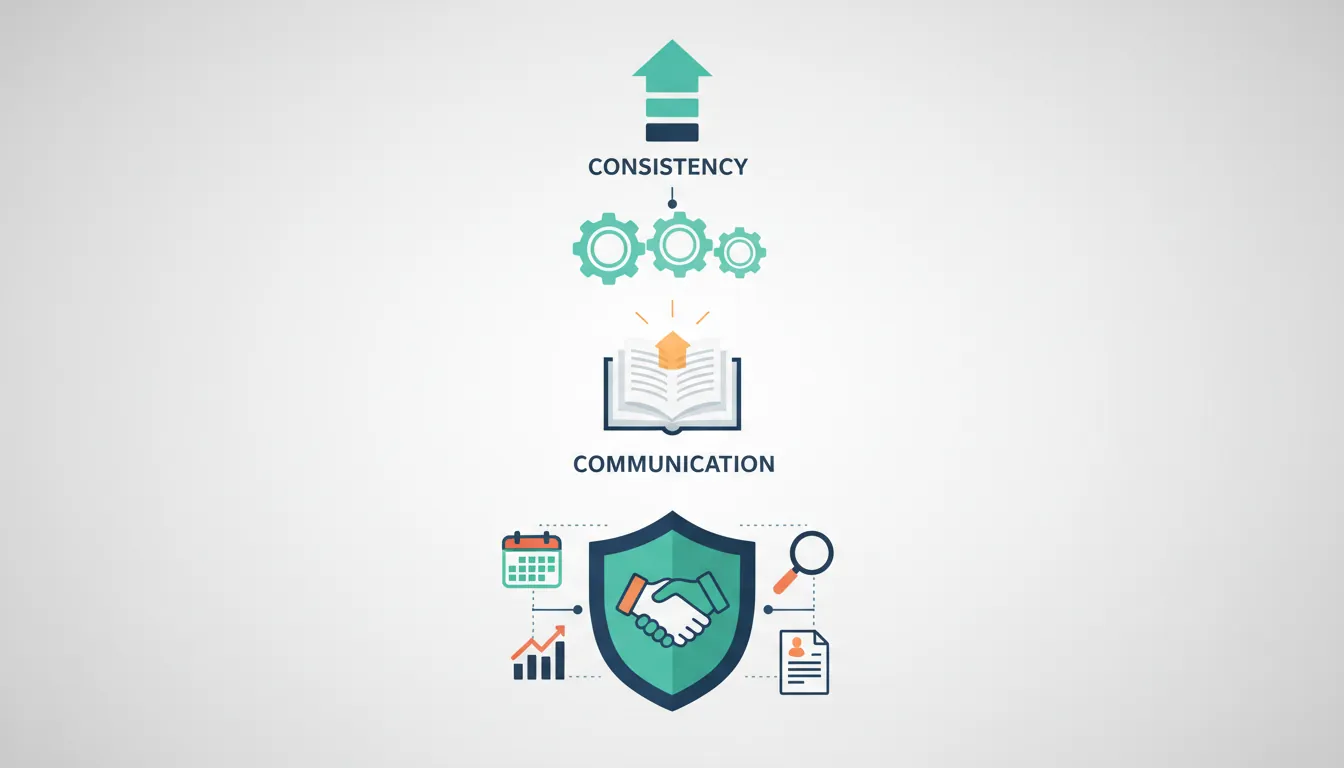
Investor Update Template
MONTHLY INVESTOR UPDATE (Send within 5 days of month end)

SUBJECT: [Company] - January 2026 Update 📈

QUICK STATS (5 seconds to scan)
├── MRR: $425K (+8% MoM) ✅
├── Cash: $2.1M (14 months runway)
├── Team: 23 (hired 2, 0 attrition)
└── NPS: 62 (+4 from last month)

HIGHLIGHTS (What went well)
• Closed Enterprise deal with [Company] ($50K ACV)
• Launched Feature X, 40% adoption in first week
• Promoted [Name] to VP Engineering

LOWLIGHTS (Be honest about challenges)
• Trial→Paid conversion dropped 5% (investigating)
• Lost deal to [Competitor] on price
• Engineering velocity slowed due to tech debt

ASKS (Specific, actionable)
• Intro to [Person] at [Company] for partnership
• Referrals for VP Sales candidates
• Feedback on new pricing page [link]

DETAILED METRICS [Optional attachment]

Thanks for your support!
[Founder Name]
• Consistency: Monthly updates, same format, same time
• Transparency: Share bad news faster than good news
• Specificity: Make asks concrete, not vague
• Follow-up: Report back on asks they helped with
• Accessibility: Make it easy for them to help you
Exercise: Prepare Your Exit Toolkit
Create the foundation for future exit readiness:
- List 5 potential strategic acquirers for your company and why each might be interested
- Calculate your company's valuation using 3 different methods
- Create a data room folder structure and identify missing documents
- Build a 12-slide pitch deck for your current stage
- Write a sample investor update for your current month
Bonus: Research 3 recent acquisitions in your space and analyze the reported multiples
7. Conclusion & Next Steps
Understanding exits is crucial, but success often depends on your network. Learn how to navigate the startup ecosystem and build strategic partnerships.