1. Introduction
Legal and financial foundations aren't glamorous, but they're essential for protecting your company and setting it up for success. This guide covers the critical decisions every founder must make.
Complete Startup Journey
Ideation & Opportunity Recognition
Problem discovery, market gaps, idea generation frameworksIdea Validation & MVP Prototyping
Customer discovery, landing pages, prototype testingBusiness Models & Canvas
BMC, lean canvas, revenue models, value propositionsLean Startup Methodology
Build-measure-learn, pivoting, validated learningFundraising & Financial Modeling
VC, angels, SAFE notes, cap tables, financial projectionsBuilding Your Founding Team
Co-founder selection, equity splits, team dynamicsHiring & Company Culture
Recruiting, culture building, OKRs, team scalingScaling Operations & Growth Hacking
Growth loops, viral mechanics, operational scalingMarketing Campaigns & Digital Growth
CAC/LTV, digital marketing, positioning, channelsLegal, Financial & Risk Foundations
Entity structure, IP, compliance, burn rate managementData-Driven Decision Making
SaaS metrics, NPS, analytics dashboards, A/B testingExit Strategies & Investor Pitches
Valuations, pitch decks, M&A, IPO preparationStartup Ecosystem & Networking
Accelerators, mentors, communities, ecosystem mappingInnovation, Technology & Future Trends
Emerging tech, AI/ML, deep tech, future marketsCapstone Projects & Portfolio
Comprehensive startup plan, portfolio presentation2. Business Structures
Choosing the right business structure affects liability protection, taxation, fundraising ability, and administrative burden. Most startups eventually become C-Corps, but the right choice depends on your goals.
This guide provides general information, not legal or tax advice. Consult with qualified attorneys and accountants for decisions specific to your situation.
Business Structure Selector
Answer a few questions about your startup to get a recommended entity type.
All data stays in your browser. Nothing is sent to or stored on any server.
Limited Liability Company (LLC)
An LLC combines liability protection with tax flexibility. It's great for early-stage companies that aren't sure about VC funding.
| Pros | Cons |
|---|---|
|
|
Best for: Service businesses, side projects, bootstrapped companies not seeking VC.
C-Corporation (C-Corp)
A C-Corp is a separate legal entity that can issue stock, raise VC funding, and go public. It's the standard for high-growth startups.
Why VCs Require C-Corps:

1. STOCK OPTIONS: C-Corps can grant ISOs (tax-advantaged)
2. INVESTMENT STRUCTURE: Preferred stock, liquidation preferences
3. FAMILIARITY: Standard legal docs, known governance
4. EXIT PATH: IPO requires C-Corp structure
5. DELAWARE: Well-established case law, business-friendly courts

Delaware C-Corp Formation:
├── File Certificate of Incorporation (~$100)
├── Adopt Bylaws
├── Issue stock to founders
├── File 83(b) election within 30 days!
├── Obtain EIN from IRS
└── Open business bank account
If founders receive stock subject to vesting, file an 83(b) election with the IRS within 30 days. This locks in taxes at current (low) value. Missing this deadline can cost tens of thousands in taxes later.
S-Corporation (S-Corp)
An S-Corp is a tax election, not a separate entity type. It allows pass-through taxation while reducing self-employment tax.
Best for: Profitable small businesses with 1-3 owners who want to minimize self-employment tax. Not suitable for VC-backed startups (100 shareholder limit, one class of stock only).
Comparison Chart
| Feature | Sole Prop | LLC | S-Corp | C-Corp |
|---|---|---|---|---|
| Liability Protection | ❌ | ✅ | ✅ | ✅ |
| Pass-Through Tax | ✅ | ✅ | ✅ | ❌ |
| Stock Options (ISO) | ❌ | ❌ | ❌ | ✅ |
| VC Fundable | ❌ | ❌ | ❌ | ✅ |
| Formation Cost | $0 | $50-500 | $50-500 | $300-2K |
| Annual Compliance | Low | Low | Medium | High |
3. Intellectual Property
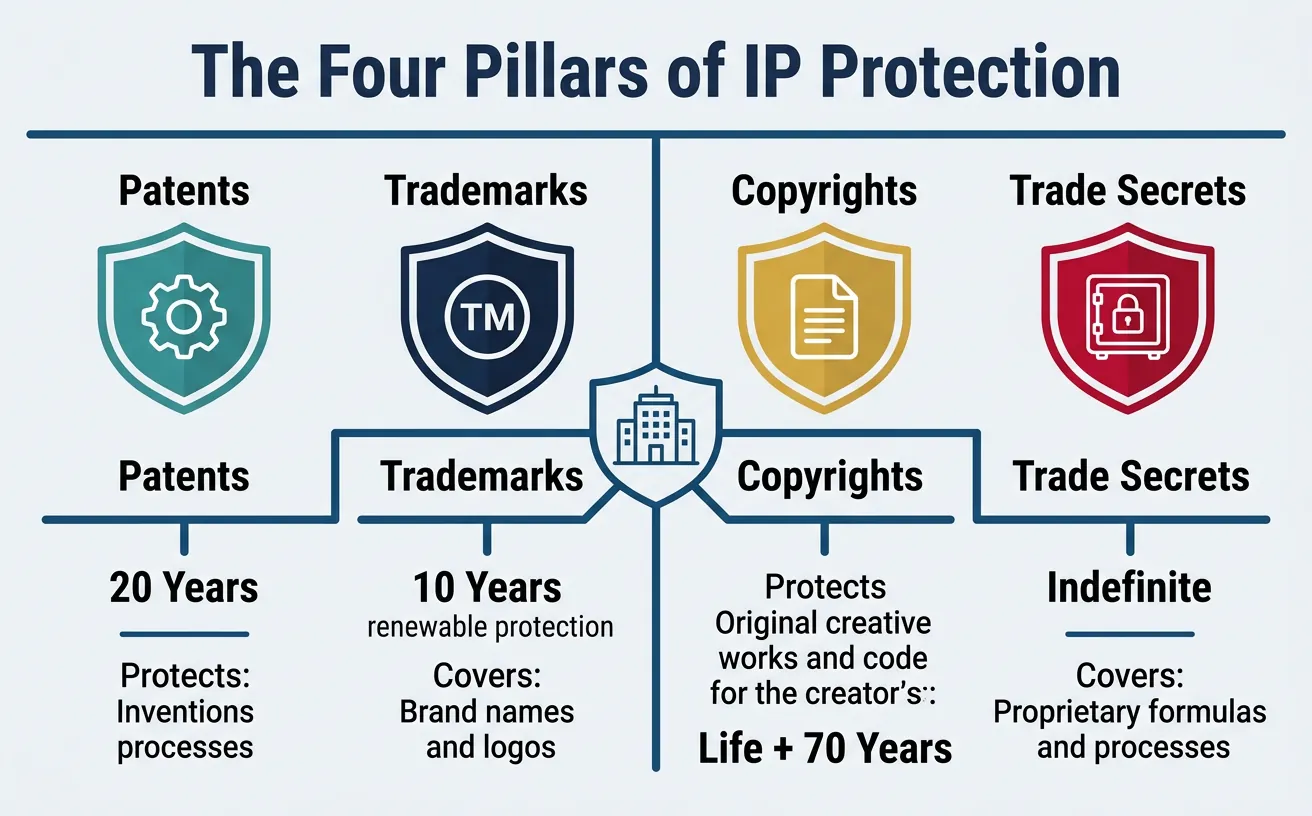
IP is often a startup's most valuable asset. Understanding the different types of protection helps you defend what you've built.
Patents
Patents protect inventions—new and useful processes, machines, or compositions of matter. They grant exclusive rights for 20 years from filing.
Patent Strategy Decision Tree:

Is your innovation patentable?
├── Is it novel? (not already known)
├── Is it non-obvious? (not trivial to experts)
├── Is it useful? (has practical application)
└── Can you describe it? (enablement requirement)

If YES to all:
├── DEFENSIVE: File to prevent competitors from patenting
├── OFFENSIVE: File to block competitors from copying
└── LICENSING: File to generate licensing revenue

Patent Process:
1. Document invention (lab notebooks, dated)
2. Conduct prior art search
3. File provisional patent ($1,500-5,000) ← 12-month priority
4. File non-provisional ($10,000-20,000)
5. Examination (2-4 years)
6. Maintenance fees (years 4, 8, 12)

Cost Reality:
• Simple software patent: $15-25K total
• Complex hardware: $30-50K+
• International (PCT): $50-100K+
Trademarks
Trademarks protect brand identifiers—names, logos, slogans, sounds, or colors that distinguish your goods/services.
| Trademark Strength | Description | Example | Protectable? |
|---|---|---|---|
| Fanciful | Invented words | Xerox, Kodak, Spotify | ⭐⭐⭐⭐⭐ Strongest |
| Arbitrary | Real words, unrelated to product | Apple (computers), Amazon | ⭐⭐⭐⭐ |
| Suggestive | Hints at qualities | Netflix, Airbnb | ⭐⭐⭐ |
| Descriptive | Describes the product | Best Buy, General Motors | ⭐⭐ (needs secondary meaning) |
| Generic | Common name for product | "Computer Store" | ❌ Not protectable |
Trademark Process:
- Conduct clearance search ($500-2,000 professional search)
- File application with USPTO ($250-350 per class)
- Examination (6-12 months)
- Publication for opposition (30 days)
- Registration issued
- Maintain: File declarations at years 5-6 and renew every 10 years
Copyrights
Copyrights automatically protect original works of authorship—code, content, designs, music. Registration isn't required but provides legal benefits.
• Copyright: Protects the specific code you write (automatic, free)
• Patent: Protects the underlying method/algorithm (requires filing, expensive)
• Copyright doesn't stop someone from implementing the same feature differently
4. Contracts & Agreements
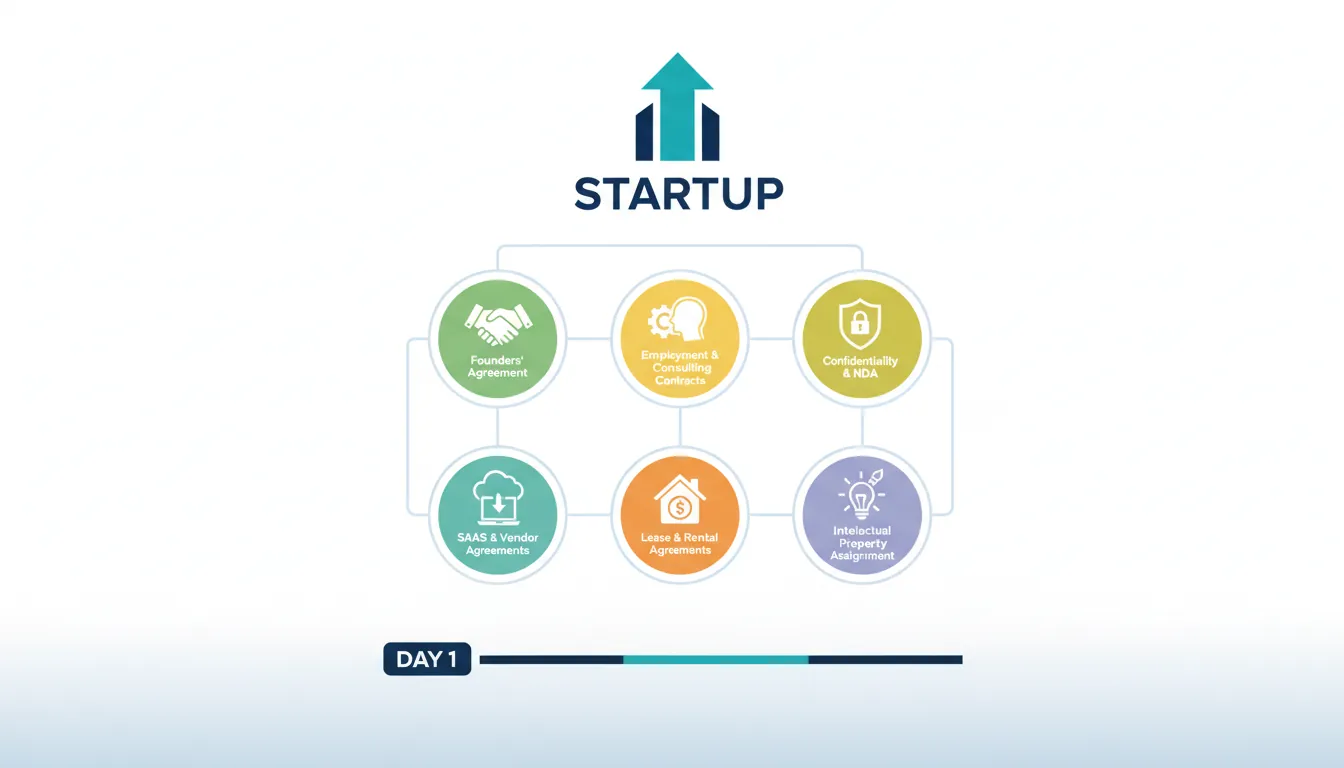
Contracts define relationships and protect all parties. Use them early and consistently—verbal agreements lead to disputes.
Non-Disclosure Agreements (NDAs)
NDAs protect confidential information shared in business discussions.
NDA Key Terms:

WHAT'S COVERED (Definition of Confidential Info):
├── Technical information, code, algorithms
├── Business plans, financials, customer lists
├── Exclude: publicly known info, independently developed

OBLIGATIONS:
├── Keep information confidential
├── Use only for stated purpose
├── Return/destroy upon request

DURATION:
├── Agreement term: Usually 1-3 years
├── Confidentiality: Often survives 2-5 years after

TYPES:
├── One-way (mutual): Both parties share
├── One-way (unilateral): Only one party shares

WHEN TO USE:
✅ Before sharing code, customer data, financials
✅ With potential acquirers, partners
❌ Most VCs won't sign (they see too many similar ideas)
❌ Don't use as a crutch—ideas aren't worth much
Key Business Contracts
| Contract Type | Purpose | Key Terms to Watch |
|---|---|---|
| Master Service Agreement (MSA) | Framework for ongoing vendor relationships | SLAs, payment terms, liability caps, termination |
| Software License (SaaS) | Terms for using your software | Acceptable use, data ownership, liability limits |
| Terms of Service (ToS) | User agreement for your product | Arbitration clause, limitation of liability |
| Privacy Policy | How you handle user data (legally required) | Data collection, use, sharing, retention |
| Contractor Agreement | Engaging independent contractors | IP assignment, independent contractor status |
Employment Agreements
Essential clauses for protecting your company when hiring:
- IP Assignment: All work created belongs to the company
- Confidentiality: Don't share company secrets
- Non-Compete: Can't work for competitors (enforceability varies by state—banned in CA)
- Non-Solicitation: Can't poach employees or customers
- At-Will Employment: Either party can terminate (standard in US)
5. Accounting Fundamentals
Good accounting isn't just for taxes—it's how you understand your business health and make informed decisions.
Bookkeeping Basics
Bookkeeping is recording financial transactions. Do it consistently from day one—catching up later is painful and expensive.
Bookkeeping Best Practices:

1. SEPARATE ACCOUNTS
   ├── Business bank account (never mix with personal)
   ├── Business credit card
   └── Clear paper trail for all transactions

2. TRACK EVERYTHING
   ├── Revenue: Every dollar in
   ├── Expenses: Every dollar out
   ├── Receipts: Digital copies of all receipts

3. CATEGORIZE PROPERLY
   ├── Use standard chart of accounts
   ├── Be consistent in categorization
   └── Common categories: Payroll, Software, Marketing, Legal, Travel

4. RECONCILE MONTHLY
   ├── Match bank statements to books
   ├── Catch errors early
   └── Required for accurate financials

TOOLS:
├── DIY: QuickBooks, Xero, Wave (free)
├── Startup-focused: Bench, Pilot (managed bookkeeping)
└── Enterprise: NetSuite, Sage
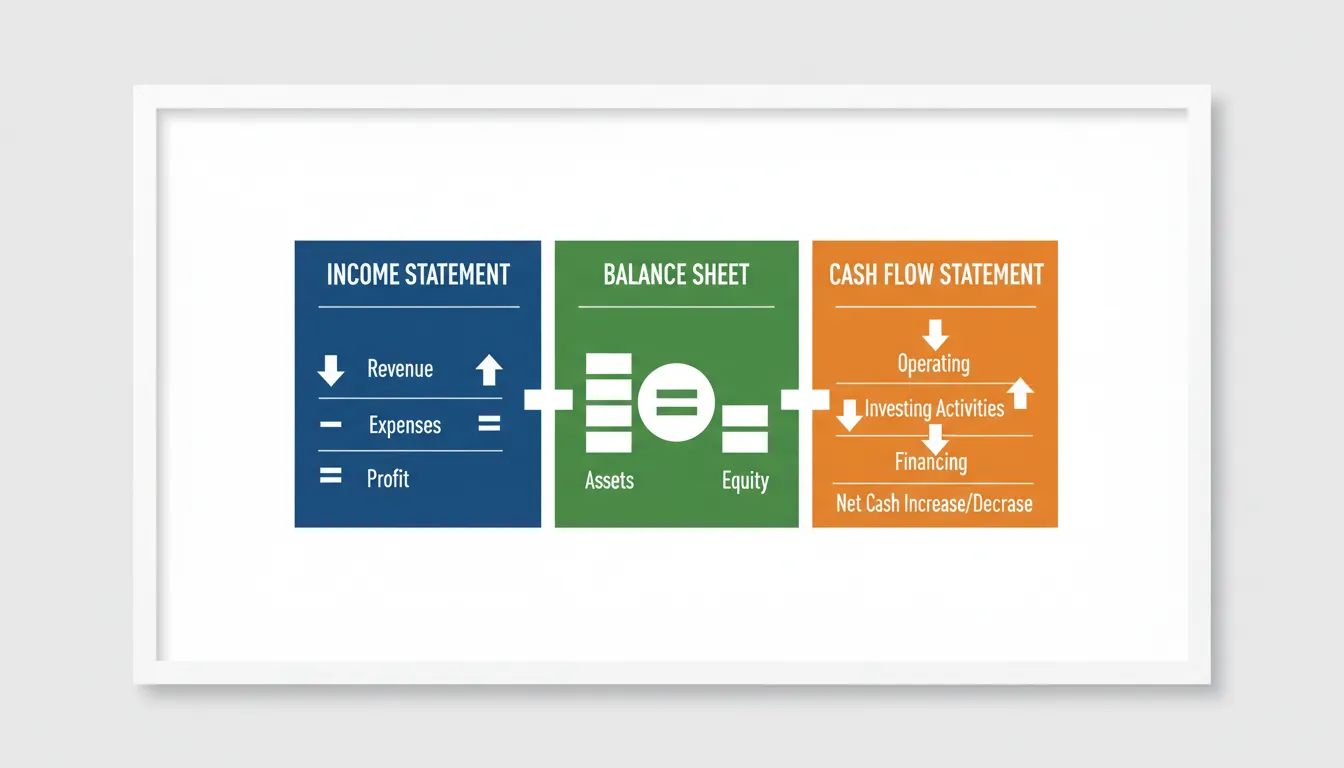
Understanding Financial Statements
| Statement | What It Shows | Key Questions Answered |
|---|---|---|
| Income Statement (P&L) | Revenue, expenses, profit over a period | Are we profitable? Where do we spend money? |
| Balance Sheet | Assets, liabilities, equity at a point in time | What do we own? What do we owe? |
| Cash Flow Statement | Cash in and out over a period | Where did cash come from? Where did it go? |
Cash Flow Management
A company can be profitable on paper and still run out of cash. Revenue is recognized when earned, but cash comes when collected. Manage timing carefully.
Cash Flow Survival Rules:

1. KNOW YOUR BURN RATE
   Burn = Cash spent per month
   Runway = Cash in bank ÷ Burn rate
   Target: 12-18 months runway minimum

2. COLLECT FAST, PAY SLOW (ETHICALLY)
   ├── Invoice immediately upon delivery
   ├── Offer discounts for early payment
   ├── Follow up on overdue invoices
   ├── Negotiate longer payment terms with vendors
   └── Never delay payroll

3. FORECAST CASH
   ├── 13-week rolling cash forecast
   ├── Model best/worst/expected scenarios
   └── Act early if runway gets short

4. BUILD A BUFFER
   ├── Keep 3-6 months expenses as reserve
   ├── Establish line of credit before you need it
   └── Conservative forecasting > optimistic
Burn Rate & Runway Calculator
Enter your cash position and monthly financials to calculate runway and default alive/dead status.
All data stays in your browser. Nothing is sent to or stored on any server.
6. Tax Planning & Compliance
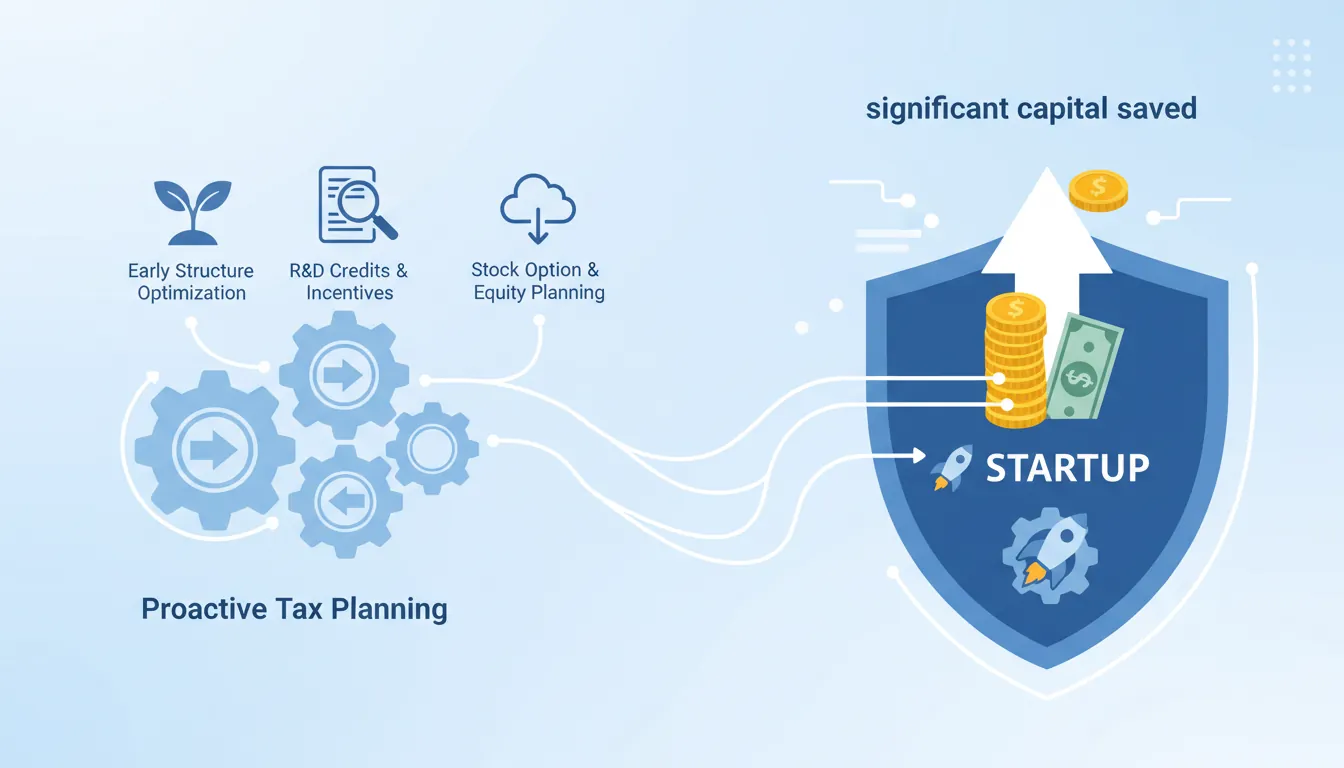
Tax planning done proactively saves money. Done reactively (at filing time), you miss opportunities.
Key Tax Considerations for Startups
| Tax Type | What It Is | Planning Opportunities |
|---|---|---|
| Income Tax | Federal/state tax on profits | R&D credits, QSBS exclusion, loss carryforwards |
| Payroll Tax | Social Security, Medicare, unemployment | Proper contractor classification, hiring credits |
| Sales Tax | Tax collected on sales (varies by state) | Nexus tracking, exemption certificates |
| International | Taxes on foreign operations/employees | Transfer pricing, tax treaties, PE risk |
Valuable Tax Credits for Startups
Tax Credit Opportunities:

R&D TAX CREDIT (Section 41)
├── Credit for qualified research expenses
├── Startups: Up to $500K/year against payroll tax
├── Must meet 4-part test (technical uncertainty, etc.)
└── Document contemporaneously!

QSBS EXCLUSION (Section 1202)
├── Exclude up to 100% of gain on qualified stock sale
├── Requirements: C-Corp, <$50M assets, held 5+ years
├── Can exclude up to $10M or 10x basis
└── Huge benefit—structure properly from start

STATE INCENTIVES
├── Hiring credits (varies by state)
├── Investment credits
├── Film/digital media credits
└── Enterprise zone benefits
7. Risk Management & Insurance
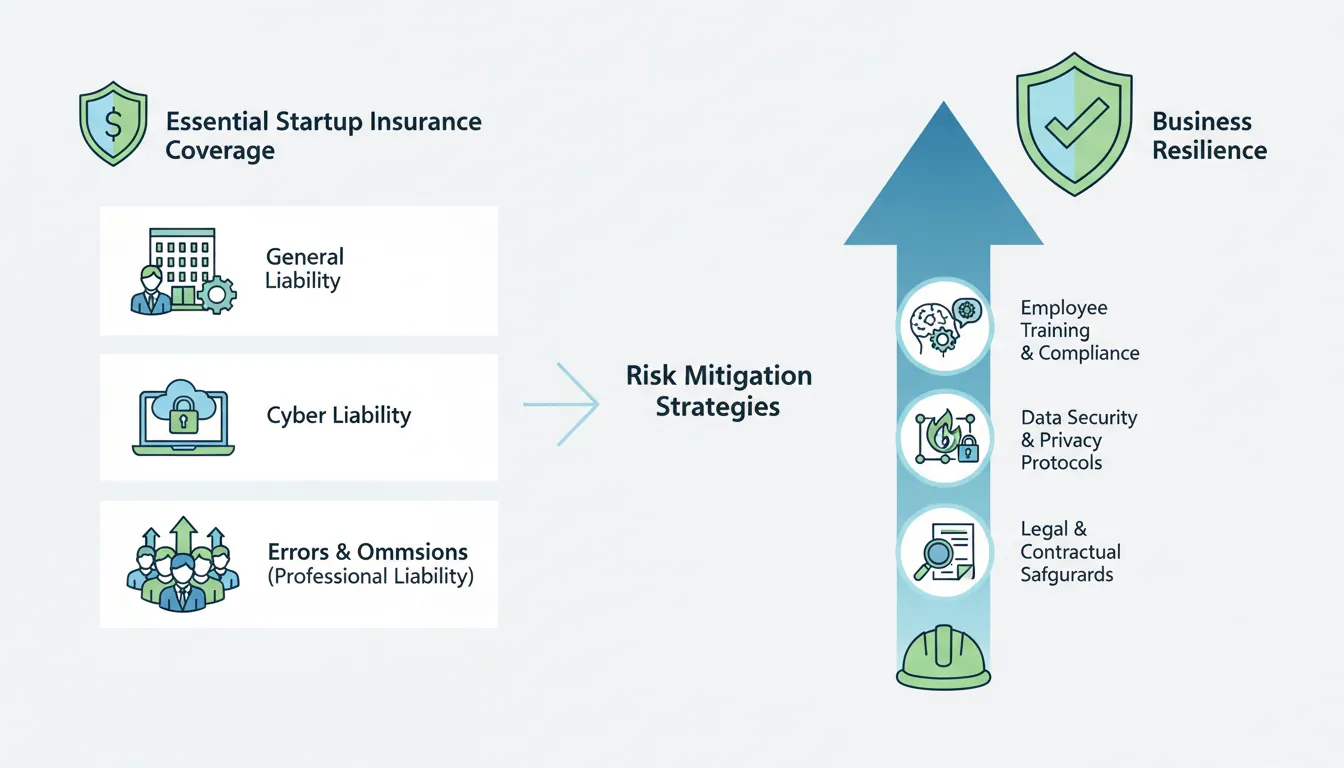
Risk management identifies, assesses, and mitigates threats to your business. Insurance transfers some risks to third parties.
Essential Insurance for Startups
| Insurance Type | What It Covers | When Needed | Typical Cost |
|---|---|---|---|
| General Liability | Third-party injuries, property damage | Day 1 (often required by landlords) | $400-1,500/year |
| D&O (Directors & Officers) | Lawsuits against leadership | When you have investors/board | $2,000-10,000/year |
| E&O (Errors & Omissions) | Professional mistakes, negligence | Service businesses, software | $1,000-5,000/year |
| Cyber Liability | Data breaches, cyber attacks | If you handle customer data | $1,000-7,500/year |
| Workers' Comp | Employee injuries on the job | Required with employees (most states) | Varies by industry/payroll |
| Key Person | Death/disability of critical people | If losing someone would cripple business | Varies |
Legal & Financial Checklist for Startups
Before Launch:
- ☐ Choose and form legal entity
- ☐ File 83(b) election (if applicable)
- ☐ Obtain EIN
- ☐ Open business bank account
- ☐ Draft founder agreements
- ☐ Clear trademark search on company name
Ongoing Compliance:
- ☐ Monthly bookkeeping
- ☐ Quarterly tax estimates
- ☐ Annual state filings
- ☐ Board consent documentation
- ☐ Insurance policy reviews
- ☐ Contract renewals tracking
8. Conclusion & Next Steps
With solid legal and financial foundations, you're ready to make data-driven decisions that guide your startup's strategy and growth.