We use cookies to enhance your browsing experience, serve personalized content, and analyze our traffic.
By clicking "Accept All", you consent to our use of cookies. See our
Privacy Policy
for more information.
Part 8 of 18: Building on negotiation from Part 7, this article dives deep into B2B and enterprise sales—where cycles are longer, stakeholders are many, and deals are larger.
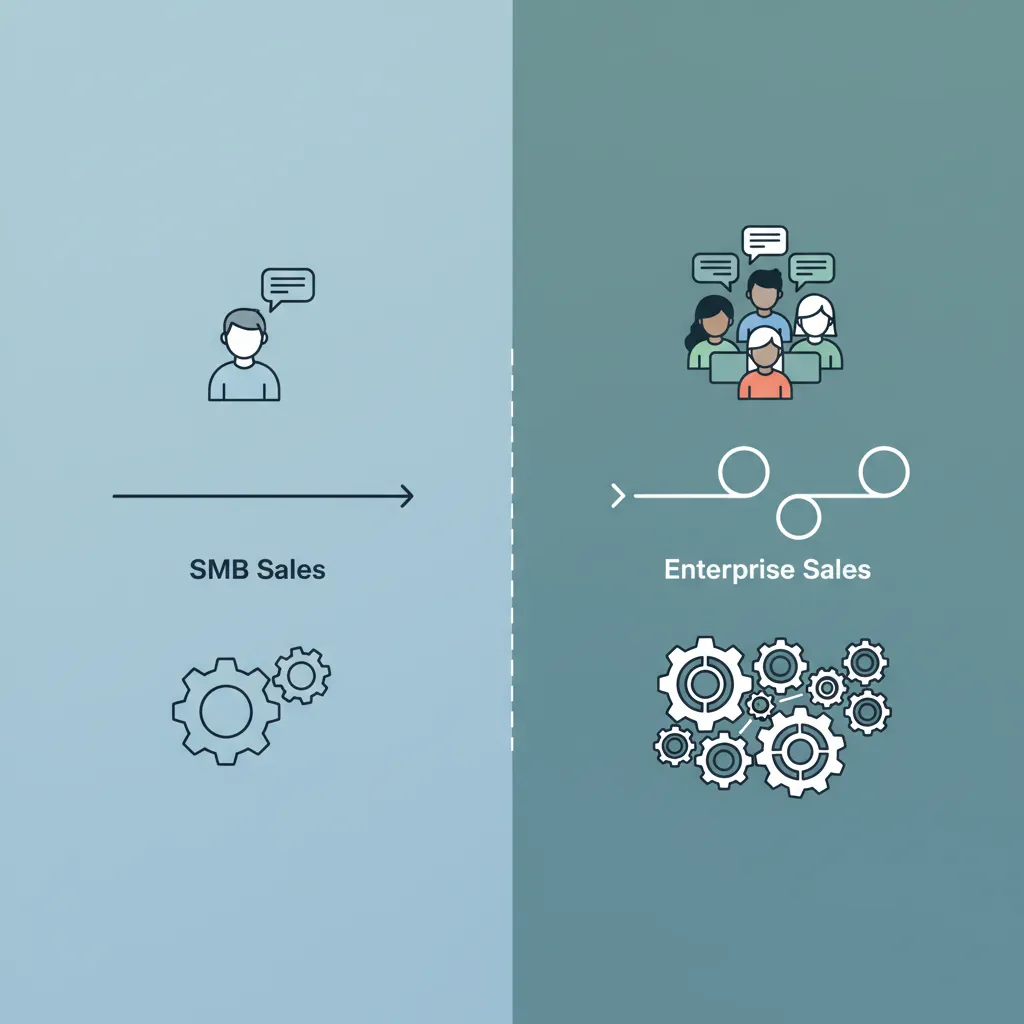
Enterprise sales is fundamentally different from SMB sales. Deals take longer, involve more stakeholders, require deeper relationships, and follow more complex procurement processes. Success requires a strategic, patient approach focused on long-term value creation.
Enterprise sales differs fundamentally from SMB sales in cycle length, stakeholder count, and deal complexity
Enterprise Reality: The average enterprise deal involves 6-10 stakeholders, takes 6-18 months to close, and requires multiple touchpoints across departments. Single-threaded deals rarely close.
Enterprise vs. SMB Selling
Dimension
SMB Sales
Enterprise Sales
Sales Cycle
Days to weeks
6-18 months
Decision Makers
1-2 people (often founder)
6-10+ stakeholders across departments
Procurement
Credit card or simple invoice
Formal RFP, security review, legal, procurement
Deal Size
$1K-$50K ACV
$100K-$1M+ ACV
Relationship
Transaction-focused
Partnership-focused, multi-year
Success Metric
Velocity (deals closed per month)
ACV, land-and-expand, net retention
Managing Long Sales Cycles
Enterprise deals take months because organizations make careful decisions about significant investments. Your job is to maintain momentum while respecting their process.
Long Cycle Management
Enterprise Skill6-18 Months
Momentum Maintenance Tactics
Mutual Action Plan: Create a shared document with milestones, owners, and dates. Update it together in every meeting.
Regular value touchpoints: Share relevant content, introduce them to customers, invite to events
Small wins: Get incremental commitments—intro to another stakeholder, technical review, champion training
Internal champion support: Arm your champion with materials to sell internally
Warning Signs of Stalled Deals
Champion goes dark or becomes unresponsive
New stakeholders keep appearing without resolution
Timeline keeps slipping with vague reasons
Budget discussion never happens or is repeatedly deferred
Buying Committees
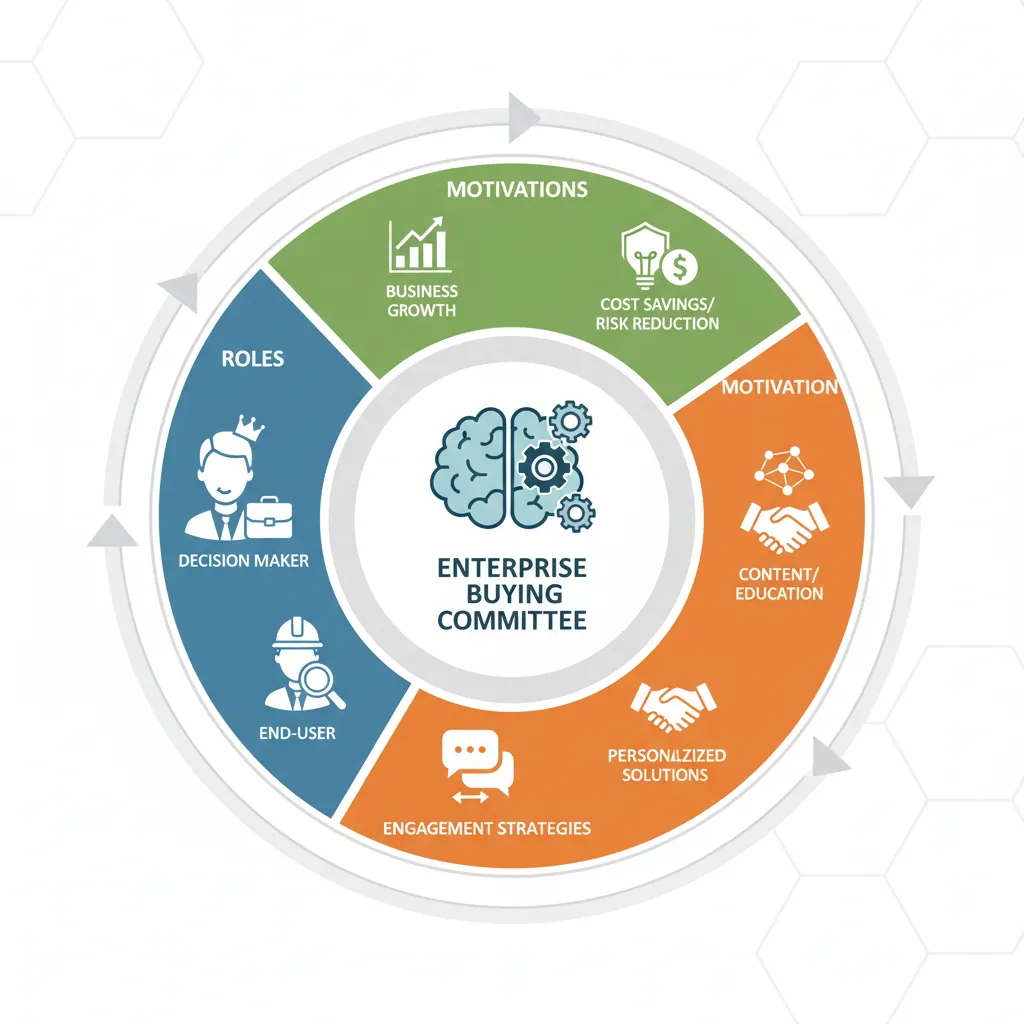
Enterprise purchases involve multiple stakeholders with different roles, motivations, and concerns. Mapping and engaging the full buying committee is essential for closing deals.
Mapping the enterprise buying committee with roles, motivations, and engagement strategies
Buying Committee Roles
Role
Their Focus
How to Engage
Economic Buyer
ROI, budget, business outcomes
Executive briefings, business case, peer references
Champion
Solving their problem, career benefit
Enable them to sell internally, make them look good
Technical Buyer
Integration, security, maintenance
Technical deep dives, architecture reviews, POC
End Users
Ease of use, training, daily impact
Product demos, trial access, reference calls
Procurement
Terms, price, vendor compliance
Standard contracts, discount justification
Legal
Risk, liability, compliance
Security certifications, DPA, standard addendums
Single-Threaded Risk: If your only contact leaves the company or changes roles, your deal dies. Always have relationships with at least 3 stakeholders.
Account-Based Selling
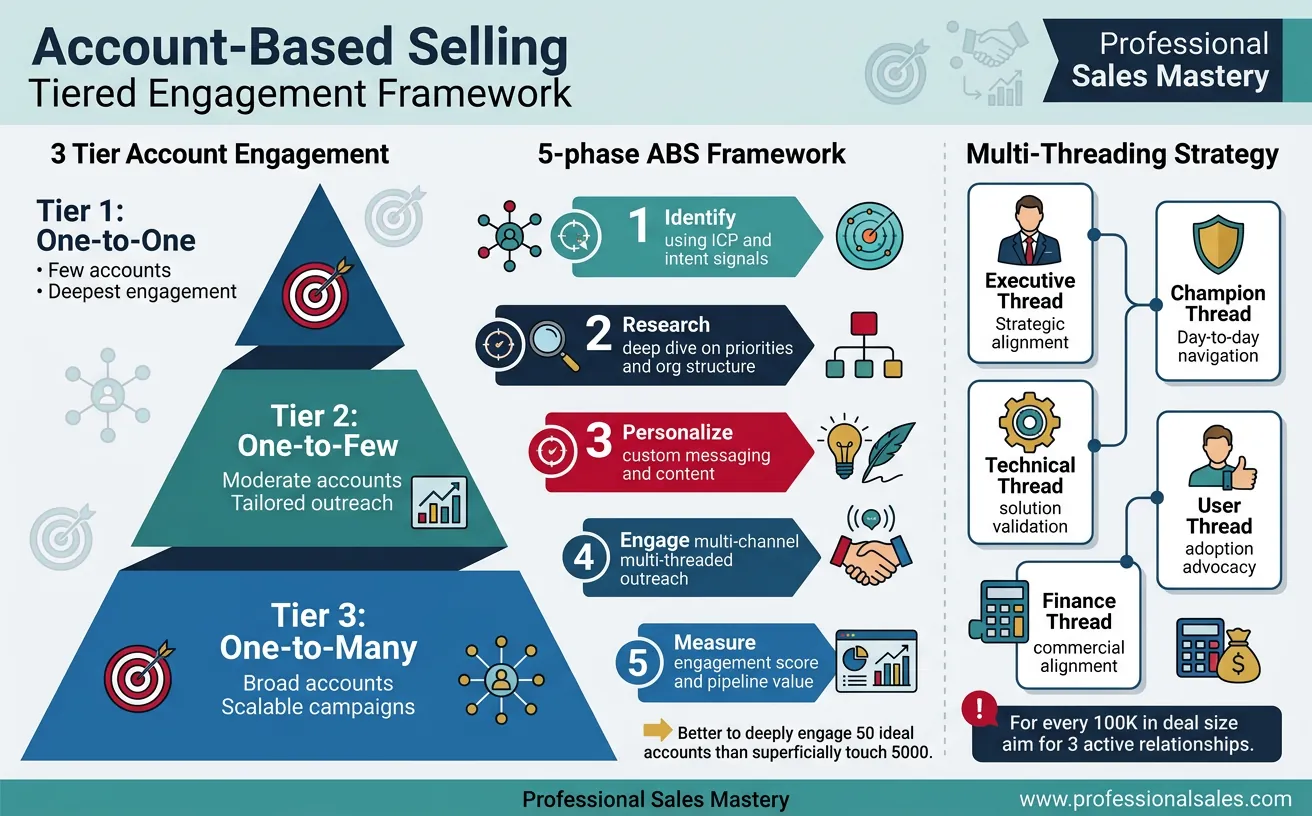
Account-Based Selling (ABS) treats each target account as a "market of one." Instead of spraying generic outreach to thousands, you orchestrate personalized campaigns for high-value accounts with coordinated sales and marketing efforts.
Account-based selling orchestrates personalized campaigns across tiered target accounts
ABS Philosophy: Better to deeply engage 50 ideal accounts than superficially touch 5,000. Quality of engagement trumps quantity of outreach.
ABS Framework
Phase
Activities
Output
1. Identify
Select target accounts using ICP, intent signals, and fit scoring
Deep dive on company priorities, org structure, key stakeholders
Account intelligence brief, stakeholder map
3. Personalize
Create account-specific messaging, content, and value propositions
Custom emails, tailored decks, industry-specific case studies
4. Engage
Multi-channel, multi-threaded outreach coordinated with marketing
Meetings booked, relationships started
5. Measure
Track engagement, pipeline created, deal velocity
Account engagement score, pipeline value
Strategic Account Planning
For your most important accounts, create formal account plans that document everything you know and guide your engagement strategy.
Account Plan Components
Strategic PlanningTier 1 Accounts
Essential Elements
Company overview: Industry, size, revenue, growth trajectory, recent news
Strategic priorities: What does leadership care about? Annual report insights, press releases
Org chart: Visual map of relevant stakeholders with roles and relationships
Pain points: Documented business challenges your solution addresses
Competition: What they use today, competitors in the account
Relationship status: Who do you know? Champions, blockers, neutrals
Engagement history: Past interactions, deals won/lost, product usage
Expansion opportunities: New products, additional users, other departments
Action plan: Specific next steps with owners and dates
Multi-Threading
Multi-threading means building relationships with multiple stakeholders within an account. It de-risks deals and accelerates decisions by creating multiple paths to value.
Multi-Threading Strategy
Thread Type
Purpose
How to Build
Executive Thread
Strategic alignment, budget authority
Executive sponsor introductions, peer-to-peer (your CEO to theirs)
Champion Thread
Day-to-day navigation, internal selling
Deep relationship, regular communication, career support
Technical Thread
Solution validation, integration
Technical deep dives, architecture sessions, sandbox access
User Thread
Adoption advocacy, use case validation
Demos, trials, user community, training
Finance/Procurement Thread
Contract and commercial alignment
Early value justification, standard terms, quick quotes
Multi-Threading Rule: For every $100K in deal size, aim for at least 3 active relationships in the account. A $500K deal should have 5+ relationships across departments.
Complex Deal Management
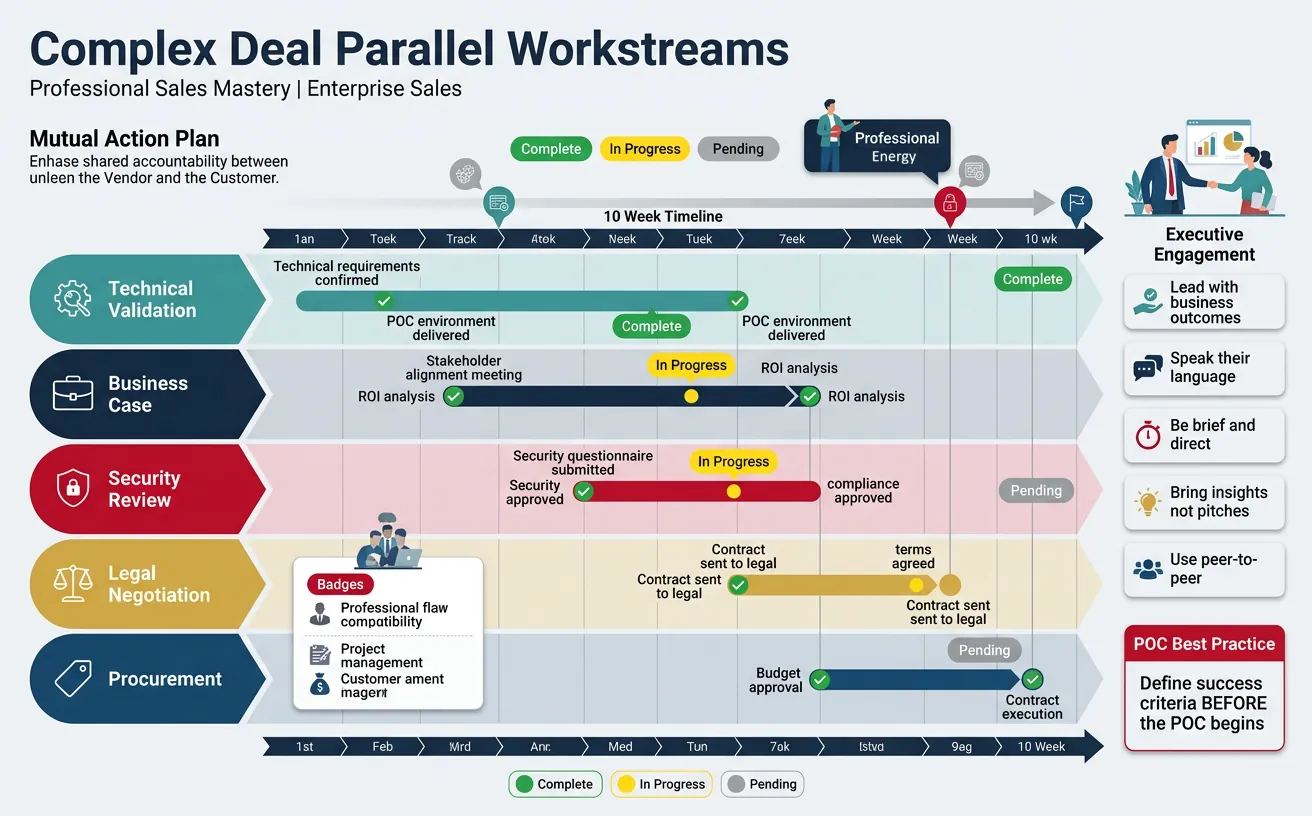
Complex enterprise deals involve multiple workstreams running in parallel: technical validation, business case development, security review, legal negotiation, and procurement. Managing these requires project management skills alongside sales skills.
Complex enterprise deals require managing multiple parallel workstreams from technical validation to procurement
Mutual Action Plan (Close Plan)
A Mutual Action Plan (MAP) is a shared document between you and the customer that outlines every step needed to go live. It creates accountability and surfaces blockers early.
Mutual Action Plan Template
Deal ManagementShared Document
Milestone
Owner
Target Date
Status
Technical requirements confirmed
IT Lead / SE
Week 2
Complete
Security questionnaire submitted
Vendor
Week 3
Complete
POC environment delivered
Vendor
Week 4
In Progress
Stakeholder alignment meeting
Champion
Week 6
Pending
Contract sent to legal
AE
Week 7
Pending
Contract execution
Both
Week 10
Pending
Executive Engagement
C-suite access is the differentiator in enterprise sales. Executives unlock budget, accelerate decisions, and champion deals when they see strategic value.
Executive Selling Principles
Principle
What It Looks Like
Lead with business outcomes
"We help companies like yours increase revenue by 20% while reducing operational costs"
Speak their language
Market share, competitive advantage, investor metrics—not features
Be brief and direct
Executives have 15 minutes, not 60. Get to the point.
Bring insights, not pitches
Share industry trends, competitive intelligence, peer benchmarks
Use peer-to-peer
Have your CEO or CRO engage their CEO. Executives listen to peers.
Proof of Value
Enterprise buyers often require proof before committing budget. POCs and pilots demonstrate value in their environment with their data.
POC Best Practice: Define success criteria BEFORE the POC begins. "What would you need to see to move forward?" Agreement upfront prevents moving goalposts.
POC Success Framework
Scope tightly: Limit to specific use case or department—don't try to prove everything
Define success: Quantifiable metrics agreed in writing before starting
Set timeline: 2-4 weeks max—momentum dies in long POCs
Assign ownership: Customer sponsor responsible for internal resources
Regular check-ins: Weekly calls to address issues and track progress
Document results: Formal report comparing results to success criteria
Commercial readiness: Have contract ready before POC ends
Enterprise Expansion
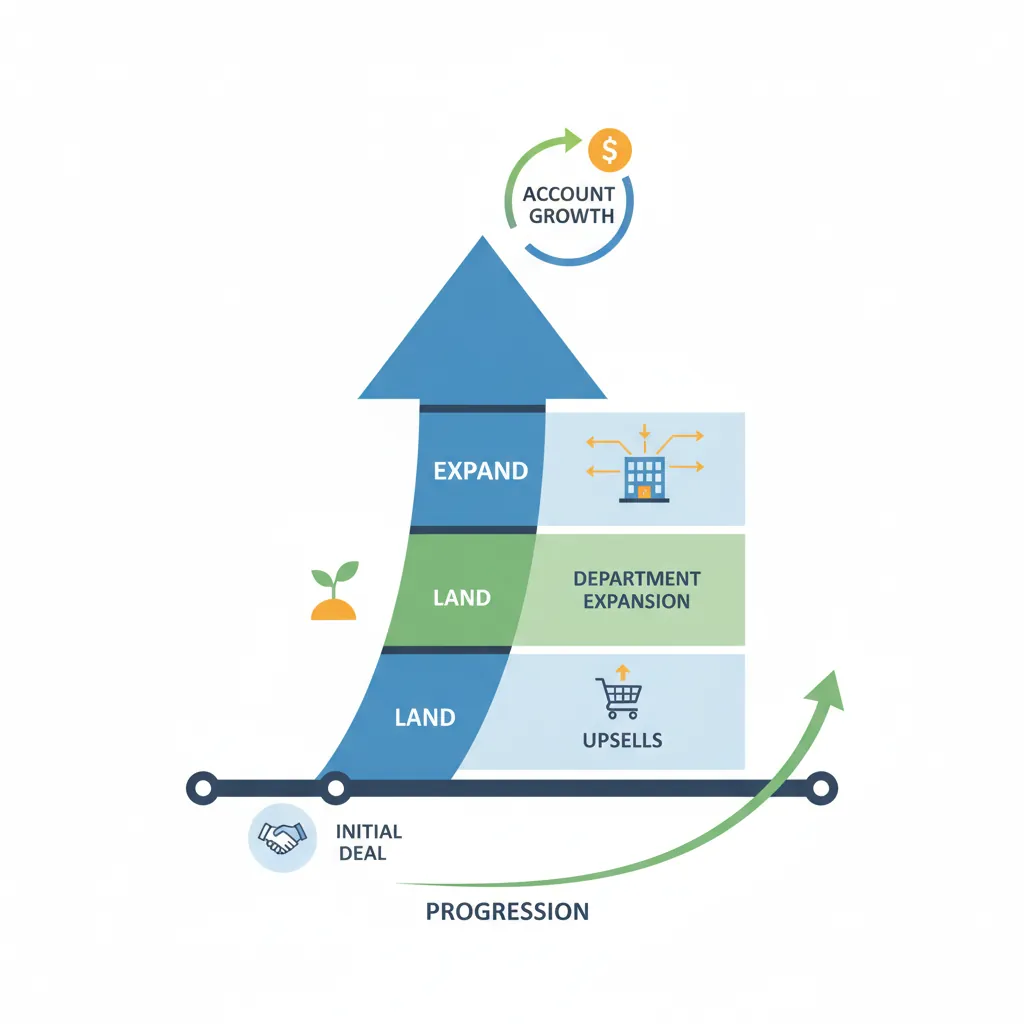
The best enterprise accounts grow over time. "Land and expand" is a deliberate strategy: win an initial deal (land), deliver exceptional value, then grow the relationship through upsells, cross-sells, and expansion to new departments (expand).
The land-and-expand framework drives account growth from initial deal through upsells and department expansion
Net Revenue Retention (NRR): The percentage of revenue retained from existing customers, including expansion. Top SaaS companies achieve 120%+ NRR, meaning growth from existing customers exceeds churn.
Land and Expand Framework
Phase
Strategy
Metrics
Land
Win initial deal—often smaller scope, single department
Initial ACV, time to close, stakeholder count
Adopt
Drive usage and value realization with CS team
DAU/MAU, feature adoption, time to value
Expand
Add users, features, or departments
Expansion ARR, seat growth rate
Renew
Secure multi-year or expanded contracts
Gross retention, NRR, renewal rate
Advocate
Turn happy customers into references
NPS, reference count, case studies
Cross-Sell & Upsell
Cross-selling and upselling are high-margin motions because you've already invested in acquiring the customer. The key is timing and relevance—don't pitch; solve problems.
Expansion Triggers
Signals That Indicate Expansion Opportunity
Account IntelligenceTiming
Usage growth: Approaching license limits or plan caps
New initiatives: Customer announces digital transformation, expansion, M&A
Org changes: New executive hires, department restructuring
Champion promotion: Your champion gets promoted and has new budget
Success milestones: Customer achieves ROI goals, ready for "what's next"
Competitive replacement: Customer complaining about other vendor
Support requests: Feature requests indicating advanced use cases
Quarterly business reviews: Formal touchpoints to discuss roadmap
Upsell vs Cross-Sell
Motion
Definition
Example
Upsell
More of the same product (seats, usage, tier)
Upgrade from Professional to Enterprise tier
Cross-sell
Different product from your portfolio
CRM customer adds marketing automation
Expansion
Same product in new department or geography
Win HR after landing in Finance
Renewal Strategy
Renewals are not automatic—they require intentional management throughout the customer lifecycle. The renewal process should start 90+ days before the contract end date.
Renewal Best Practices
Start early: Begin renewal motion 90-120 days out for enterprise
Know your champion: Ensure renewal sponsor is still in role and engaged
Document value: Compile ROI data from QBRs and success metrics
Identify risk: Watch for declining usage, support escalations, champion departure
Multi-year incentives: Offer discounts for 2-3 year commitments
Bundle expansion: Package renewal with expansion for better terms
Executive touchpoint: Have leadership engage for strategic renewals
Churn Warning Signs: Declining usage, reduced executive engagement, missed QBRs, increased support tickets, competitor conversations. Address these immediately—don't wait for renewal.
Enterprise Account Strategy Canvas
Document your enterprise account strategy for major accounts. Download as Word, Excel, PDF, or PowerPoint.
Draft auto-saved
All data stays in your browser. Nothing is sent to or stored on any server.
Practical Exercises
Exercise 1: Account Tiering
15 minutesABS Strategy
Objective: Practice categorizing accounts for focused effort.
List your top 10 accounts or prospects
Score each on: revenue potential (1-5), strategic fit (1-5), likelihood to close (1-5)