We use cookies to enhance your browsing experience, serve personalized content, and analyze our traffic.
By clicking "Accept All", you consent to our use of cookies. See our
Privacy Policy
for more information.
Part 5 of 18: Building on discovery skills from Part 4, this article teaches you how to transform insights into compelling sales messages and presentations that resonate with any buyer.
Discovery reveals needs—messaging transforms those needs into compelling reasons to buy. Great sales messaging doesn't just inform; it moves buyers emotionally and logically toward action.
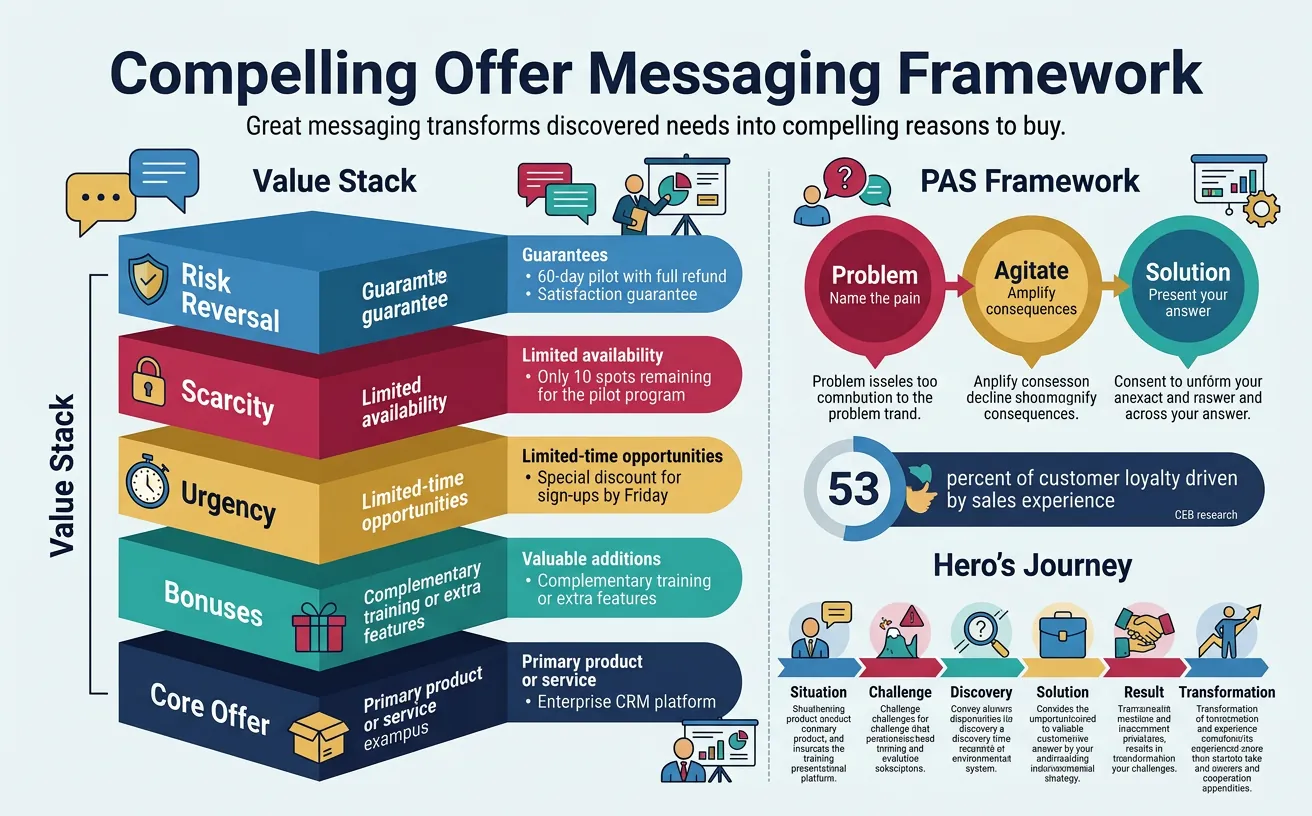
Great messaging transforms discovered needs into compelling reasons to buy
The Messaging Imperative
Corporate Executive Board research shows that 53% of customer loyalty is driven by the sales experience itself—not product, price, or brand. Your messaging and presentation skills directly impact whether deals close.
Offer Construction Framework
A compelling offer packages value, creates urgency, and reduces risk. Use the Value-Stack Framework to build irresistible offers:
The Value Stack
Layer
Component
Example
1. Core Offer
Primary solution
"Enterprise CRM platform with full customization"
2. Bonuses
Added value
"Free migration + 6 months premium support"
3. Urgency
Time-bound incentive
"Implementation team available only through Q1"
4. Scarcity
Limited availability
"Only 3 enterprise onboarding slots this quarter"
5. Risk Reversal
Reduce buyer risk
"60-day pilot with full refund if KPIs aren't met"
The Problem-Agitate-Solution (PAS) Framework
PAS is a classic copywriting formula that works equally well in sales conversations:
Problem: Name the pain clearly. "Most sales teams struggle with pipeline visibility."
Agitate: Amplify the consequences. "Without visibility, deals slip, forecasts miss, and quotas suffer."
Solution: Present your answer. "Our platform gives you real-time deal intelligence so nothing falls through the cracks."
Storytelling in Sales
Stories are the most powerful persuasion tool in your arsenal. The brain processes stories 22x more effectively than facts alone. Every sales conversation should include at least one well-crafted story.
The Hero's Journey in Sales
In every sales story, the customer is the hero—not your company. You are the guide who helps them succeed.
Customer Success Story Structure
Situation: "Acme Corp had a 15-person sales team struggling to hit quota..."
Challenge: "Reps spent 40% of their time on admin instead of selling..."
Discovery: "They realized they needed better lead prioritization..."
Solution: "They implemented our AI scoring system..."
Result: "Within 90 days, quota attainment increased by 35%..."
Transformation: "Now their team focuses only on deals that close."
Pro Tip: Always get permission to share customer stories. Better yet, collect video testimonials.
Emotional Connection Techniques
Facts tell, emotions sell. Use these techniques to create emotional resonance:
Technique
Application
Example
Specificity
Use exact numbers and details
"They saved 12.7 hours per week" (not "lots of time")
Sensory Language
Paint vivid mental pictures
"Imagine walking into your Monday forecast meeting with complete confidence..."
Read the room and adjust your messaging in real-time:
Watch for engagement signals: Nodding, leaning forward, asking questions indicate interest. Expand on those topics.
Note disengagement: Crossed arms, phone checking, short responses mean pivot or ask what's on their mind.
Adjust depth: Executives want 30,000-foot views. Technical buyers want details. Match your depth to the audience.
Handle mixed audiences: When presenting to both executives and end-users, lead with strategic value, then offer to "go deeper" for those interested.
Executive Presentations
Presenting to executives is fundamentally different from presenting to practitioners. Executives prioritize time, outcomes, and risk—they want the "so what," not the "how."
Executives prioritize time, outcomes, and risk over technical details
The Executive Mindset
C-suite buyers think in terms of:
Executive Priorities
Strategic alignment: "Does this fit our 3-year plan?"
Competitive advantage: "Will this help us win against competitors?"
Risk management: "What could go wrong? How do we mitigate?"
Resource efficiency: "Is this the best use of our capital and people?"
Speed to value: "How quickly will we see results?"
The Executive Presentation Framework
Structure executive presentations with the SCQA Framework:
Element
Purpose
Time
S – Situation
Establish shared context—what we all know is true
30 seconds
C – Complication
Introduce the challenge or change—why we're here
1 minute
Q – Question
Frame the decision—what we need to solve
30 seconds
A – Answer
Your recommendation with evidence
5-10 minutes
Executive Presentation Pitfalls
Don't build to the punchline: Start with your recommendation. Executives hate suspense.
Don't read slides: Slides are visual aids, not scripts.
Don't ignore the room: If the CEO interrupts with a question, answer it—don't say "I'll get to that."
Don't over-explain: Be concise. If they want details, they'll ask.
Handling Technical Buyers
Technical buyers (CTOs, architects, IT managers) require a different approach than business buyers. They care about how things work, not just what they do.
Technical Presentation Best Practices
Know your product deeply: Technical buyers will probe for weaknesses. If you don't know, say so and follow up.
Use their language: Speak to APIs, integrations, architecture, compliance standards.
Show, don't tell: Technical buyers want to see working systems, not slides about features.
Address "build vs. buy": They're considering building themselves. Frame your solution as faster, cheaper, and lower-risk than DIY.
Bring your technical experts: Don't bluff through technical questions. Partner with SEs or product experts.
POC and Technical Deep-Dive Structure
Technical Deep-Dive Agenda
Architecture Overview (10 min): How the system is designed—infrastructure, data flow, security model.
Integration Demo (15 min): Live demonstration of connecting to their existing systems.
Scalability Discussion (10 min): How the system handles growth—load testing results, architecture limits.
Q&A / Edge Cases (15 min): Let them ask the hard questions.
Deck Structure for Enterprise Deals
Enterprise sales decks need structure that works for different audiences and meeting formats. Use the Modular Deck Architecture:
The Modular Sales Deck
Build your deck in modules you can mix and match based on audience:
Title + Agenda (1-2 slides): Who you are, what you'll cover.
Problem Module (3-5 slides): Market challenges, trends, pain points.
Solution Module (5-8 slides): How you solve the problem—capabilities overview.
Differentiation Module (2-3 slides): Why you vs. competitors or status quo.
Social Proof Module (2-4 slides): Case studies, logos, testimonials.
Technical Module (5-10 slides): Architecture, security, integrations—for IT audiences.
ROI Module (2-4 slides): Value calculation, payback period—for finance audiences.
Next Steps (1 slide): Clear call to action.
Slide Design Principles
Principle
Application
One idea per slide
Don't cram multiple points. Split into separate slides.
Less text, more visuals
Use charts, icons, and images. Maximum 6 lines of text.
Consistent branding
Use company colors, fonts, and templates consistently.
Action-oriented titles
Titles should be takeaways: "Pipeline visibility increases 40%" not "Features."
Proposal Writing
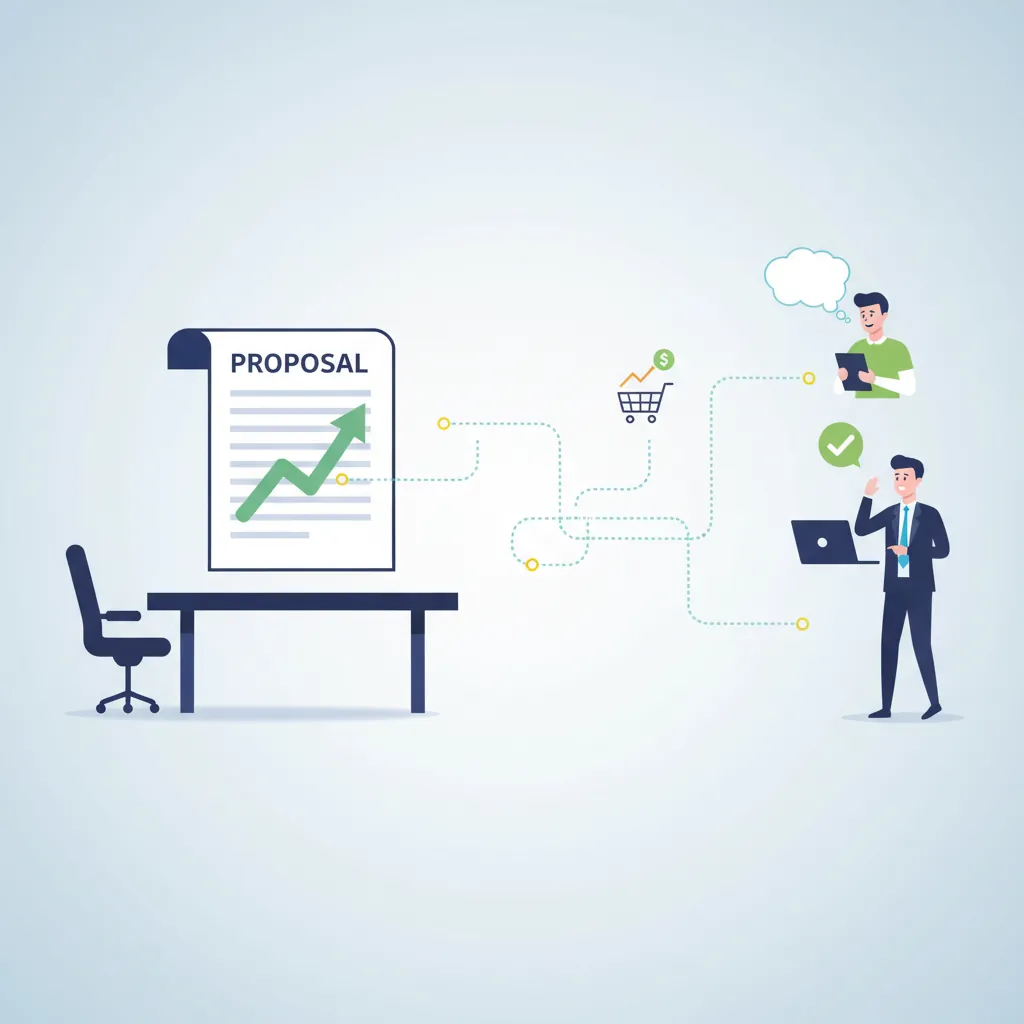
Proposals aren't just documents—they're sales tools that continue selling when you're not in the room. A great proposal synthesizes discovery, addresses objections, and makes saying "yes" easy.
Proposals continue selling when you're not in the room
Proposal Structure Framework
Follow the PESO Model for clear, persuasive proposals:
The PESO Proposal Framework
Section
Purpose
Length
P – Problem
Restate their challenge in their words (from discovery)
1/2 page
E – Evidence
Quantify the cost of the problem and the value of solving it
1 page
S – Solution
How your offering addresses each pain point specifically
2-3 pages
O – Outcome
Expected results, timeline, ROI, and next steps
1-2 pages
Executive Summary Best Practices
The executive summary is often the only page decision-makers read. Make it count:
Keep it to one page: Maximum 300 words. Every word must earn its place.
Lead with their goals: "Your goal is to increase revenue by 20%..." not "Our company was founded in..."
Include the bottom line upfront: Investment, expected ROI, and timeline in the first paragraph.
Use their language: Mirror terminology from discovery conversations.
End with a clear ask: "We recommend proceeding with Phase 1 starting [date]."
Proposal Mistakes to Avoid
Generic templates: Every proposal should feel custom-built for this buyer.
Feature lists without context: Connect every capability to their specific needs.
Hiding the price: Don't bury pricing on page 47. Be direct and confident.
PDF attachments only: Include a live summary email so they can forward easily.
No clear next steps: Always end with a specific action and timeline.
Visual Persuasion
Design matters. A well-designed proposal signals professionalism and attention to detail. A poorly designed one raises doubts.
Visual Design Principles
Principle
Application
White space
Don't cram. Generous margins and spacing improve readability.
Visual hierarchy
Use headings, bold, and color to guide the eye to key points.
Data visualization
Charts and graphs make numbers memorable. Bar vs. pie vs. line for different data types.
Consistent branding
Use your company's colors, fonts, and logo placement consistently.
Imagery with purpose
Use images that reinforce messages—not stock filler.
Data Visualization for Impact
Choosing the Right Chart
Comparison: Bar charts—compare values across categories.
Trend over time: Line charts—show progress or change.
Part-to-whole: Pie charts (sparingly)—show percentages.
Process flow: Timeline or journey map—show sequence.
Pricing Presentation
How you present price matters as much as the price itself. Use anchoring, framing, and optionality to make pricing feel right.
Price Anchoring
Always present value before price. The brain needs context to evaluate cost.
Anchoring Sequence
Restate the problem cost: "You're losing $500K annually to slow lead response..."
Quantify the solution value: "Our solution will recover $350K in the first year..."
Present the investment: "The total investment is $80K..."
Calculate ROI: "That's a 4.4x return and 3-month payback."
Tiered Pricing Options
Offer 3 options to give buyers control and reduce negotiation friction:
Tier
Strategy
When It Wins
Good
Basic offering—meets minimum needs
Budget-constrained buyers; pilots
Better (Recommended)
Standard offering—best value for most
Most buyers—design this as your target
Best
Premium offering—all bells and whistles
Makes "Better" look reasonable; captures upsells
Psychology Note: When presented with three options, most buyers choose the middle. Design your preferred option as "Better."
Personal Brand Selling
B2P (Business-to-Person) selling is the art of selling your expertise, not just your product. Consultants, coaches, advisors, and thought leaders use personal brand selling to command premium prices and attract ideal clients.
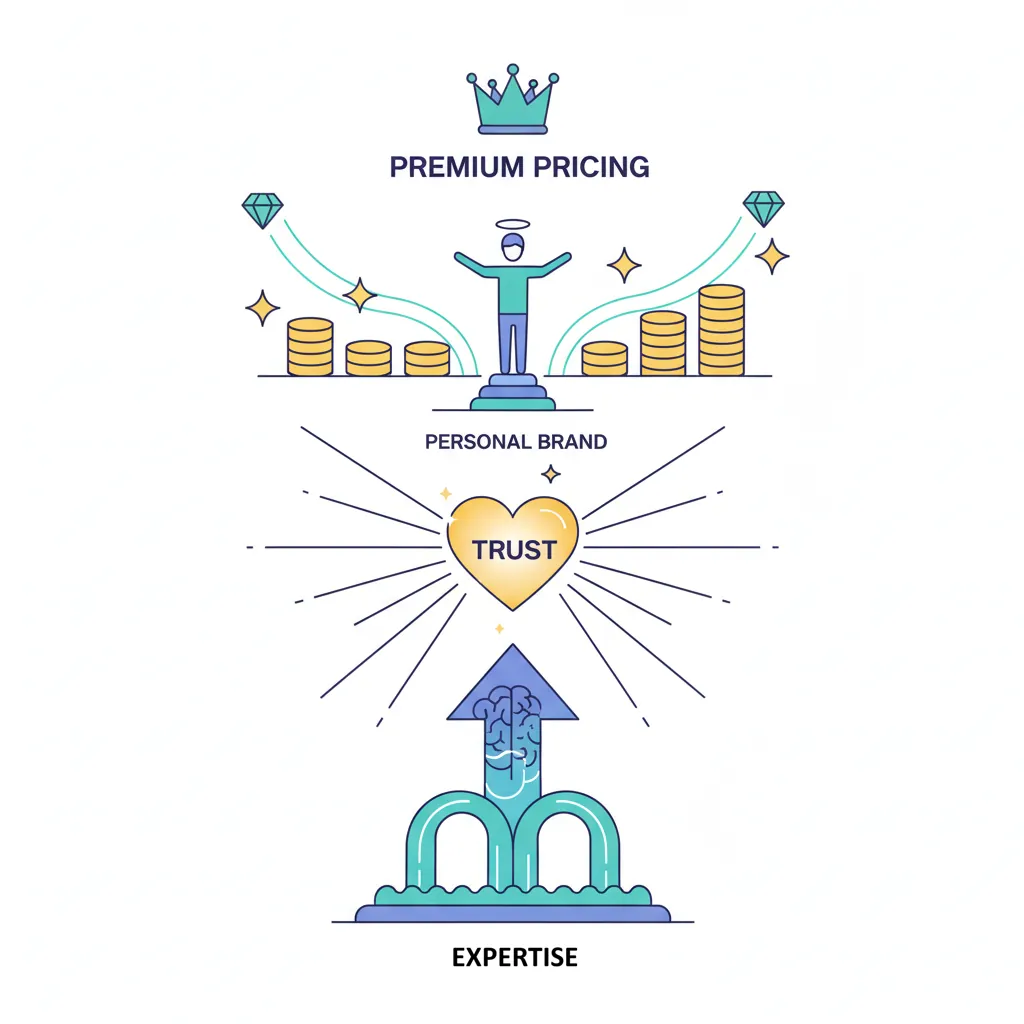
Personal brand selling leverages expertise and trust for premium pricing
The Expert Positioning Formula
Expertise + Trust + Visibility = Premium Pricing Power Buyers pay more for recognized experts because expertise reduces their risk and effort.
B2P Messaging Frameworks
Personal brand selling requires different messaging than product selling. Focus on:
Transformation promise: What result do you help clients achieve?
Methodology credibility: What's your unique process or framework?
Track record: Who have you helped? What outcomes did they get?
Point of view: What do you believe that others don't? What's your unique take?
B2P Positioning Statement Template
I help [specific audience] achieve [specific outcome] through [unique methodology], even if [common objection].
Example: "I help SaaS founders close enterprise deals through my Strategic Discovery System, even if they've never sold to large companies before."
Authority Positioning
Authority isn't claimed—it's demonstrated. Build authority through consistent evidence of expertise.
Authority Building Pillars
Pillar
Tactics
Examples
Content
Publish valuable insights regularly
Blog posts, LinkedIn articles, YouTube videos, podcasts
Speaking
Present at events and conferences
Keynotes, webinars, panel discussions, workshops
Social Proof
Showcase results and endorsements
Case studies, testimonials, client logos, certifications
Associations
Align with respected brands and people
Guest posts, co-marketed content, advisory roles
Building Your Expert Persona
Specialize: Experts are experts in something specific. "Sales consultant" is generic. "SaaS enterprise deal consultant" is specific.
Create frameworks: Name your methodology. "The Strategic Discovery System" is more memorable and ownable than "my approach."
Be consistent: Show up regularly. Inconsistent presence undermines authority.
Take a stand: Experts have opinions. Safe, generic advice doesn't differentiate.
Content-Based Selling
Content-based selling uses valuable content to attract, nurture, and convert buyers—without cold outreach or hard pitches.
The Content Sales Funnel
Content to Client Journey
Awareness Content: Blog posts, social content—attracts strangers with valuable insights.
Lead Magnets: Guides, templates, assessments—captures contact info in exchange for value.
Nurture Sequences: Email series, drip campaigns—builds trust over time.
Conversion Events: Webinars, workshops, strategy calls—moves to sales conversation.
Sales Conversation: Apply discovery and consultative selling techniques.
Webinar Selling Framework
Webinars are powerful for B2P selling—they demonstrate expertise and create natural conversion opportunities.
The 60-Minute Webinar Structure
Hook (5 min): Open with a compelling promise—what will attendees gain?
Credibility (3 min): Brief background—why should they listen to you?
Teaching (35 min): Deliver massive value—your best content, not surface-level.
Transition (2 min): Bridge from content to offer—"For those who want to go deeper..."
Offer (10 min): Present your product/service with clear benefits and social proof.
Q&A (5 min): Handle objections live—great for addressing concerns.
Educational Sales Approaches
Lead with value: Give away your best ideas. Premium buyers pay for implementation, not information.
Position, don't pitch: Let content demonstrate expertise. The sales conversation becomes "how can we work together?" not "here's why you should buy."
Build a waitlist: Create scarcity with limited spots or cohorts.
Use case studies: Show transformation through client stories. Data + narrative = compelling proof.
Sales Presentation Planner Canvas
Plan your next sales presentation or proposal with this structured canvas. Export as Word, Excel, PDF, or PowerPoint to prepare and share with your team.
Presentation Planner Canvas
Fill in the details for your upcoming presentation. All fields help structure your messaging.
Draft auto-saved
All data stays in your browser. Nothing is sent to or stored on any server.
Exercises
Exercise 1: Hero's Journey Story30 minutes
Objective: Craft a customer success story using the Hero's Journey framework.
Choose a successful customer or client outcome.
Map their journey: Ordinary World → Call to Adventure → Challenges → Solution → Transformation
Write a 2-minute narrative version (roughly 300 words).
Practice telling it naturally—don't read, tell.
Test on a colleague and gather feedback.
Success Criteria: The story creates an emotional connection and clearly demonstrates the transformation.
Exercise 2: Persona Message Tailoring45 minutes
Objective: Create persona-specific messaging for the same product/service.
Choose a product or service you sell.
Write 3 different opening pitches (30 seconds each) for:
Economic Buyer (CFO/CEO)
Technical Buyer (IT Lead/Engineer)
End User (Daily operator)
Use the Persona-Specific Messaging Matrix to guide focus, language, and proof points.
Record yourself delivering each and compare.
Success Criteria: Each pitch feels distinctly tailored to that persona's priorities.
Exercise 3: PESO Proposal Outline60 minutes
Objective: Create a proposal outline using the PESO framework.
Choose a real or hypothetical deal opportunity.
Draft the executive summary (1 page max, 300 words).
Outline each PESO section with bullet points:
P – Problem: Their challenge in their words
E – Evidence: Cost of problem, value of solving
S – Solution: How you address each pain point
O – Outcome: Expected results, timeline, ROI, next steps
Create a tiered pricing section (Good/Better/Best).
Success Criteria: A colleague unfamiliar with the deal can understand the opportunity from your outline alone.
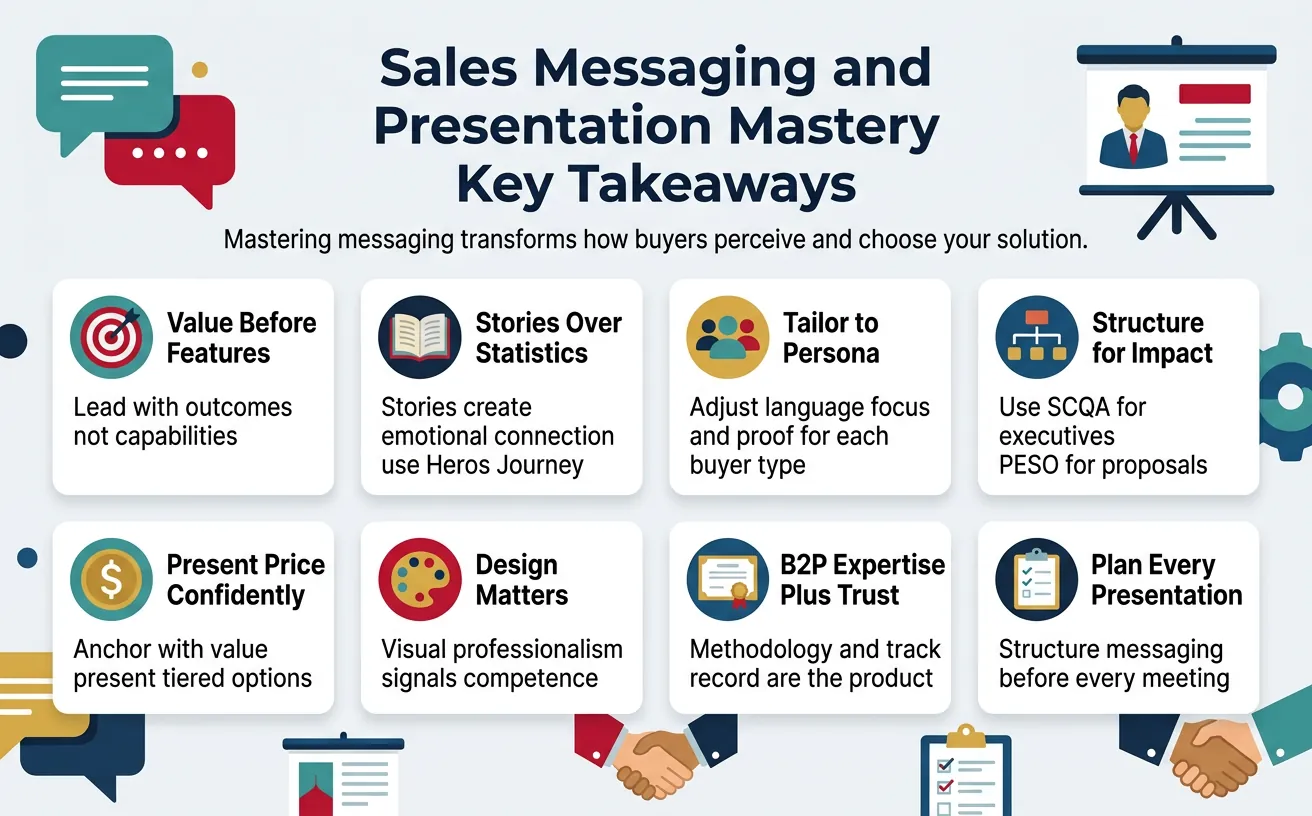
Key Takeaways
Value before features: Always lead with the outcome, not the capability. Buyers care about results.
Stories over statistics: Stories create emotional connection. Use the Hero's Journey to make customers the hero.
Tailor to persona: Different buyers have different priorities. Adjust language, focus, and proof for each persona type.
Structure for impact: Use frameworks like SCQA for executives, PESO for proposals, and Modular Deck Architecture for flexibility.
Present price confidently: Anchor with value, present tiered options, and treat pricing as the natural conclusion—not a reveal.
Design matters: Visual professionalism signals competence. Use white space, hierarchy, and data visualization intentionally.
B2P = Expertise + Trust: For consultants and experts, your methodology and track record are the product. Build authority systematically.
Plan every presentation: Use the Sales Presentation Planner to structure messaging before every significant meeting.
Mastering messaging transforms how buyers perceive and choose your solution