We use cookies to enhance your browsing experience, serve personalized content, and analyze our traffic.
By clicking "Accept All", you consent to our use of cookies. See our
Privacy Policy
for more information.
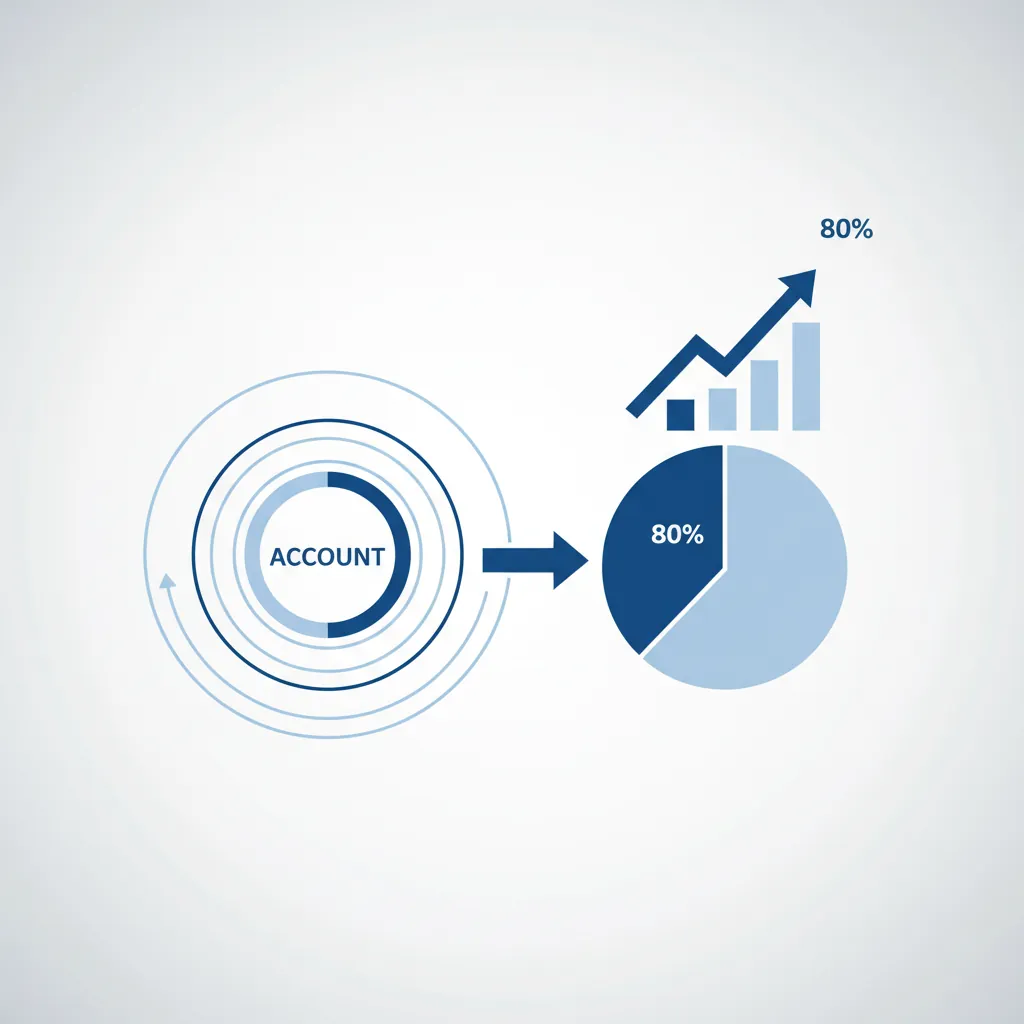
Strategic Account Management (SAM) is the discipline of systematically growing your most valuable customer relationships. While new business hunting drives growth, strategic accounts often represent 80% of revenue from 20% of customers.
Figure 1: Strategic account management — systematically growing the 20% of accounts that drive 80% of revenue
Key Account Identification Criteria
Criteria
Description
Weight
Current Revenue
Annual spend with your company
High
Growth Potential
Whitespace for expansion (products, departments, regions)
High
Strategic Value
Logo value, reference potential, industry influence
Medium
Relationship Depth
Executive access, multi-threaded connections
Medium
Alignment
Product-market fit, cultural compatibility
Medium
Account Tiering
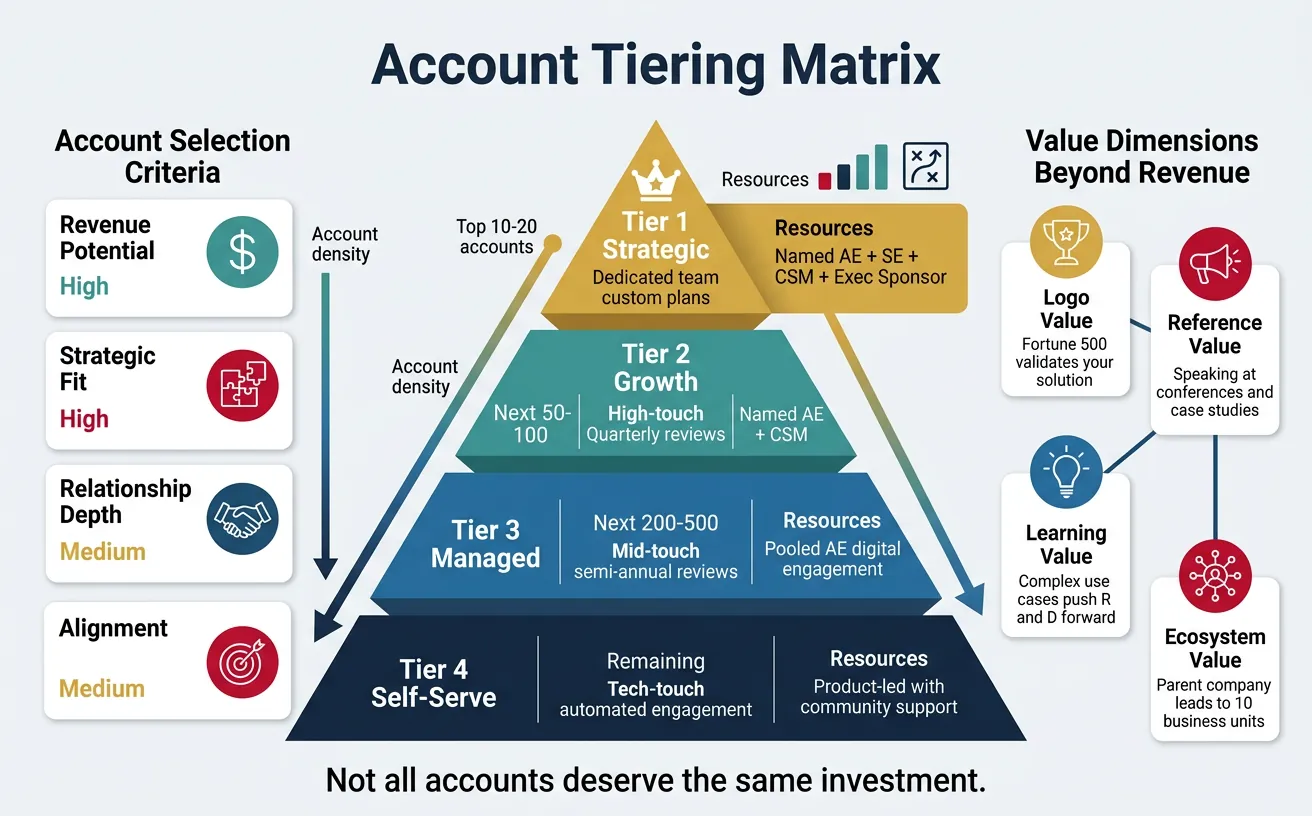
Not all accounts deserve the same investment. Tiering ensures your best resources go to your highest-potential accounts.
Figure 2: Account tiering matrix — allocating best resources to highest-potential accounts
Account Tier Model
Tier
Accounts
Touch Model
Resources
Tier 1 (Strategic)
Top 10-20
Dedicated team, custom plans
Named AE, SE, CSM, Exec Sponsor
Tier 2 (Growth)
Next 50-100
High-touch, quarterly reviews
Named AE + CSM
Tier 3 (Managed)
Next 200-500
Mid-touch, semi-annual reviews
Pooled AE, digital engagement
Tier 4 (Self-Serve)
Remaining
Tech-touch, automated
Product-led, community support
Strategic Value
Revenue is only one dimension of account value. Consider the full strategic picture.
Value Dimensions Beyond Revenue
Value Type
Description
Example
Logo Value
Brand recognition in target market
Fortune 500 company validates your solution
Reference Value
Willingness to advocate publicly
Speaking at conferences, case studies
Learning Value
Drives product innovation
Complex use cases push R&D forward
Ecosystem Value
Opens doors to partners/subsidiaries
Parent company leads to 10 business units
Account Planning
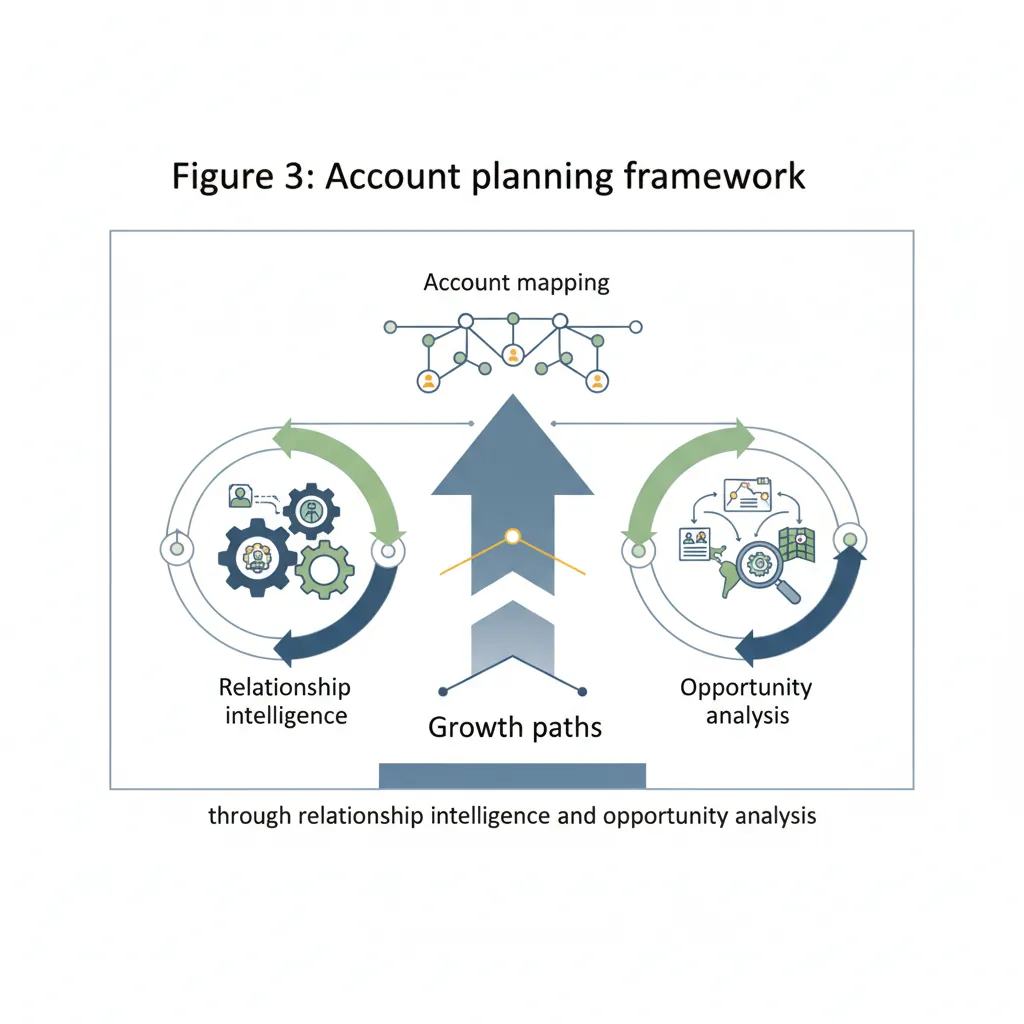
A strategic account plan is a living document that maps your path to growth within a key account. It combines relationship intelligence, opportunity mapping, and action plans.
Figure 3: Account planning framework — mapping growth paths through relationship intelligence and opportunity analysis
Account Plan Components
Component
Purpose
Update Frequency
Company Overview
Industry, size, strategy, challenges
Annual
Relationship Map
Key contacts, influence, sentiment
Monthly
Current Footprint
Products, departments, usage, satisfaction
Quarterly
Whitespace Analysis
Unexplored products, regions, departments
Quarterly
Competitive Landscape
Alternative vendors, switching risk
Semi-annual
Action Plan
90-day priorities, owners, deadlines
Quarterly
Stakeholder Mapping
In large accounts, decisions involve multiple stakeholders. Map them systematically to understand influence dynamics.
Stakeholder Role Matrix
Role
Description
Engagement Strategy
Economic Buyer
Controls budget, final approval authority
ROI-focused, executive-to-exec engagement
Champion
Internal advocate, sells on your behalf
Arm with business case, give credit publicly
Technical Evaluator
Assesses technical fit, can veto
Deep demos, POCs, technical documentation
End User
Daily user of your product
Training, feedback loops, adoption support
Blocker
Opposes your solution (may back competitor)
Understand concerns, address or go around
Multi-Threading Rule
If you have fewer than 3 relationships at a strategic account, you're at risk. Single-threaded accounts are one departure away from churning. Aim for 5+ active contacts across multiple departments and levels.
Executive Business Reviews
Quarterly Business Reviews (QBRs) are your opportunity to demonstrate value, align on strategy, and uncover growth opportunities.
QBR Structure
Value Delivered (40%): Metrics, ROI, success stories from the past quarter
Roadmap Alignment (20%): Product updates relevant to their strategy
Strategic Discussion (25%): Their evolving priorities, how you can help
Action Plan (15%): Joint commitments for next quarter
Common QBR Mistake
Don't use QBRs as product demos or feature update sessions. Focus on their business outcomes, not your product capabilities. Ask more than you tell.
Expansion Strategies
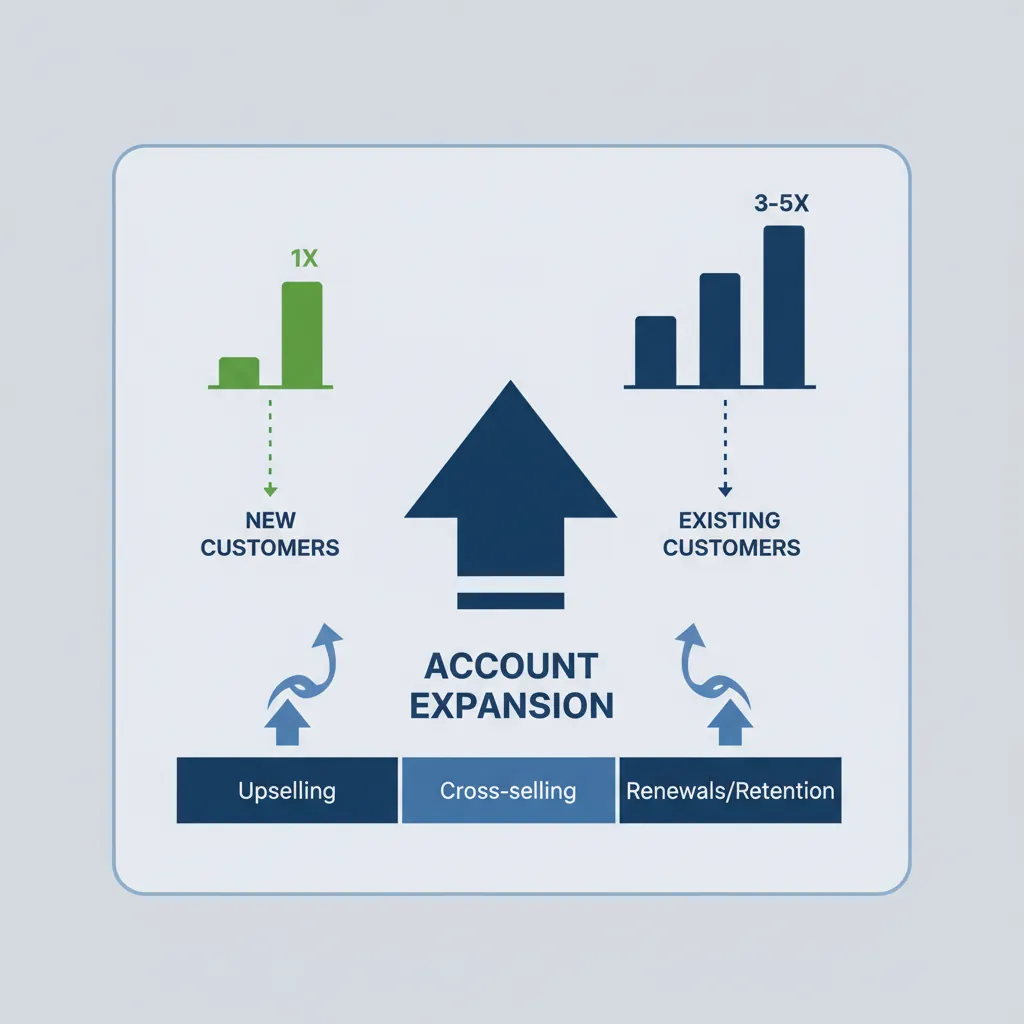
Expansion revenue from existing customers is 3-5x more efficient than new logo acquisition. Strategic expansion requires identifying whitespace and executing systematically.
Figure 4: Account expansion strategies — 3-5x more efficient revenue growth through existing customers
Expansion Types
Type
Definition
Trigger Signals
Upsell
More of the same (seats, volume, tier)
Usage approaching limits, new hires, team growth
Cross-Sell
Different products/modules
Adjacent pain points mentioned, new initiatives
Departmental Expansion
Same product, new business unit
Success story travels, internal referrals
Geographic Expansion
Same product, new regions
International rollouts, acquisitions
Land & Expand
Start with a focused use case in one team, prove value, then expand systematically across the organization.
Land & Expand Playbook
Phase
Goal
Activities
Timeline
Land
Win first deal in target account
Focused POC, solve one clear problem
Month 1-3
Adopt
Drive usage and satisfaction
Onboarding, training, success metrics
Month 3-6
Expand
Grow within the team/department
Add users, features, use cases
Month 6-12
Proliferate
Spread to other business units
Internal case study, exec sponsorship
Month 12-18
Enterprise
Enterprise-wide agreement
ELA/MSA negotiation, strategic partnership
Month 18+
Customer Success Integration
In strategic accounts, Customer Success and Sales must operate as a unified team. CS owns adoption and health; Sales owns expansion revenue.
CS-Sales Handoff Model
Responsibility
Customer Success
Account Executive
Onboarding
Leads implementation and training
Ensures business outcomes align
Health Monitoring
Usage data, NPS, support tickets
Relationship health, exec sentiment
Expansion Signals
Identifies and surfaces to AE
Qualifies and runs expansion deals
Renewals
Drives value realization for renewal
Negotiates commercial terms
Escalations
Technical and product issues
Commercial and relationship issues
LTV Maximization
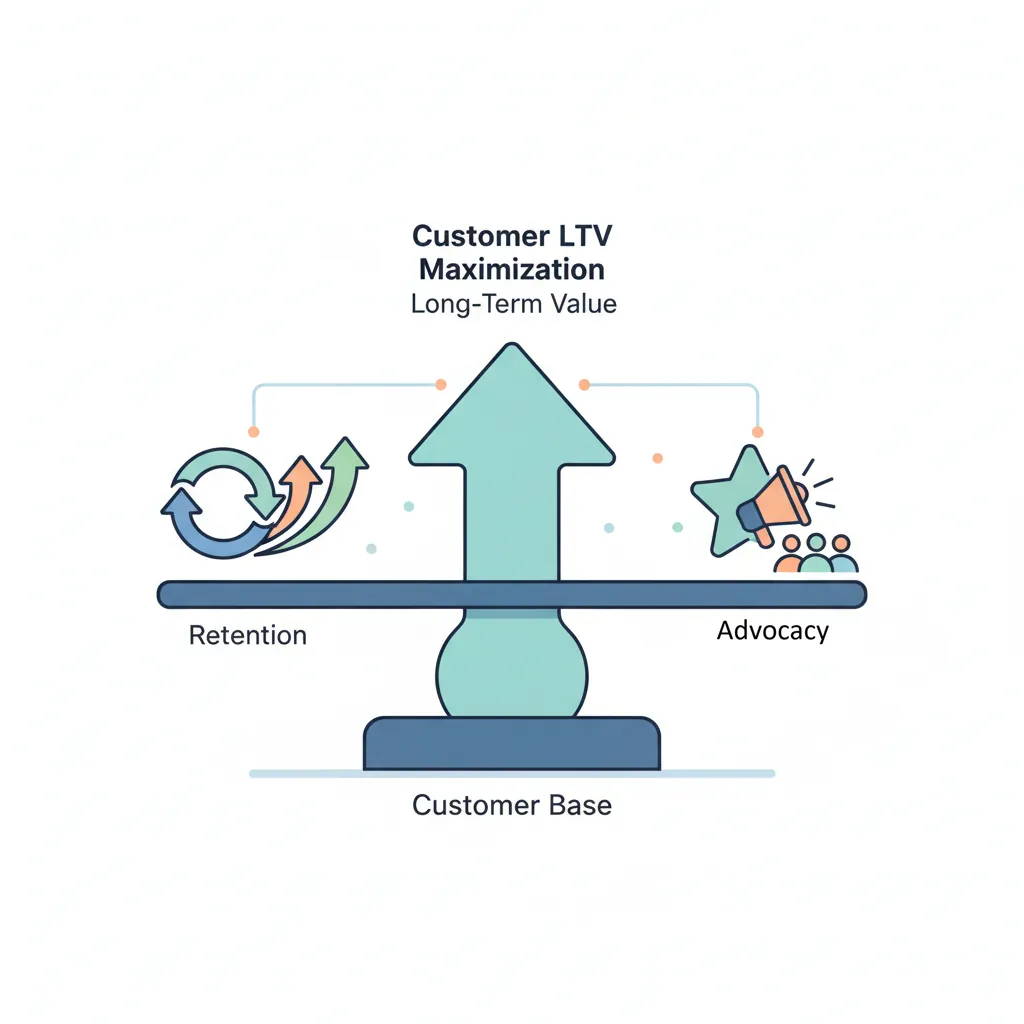
Customer Lifetime Value (LTV) is the total revenue a customer generates over the relationship. Maximizing LTV requires balancing retention, expansion, and advocacy.
Figure 5: Customer LTV maximization — balancing retention, expansion, and advocacy for long-term value
LTV Levers
Lever
Impact
Actions
Retention Rate
5% improvement = 25-95% profit increase
Health scoring, proactive outreach, value delivery
Expansion Revenue
Net Revenue Retention >120%
Cross-sell, upsell, price increases
Contract Length
Multi-year reduces churn risk
Incentivize annual/multi-year over monthly
Referral Revenue
$0 CAC on referred customers
Advocacy programs, referral incentives
Churn Prevention
Churn doesn't happen suddenly—there are always early warning signals. Build a system to detect and respond to risk.
Churn Risk Indicators
Signal
Risk Level
Intervention
Usage declining 20%+ month-over-month
Medium
CSM outreach, adoption review
Champion departure
High
Immediate exec engagement, new champion building
Support ticket volume spike
Medium
Escalate to engineering, provide dedicated support
Competitor evaluation detected
High
Executive intervention, value reinforcement, save offer
No engagement with product updates
Low
Personalized update briefing, training session
Advocacy Programs
Your best customers can become your most powerful sales channel. Structure advocacy to be mutually beneficial.
Advocacy Ladder
Level
Ask
Value to Customer
1. Reference
Speak with prospects in similar industries
Networking, industry visibility
2. Case Study
Published success story
PR exposure, brand awareness
3. Speaking
Conference presentation or webinar
Thought leadership, personal brand
4. Advisory Board
Product direction input
Influence product roadmap, early access
5. Co-Innovation
Joint development or research
Custom solution, competitive advantage
Strategic Account Canvas
Document your strategic account plan and growth strategy:
Strategic Account Canvas
Build your account plan. Download as Word, Excel, PDF, or PowerPoint.
Draft auto-saved
All data stays in your browser. Nothing is sent to or stored on any server.
Exercises
Exercise 145 min
Account Tiering Exercise
List your top 20 accounts. Score each on current revenue, growth potential, strategic value, and relationship depth (1-5 scale). Assign tiers based on total score. Compare your result to current resource allocation—are you investing in the right accounts?
Exercise 230 min
Stakeholder Map
For your top 3 strategic accounts, map all known stakeholders by role (Economic Buyer, Champion, Technical Evaluator, End User, Blocker). Identify gaps—where are you single-threaded? Create 3 specific actions to deepen relationships.
Exercise 320 min
Churn Risk Assessment
Review your top 10 accounts for churn risk indicators. Score each signal (usage trends, champion status, support tickets, competitive threats, engagement). Rank accounts by total risk and create an intervention plan for the top 3 at-risk accounts.
Key Takeaways
80/20 rule applies: ~20% of accounts generate ~80% of revenue—invest accordingly
Account tiering: Match investment level (dedicated team, pooled, self-serve) to account potential
Value beyond revenue: Logo value, references, learning, and ecosystem expansion matter
Living account plans: Update relationship maps monthly, action plans quarterly
Multi-threading: 5+ contacts across levels and departments protects against churn
Expansion > acquisition: Growing existing accounts is 3-5x more efficient than new logos
Land & expand systematically: Land → Adopt → Expand → Proliferate → Enterprise
Build an advocacy ladder: Progress customers from references to case studies to advisory boards