We use cookies to enhance your browsing experience, serve personalized content, and analyze our traffic.
By clicking "Accept All", you consent to our use of cookies. See our
Privacy Policy
for more information.
Consumer sales operates differently from B2B. Decisions are faster, emotions drive purchases, and the customer journey is often compressed into minutes rather than months. Understanding the psychology behind consumer buying is the foundation of B2C success.
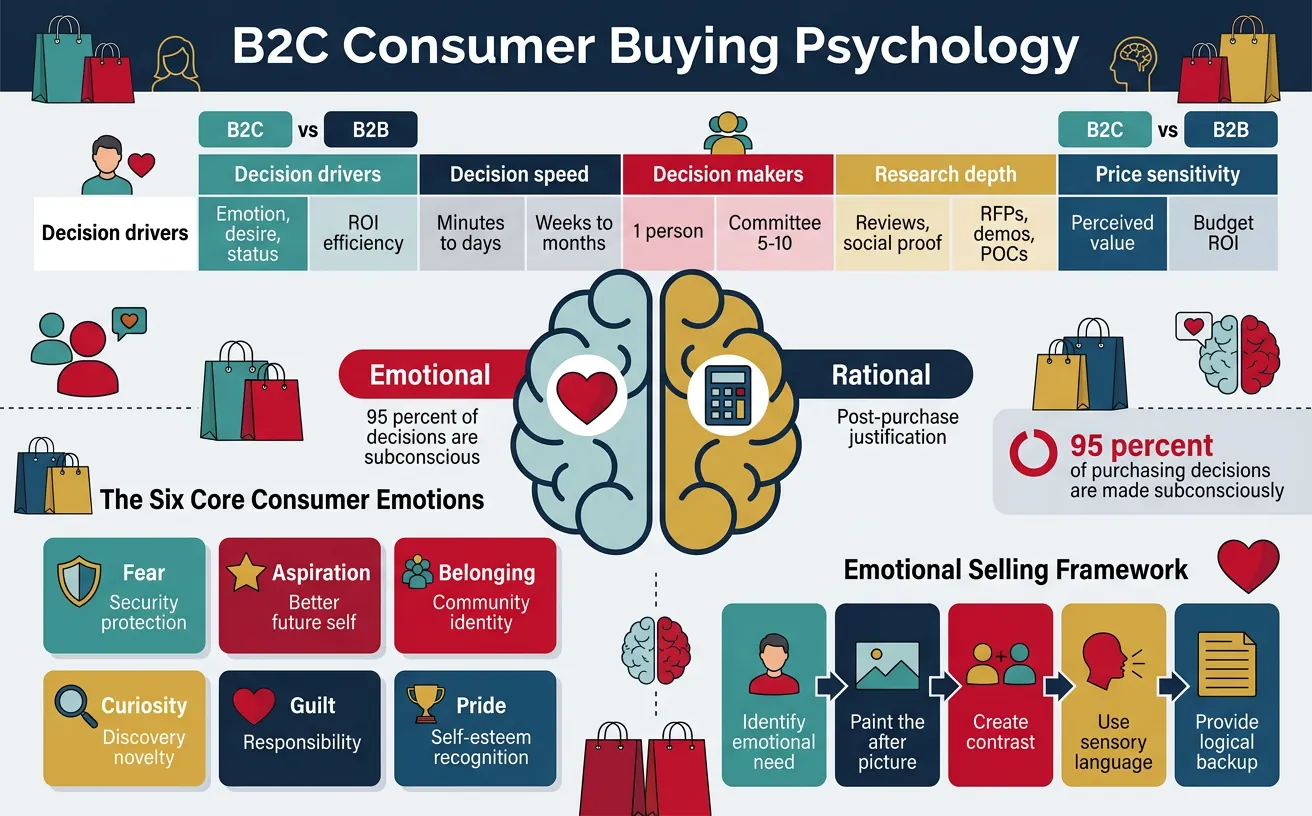
Figure 1: Consumer buying psychology — emotional triggers drive 95% of purchasing decisions before rational justification
B2C Reality: 95% of purchasing decisions are made subconsciously. Consumers buy on emotion, then rationalize with logic. Your job is to connect emotionally first.
Consumer vs. Business Buyer
Dimension
B2C Consumer
B2B Buyer
Decision drivers
Emotion, desire, status, convenience
ROI, efficiency, risk reduction
Decision speed
Minutes to days
Weeks to months
Decision makers
Usually 1 person (or family)
Committee (5-10 people)
Research depth
Reviews, social proof, quick comparison
RFPs, demos, POCs, references
Price sensitivity
High perceived value reduces sensitivity
Budget and ROI driven
Emotional Selling
Emotional selling connects products to the feelings customers want to experience. Features inform, but emotions persuade.
Core Emotional Drivers
The Six Core Consumer Emotions
Consumer PsychologyEmotional Triggers
Emotion
What It Drives
Copy Example
Fear
Security, protection, avoiding loss
"Don't let another opportunity pass you by"
Aspiration
Better future self, status, achievement
"Become the person you've always wanted to be"
Belonging
Community, identity, group membership
"Join 500,000+ members who've transformed"
Curiosity
Discovery, learning, novelty
"Discover the secret top performers know"
Guilt
Responsibility, doing right by others
"Give your family the protection they deserve"
Pride
Self-esteem, accomplishment, recognition
"Show the world what you're capable of"
Emotional Selling Framework
Identify the emotional need: What feeling does the customer really want?
Paint the after picture: Help them visualize life with the benefit
Create contrast: Show the gap between current state and desired state
Use sensory language: Make them feel, see, hear the experience
Provide logical backup: Give features as rationalization for emotional choice
Impulse Buying
Impulse purchases happen when emotional desire overcomes rational hesitation. Great retailers design environments and experiences that create these moments.
Impulse Purchase Triggers
Trigger
How It Works
Example
Scarcity
Limited availability creates urgency
"Only 3 left in stock"
Social proof
Others' behavior validates choice
"12 people bought this in the last hour"
Time pressure
Deadline forces quick decision
"Sale ends at midnight"
Free shipping
Removes pain of extra cost
"Free shipping on orders over $50"
Discovery
Finding unexpected item
End caps, recommendation engines
Easy checkout
Removing friction to buy
One-click purchase, Apple Pay
Ethical Note: Creating urgency is effective, but false scarcity or fake countdown timers destroy trust. Use real triggers, not manufactured manipulation.
Retail Techniques
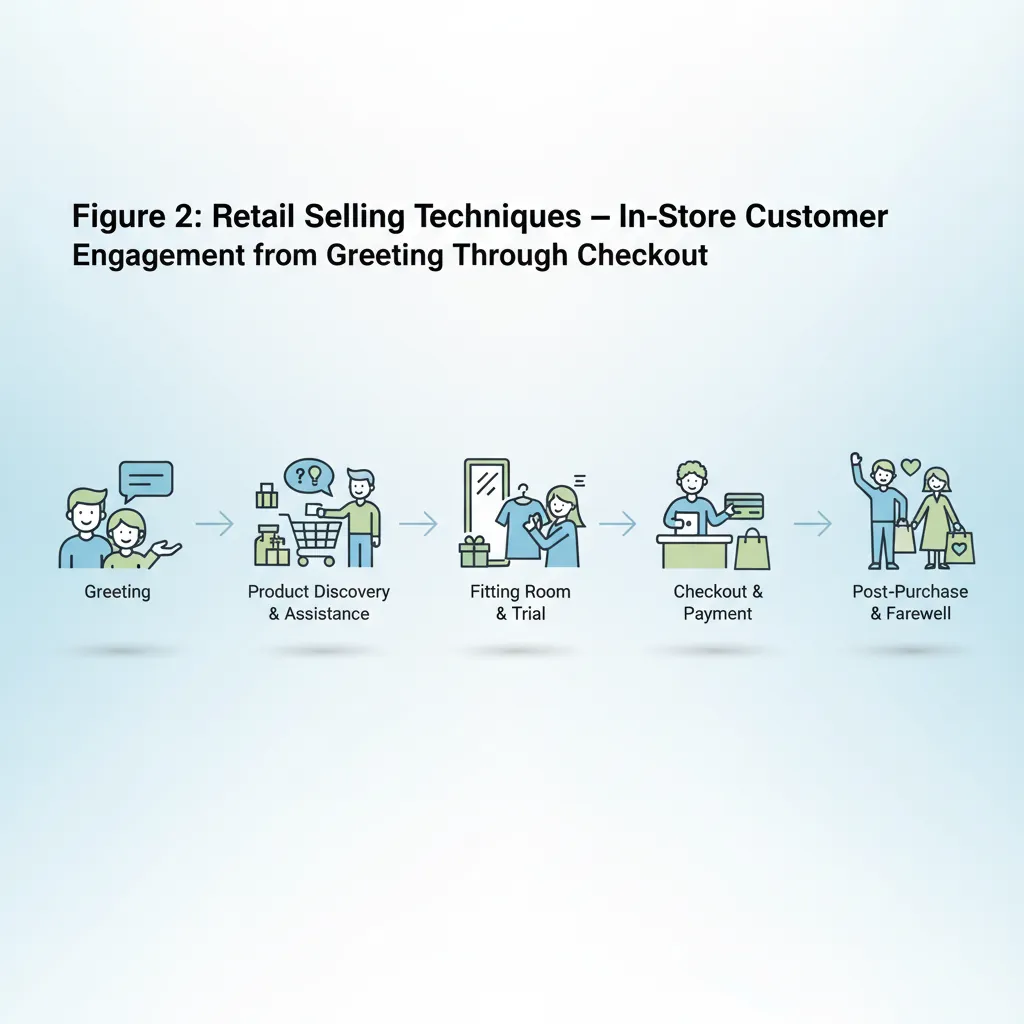
In-store retail selling combines interpersonal skills with environmental design. Every interaction, from greeting to checkout, is an opportunity to create value and increase sales.
Figure 2: Retail selling techniques — in-store customer engagement from greeting through checkout
The Retail Sales Process
Stage
Goal
Techniques
1. Approach
Engage without pressure
Open-ended greeting, give space, read body language
2. Discover
Understand true needs
"What brings you in today?", "Is this for a special occasion?"
3. Present
Show relevant options
Limit to 3 choices, start high, explain benefits not features
Thank, invite return, collect contact for marketing
Upselling & Cross-Selling
Increasing average order value (AOV) through strategic recommendations. The best upsells genuinely help the customer get more value.
Upselling vs. Cross-Selling
Increasing Basket Size
Revenue GrowthAOV Optimization
Technique
Definition
Example
Upsell
Upgrade to better version of same product
"The Pro model has 2x storage for just $50 more"
Cross-sell
Add complementary products
"Would you like a case and screen protector?"
Bundle
Package multiple items at discount
"Get all three for 20% off"
Add-on
Small additional purchase at checkout
"Add gift wrapping for $3?"
Effective Upselling Principles
Relevance: Only suggest items that genuinely enhance the purchase
Timing: Upsell after they've decided, not before
Value framing: Show the benefit relative to cost ("just $20 more for double the warranty")
Rule of 25%: Suggest add-ons at 25% or less of main purchase price
One ask: Pick the single best recommendation, not multiple pitches
Customer Experience
Experience is now the differentiator in retail. When products are commoditized, the experience of buying becomes the product.
Experience Economy: Customers will pay more and return more often for exceptional experiences. A 5% increase in customer retention can increase profits by 25-95%.
Customer Experience Elements
Element
What It Means
How to Optimize
Store atmosphere
Physical environment signals brand
Lighting, music, scent, layout that match brand identity
Staff interactions
Human touches matter most
Training, empowerment, genuine helpfulness
Wait time
Time is the scarcest resource
Mobile checkout, queue management, self-service
Personalization
Feeling recognized and valued
Loyalty programs, purchase history, preferences
Problem resolution
How you handle issues defines you
Empower frontline to resolve, exceed expectations
D2C Models
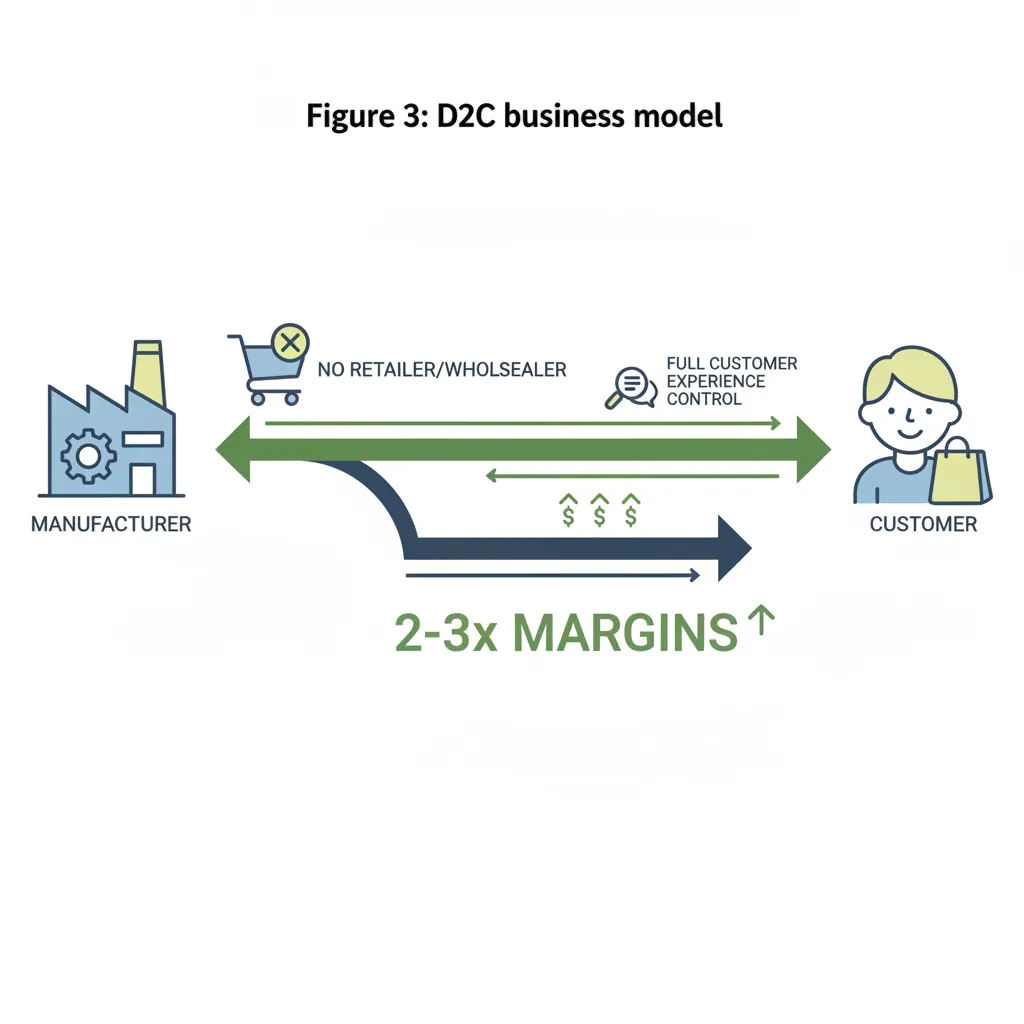
Direct-to-Consumer (D2C) brands bypass traditional retail to sell directly through owned channels. This model offers higher margins, direct customer relationships, and complete control over brand experience.
Figure 3: D2C business model — direct channels deliver 2-3x margins with full customer experience control
D2C Advantage: By cutting out middlemen, D2C brands capture 2-3x the margin while controlling the entire customer experience from first touch to delivery.
D2C Business Models
Model
How It Works
Examples
Pure D2C
100% direct sales via owned website
Warby Parker (early), Glossier
Hybrid D2C
D2C + selective retail partnerships
Allbirds, Casper
Subscription D2C
Recurring delivery of products
Dollar Shave Club, HelloFresh
Marketplace D2C
D2C with Amazon/platform presence
Many brands using Amazon as channel
E-Commerce Sales
Online selling requires converting visitors into buyers without the benefit of physical interaction. Every element of the digital experience must be optimized for conversion.
E-Commerce Conversion Funnel
The Path to Purchase
E-CommerceConversion Funnel
Stage
Metric
Optimization Levers
Traffic
Sessions, unique visitors
SEO, paid ads, social, influencers
Browse
Pages per session, time on site
Navigation, search, recommendations
Add to cart
Add-to-cart rate
Product pages, reviews, imagery
Checkout
Cart abandonment rate
Guest checkout, payment options, shipping clarity
Purchase
Conversion rate
Trust signals, urgency, one-click buy
Repeat
Repeat purchase rate
Email, retargeting, loyalty programs
Cart Abandonment Tactics
Exit-intent popups: Offer discount when cursor moves to leave
Abandoned cart emails: Sequence of 3 emails over 72 hours
Retargeting ads: Show the exact products they viewed/carted
Free shipping thresholds: "Add $15 more for free shipping"
Subscription Models
Subscriptions create predictable recurring revenue. The economics are powerful: acquiring a customer once generates years of revenue.
Subscription Success Metrics
Metric
Definition
Good Benchmark
MRR
Monthly Recurring Revenue
Growing 15%+ MoM (early stage)
Churn rate
% of subscribers who cancel monthly
<5% monthly for consumer
LTV
Lifetime Value per customer
LTV > 3x CAC
Payback period
Months to recoup CAC
<12 months
Subscriber stickiness
Average months before churn
8+ months
Subscription Retention: The battle is won in retention, not acquisition. A 5% improvement in retention can double lifetime value. Focus on onboarding, engagement, and value delivery.
High-Volume Sales
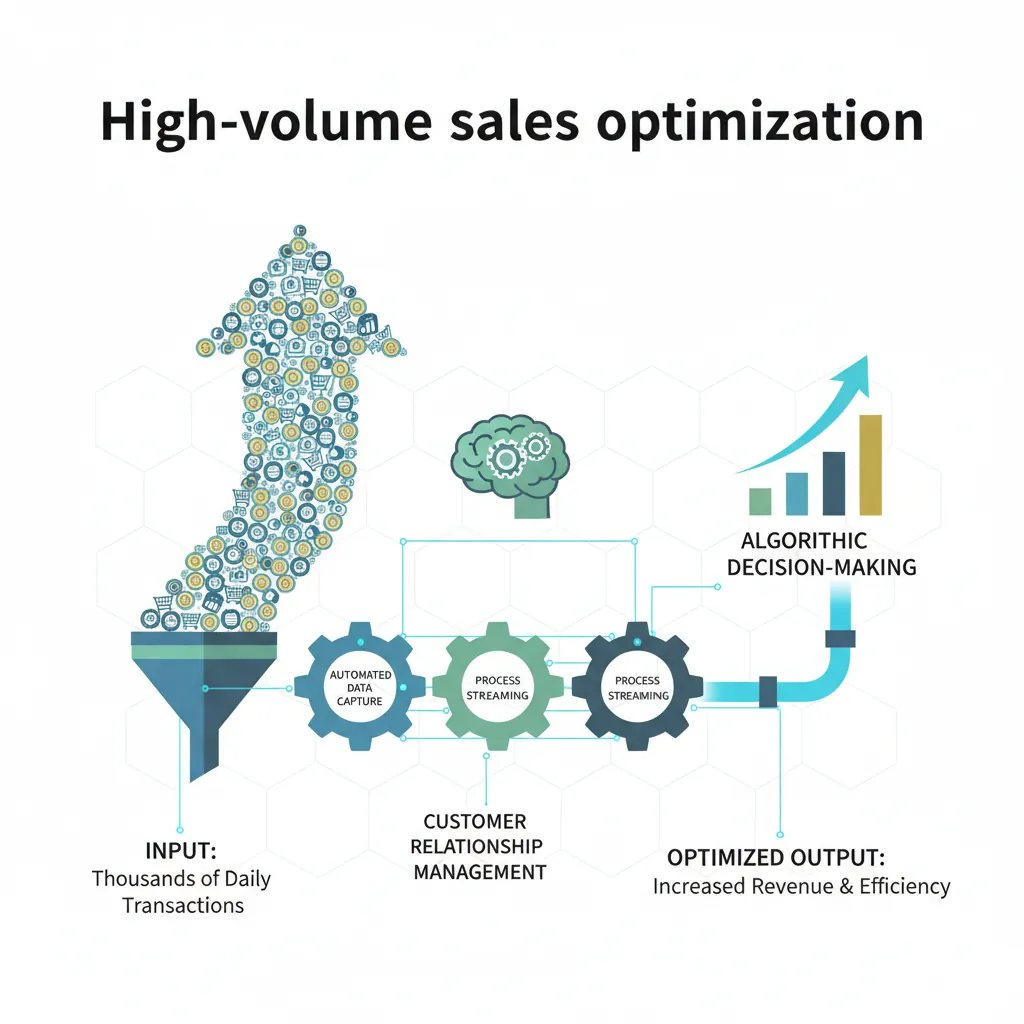
High-volume retail and e-commerce requires systematizing every aspect of the sales process. When you're handling thousands of transactions daily, small optimization creates massive impact.
Figure 4: High-volume sales optimization — systematizing processes for thousands of daily transactions
Sales Automation
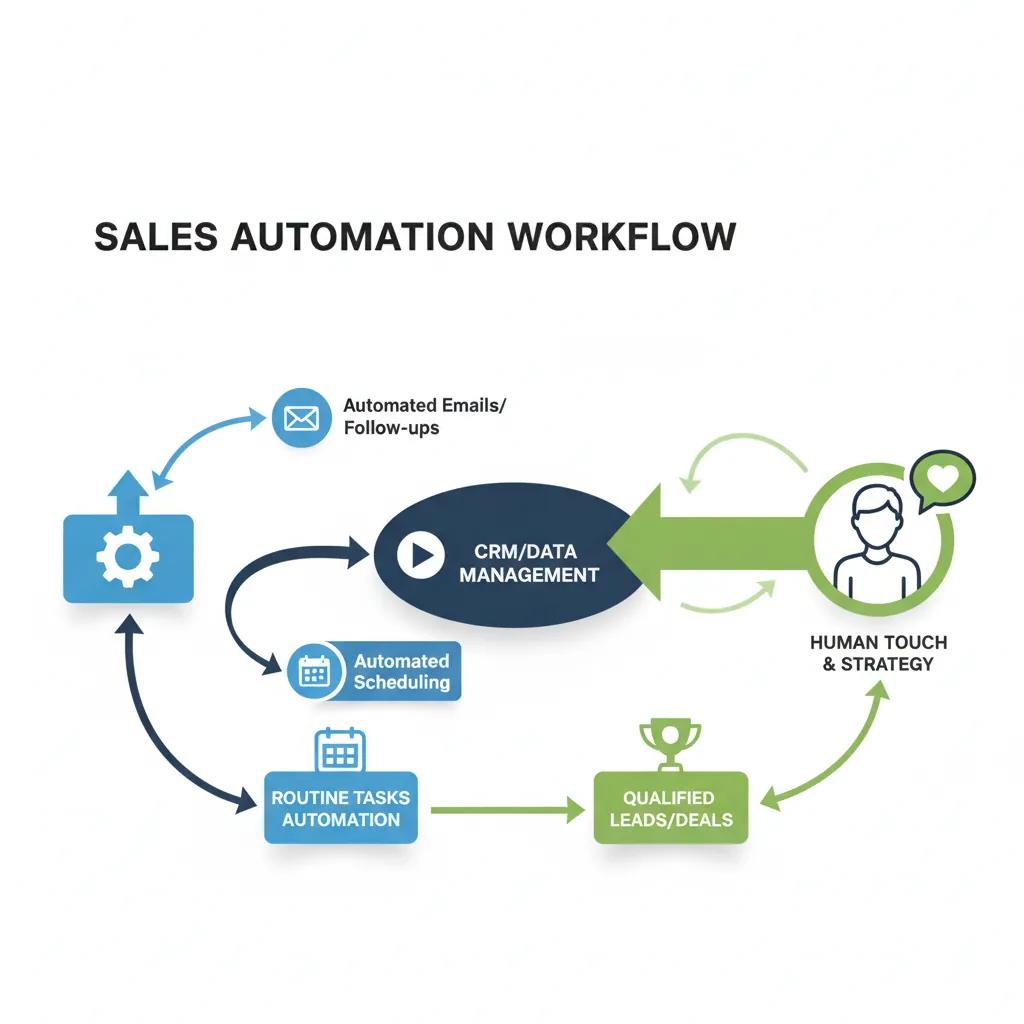
Automation removes manual tasks so teams can focus on high-value activities. The goal isn't to replace human touch, but to deploy it where it matters most.
Figure 5: Sales automation workflow — deploying human touch where it matters most while automating routine tasks
What to Automate in B2C
Process
Automation Approach
Tools
Welcome sequences
Triggered email series for new subscribers
Klaviyo, Mailchimp, Postscript
Abandoned cart
Multi-touch email/SMS sequence
Shopify Flow, Attentive
Review requests
Post-purchase automation
Yotpo, Judge.me, Stamped
Reorder reminders
Time-based triggers for replenishment
Recharge, Bold Subscriptions
Customer service
Chatbots for common questions
Gorgias, Zendesk, Intercom
Loyalty programs
Automatic point tracking and rewards
Smile.io, LoyaltyLion
Conversion Optimization
Conversion Rate Optimization (CRO) is the systematic process of increasing the percentage of visitors who take desired actions. Small wins compound into significant revenue gains.
The Power of 1%: If your site converts at 2% and you improve to 3%, that's a 50% increase in sales with the same traffic. CRO is often the highest-ROI investment.
A/B Testing Framework
The CRO Testing Process
OptimizationA/B Testing
Analyze: Use analytics to find friction points (high bounce, low add-to-cart)
Hypothesize: "Changing X will improve Y because Z"
Design: Create variant with single variable change
Test: Run A/B test with statistical significance (usually 2-4 weeks)
Analyze: Review results, document learnings
Implement or iterate: Roll out winner or test next hypothesis
High-Impact CRO Elements
Headlines: Test value propositions and emotional vs. rational copy
CTAs: Button color, copy, placement, size
Social proof: Reviews, testimonials, trust badges
Product images: Lifestyle vs. product, 360° views, video