We use cookies to enhance your browsing experience, serve personalized content, and analyze our traffic.
By clicking "Accept All", you consent to our use of cookies. See our
Privacy Policy
for more information.
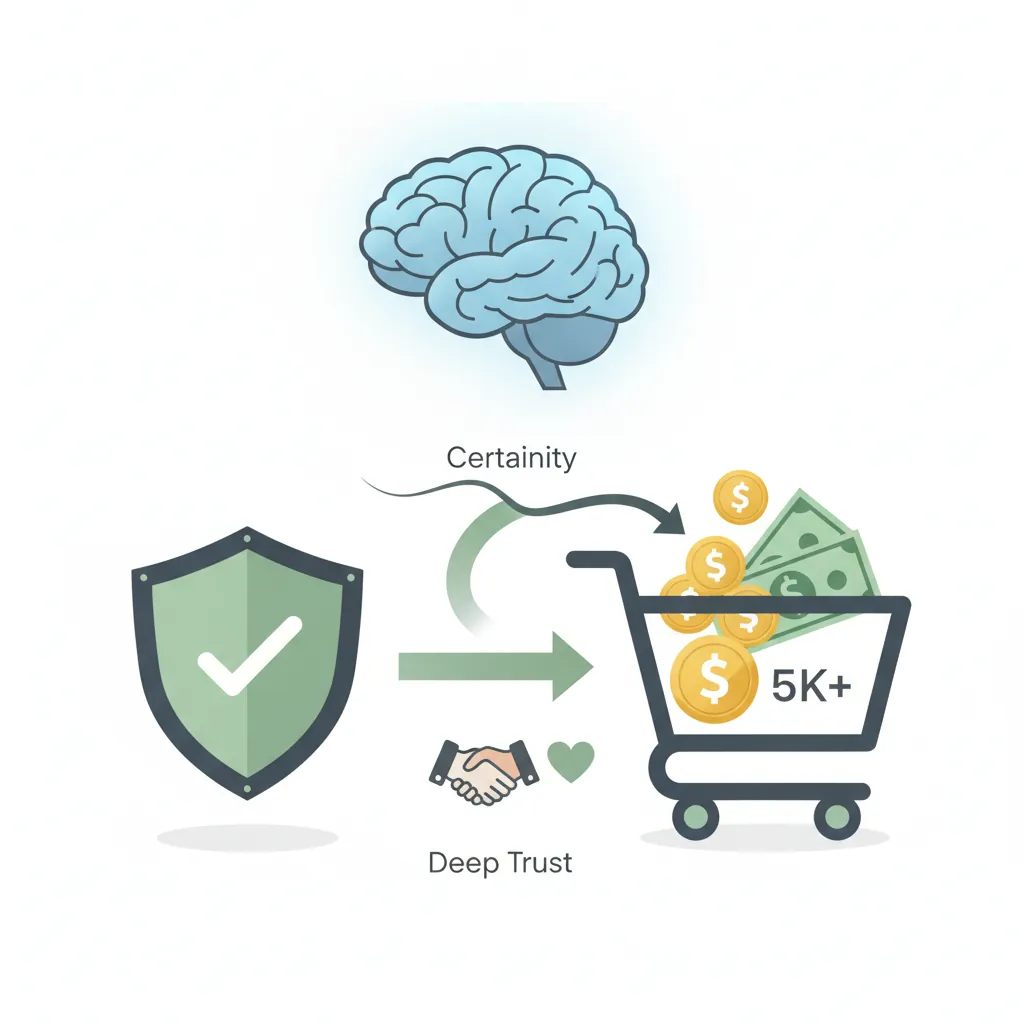
High-ticket sales fundamentally differ from volume-based selling. When prices exceed $5,000-$10,000+, buyers engage different psychological processes—they seek certainty, personal connection, and deep trust before committing. Understanding premium buyer psychology transforms your approach from transactional to transformational.
Figure 1: High-ticket buyer psychology — premium buyers seek certainty and deep trust before committing to $5K+ purchases
High-Ticket vs. Low-Ticket Psychology
Buyer PsychologyDecision Differences
Dimension
Low-Ticket ($100-$1K)
High-Ticket ($5K-$100K+)
Decision Speed
Minutes to hours
Weeks to months
Risk Perception
Low—reversible decision
High—significant commitment
Information Need
Features and benefits
Proof, transformation, outcomes
Trust Requirement
Brand/reviews sufficient
Personal relationship essential
Emotional Driver
Desire and convenience
Identity and transformation
Sales Approach
Scalable, automated
High-touch, personalized
Premium Psychology Principle: High-ticket buyers aren't buying a product—they're buying a future version of themselves. Your role is to make that transformation feel inevitable and safe.
Value Positioning
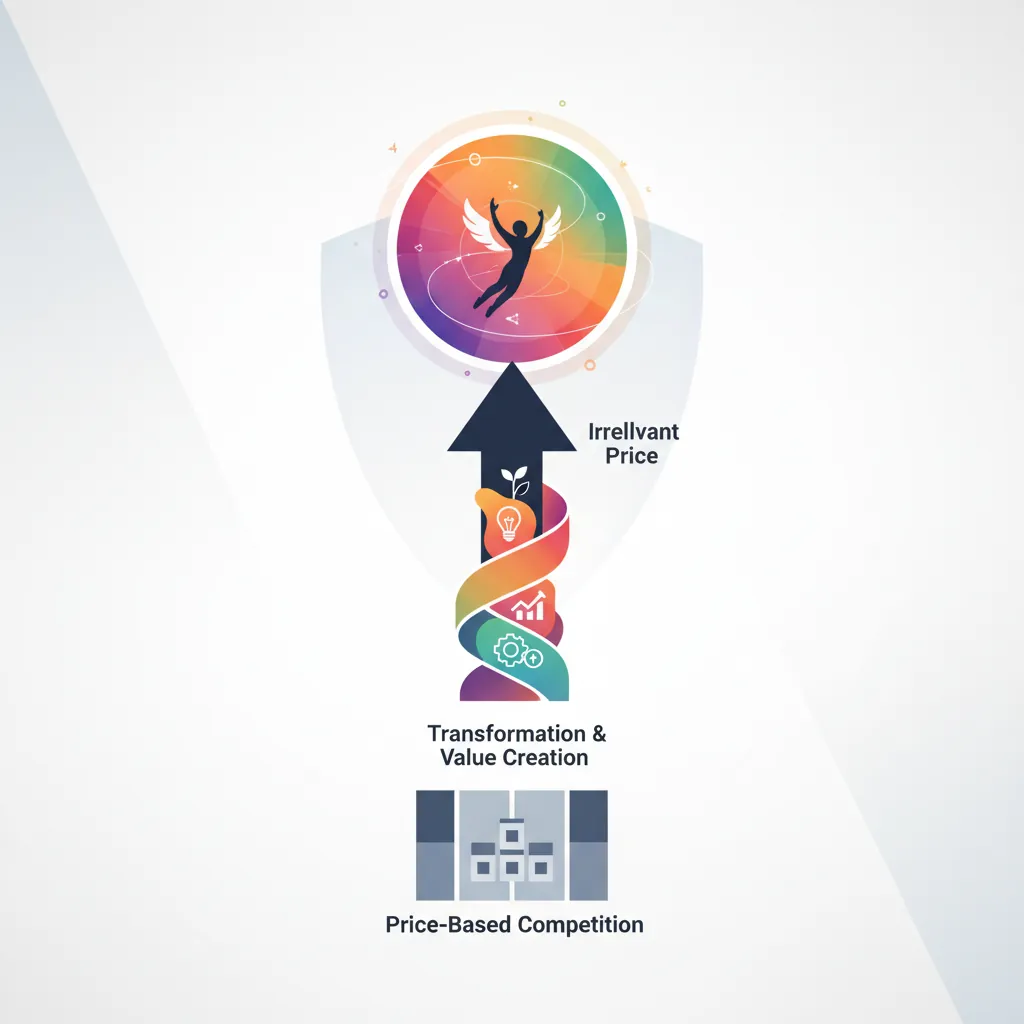
Premium pricing requires premium positioning. Value positioning isn't about justifying your price—it's about making price irrelevant compared to the transformation you deliver.
Figure 2: Value positioning strategy — making price irrelevant through transformation-focused positioning
The Value Stack Framework
Price JustificationValue Architecture
Core Transformation (40% of perceived value): The primary outcome—what fundamental change do they experience?
Implementation Support (25%): How you ensure they succeed—onboarding, coaching, troubleshooting
Access & Community (15%): Exclusive access to you, networks, or communities
Value-to-Price Ratio Target: Your total value stack should represent 10-20x the investment. A $10,000 program should deliver $100,000-$200,000 in perceived value.
Stack ValueROI MultipleTransformation
Price anchoring for premium: When presenting high-ticket offers, anchor against the cost of NOT solving the problem rather than competitor pricing. "What's the cost of staying stuck for another year?" positions investment as the obvious choice.
Trust Building
High-ticket purchases require deep trust—built over time through consistent value delivery before the sale.
Trust Ladder for Premium Sales
Trust ProgressionNurture Sequence
Awareness (Stranger): Free content—blogs, podcasts, videos, social media
Commitment (Client): High-ticket offer with full confidence
Key Insight: Most high-ticket failures try to sell at Stage 1-2. Successful premium sellers warm leads through Stages 3-4 before presenting the core offer.
NurtureLadderWarming
Trust Accelerators: Published book (instant authority), prestigious media features, speaking at recognized events, testimonials from known figures, verifiable credentials from respected institutions.
Authority Positioning
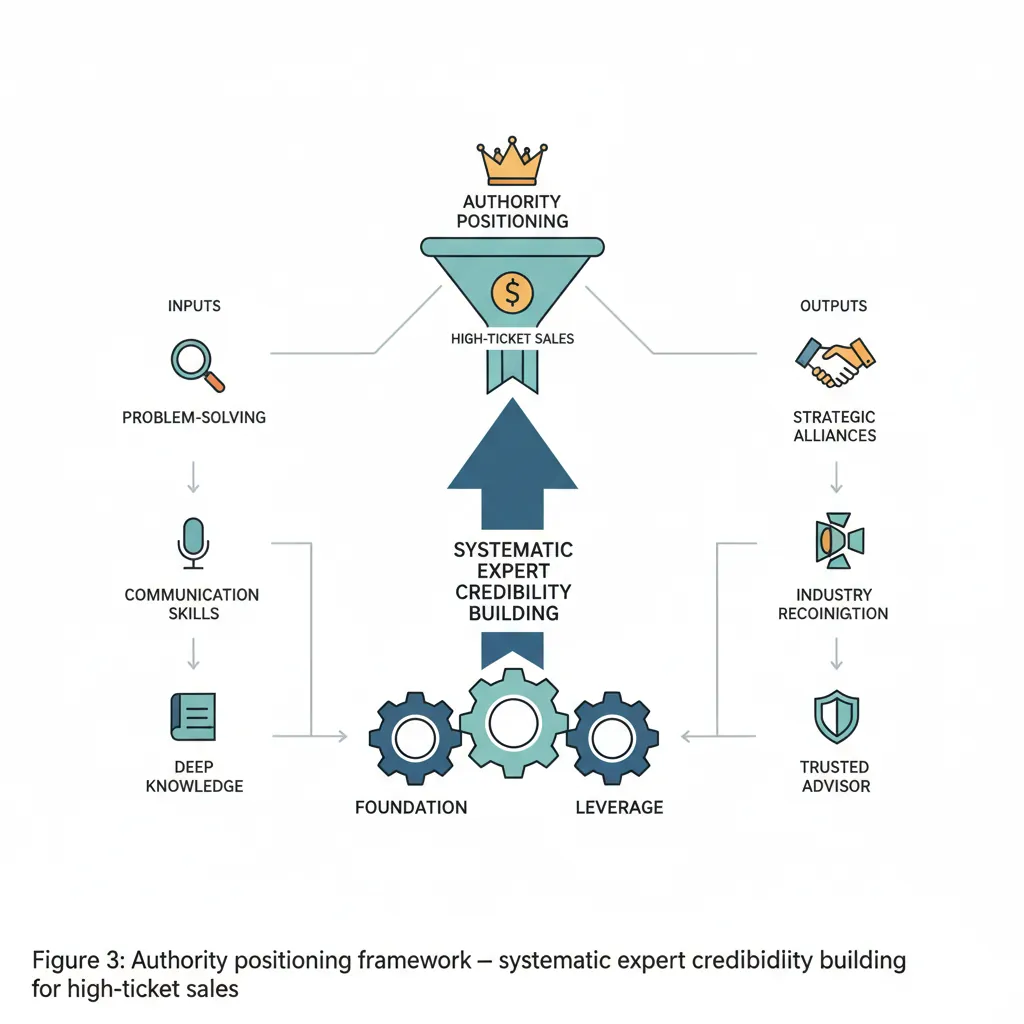
Authority positioning is the systematic process of establishing yourself as the recognized expert in your field. In high-ticket sales, buyers don't just purchase solutions—they purchase from trusted authorities who reduce their risk of failure.
Figure 3: Authority positioning framework — systematic expert credibility building for high-ticket sales
The Authority Pyramid
Personal BrandExpert Positioning
Practitioner (Base): Do the work—have real results and experience
Documentor: Share your process—content, posts, articles
Teacher: Help others achieve results—workshops, courses
Speaker: Address larger audiences—conferences, podcasts, media
Progress Strategy: Advance one level at a time. Each level builds upon documented success at the previous level. Skipping steps creates hollow authority that buyers sense.
Expert StatusAuthority BuildingCredibility
Niche Authority Principle: It's better to be the #1 authority in a narrow niche than a generalist competing with thousands. "AI consultant for healthcare startups" outpositions "business consultant."
Thought Leadership
Thought leadership establishes you as the go-to voice in your field. It's not about being everywhere—it's about saying something meaningful, consistently.
Thought Leadership Content Pillars
Content StrategyAuthority Content
Content Type
Purpose
Frequency
Perspective Pieces
Share unique point of view on industry trends
Weekly
Case Studies
Document client transformations with specifics
Monthly
Original Research
Data and insights others can cite
Quarterly
Framework Articles
Proprietary methods with memorable names
Bi-monthly
Contrarian Takes
Challenge industry assumptions thoughtfully
Monthly
Speaking strategy: Start with podcasts (lowest barrier), advance to local events, then industry conferences. Build a "speaker reel" from each appearance for future opportunities.
Social Proof Systems
Social proof for high-ticket must be specific, credible, and strategically deployed at decision points.
Social Proof Hierarchy
CredibilityTrust Signals
Strongest to Weakest Social Proof:
Video Testimonials: Named clients sharing specific results on camera
Detailed Case Studies: Before/after with metrics and named client
Screenshot Testimonials: Real messages with names visible
Written Testimonials: Named quotes with company/role
Anonymous Testimonials: Results without attribution (weakest)
Deployment Strategy: Place strongest proof at highest-friction points—pricing page, checkout, post-objection follow-ups.
TestimonialsCase StudiesProof
Proof Collection System: Build testimonial collection into your delivery process. Request feedback at peak satisfaction moments—typically 30-60 days after achieving first major result.
B2P Selling
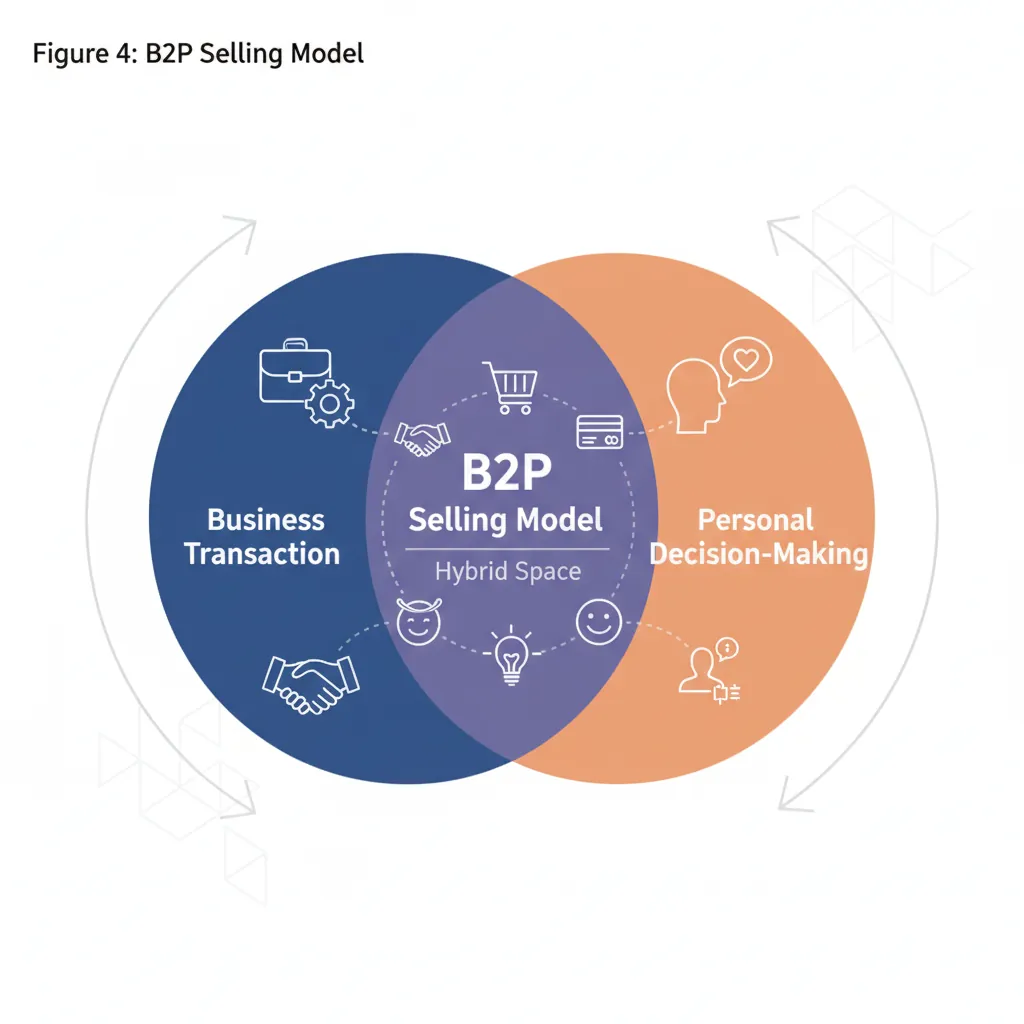
B2P (Business to Person) represents a hybrid model where the transaction is business-related, but the decision is deeply personal. Consultants, coaches, advisors, and professional service providers operate in this space—buyers hire the person, not just the company.
Figure 4: B2P selling model — the hybrid space where business transactions meet personal decision-making
B2B vs B2P vs B2C Comparison
Sales ModelsModel Selection
Dimension
B2B
B2P
B2C
Decision Maker
Committee/multiple
Individual professional
Consumer
Buying Motivation
Business outcomes
Personal + business
Personal desire
Key Differentiator
Solution capability
Personal rapport
Brand/emotional appeal
Examples
Enterprise software
Coaching, consulting
Retail products
Sales Cycle
Long, multi-touch
Medium, trust-based
Short, impulse-driven
B2P Core Truth: In B2P, clients are buying access to you specifically. Your personality, methodology, and individual expertise are the product—not interchangeable with competitors.
Relationship Selling
Relationship selling prioritizes long-term connection over short-term transactions. Premium B2P clients often become lifetime clients and referral sources.
The R.A.P.P.O.R.T. Framework
Relationship BuildingConnection Framework
R - Remember: Details about their life, goals, challenges—use CRM notes
A - Acknowledge: Celebrate their wins, recognize milestones
P - Proactive: Reach out before they need you
P - Personal: Share your own journey authentically
O - Ongoing: Maintain contact between engagements
R - Reciprocate: Provide value without expectation
T - Time: Invest in relationship longevity, not quick wins
TrustConnectionRelationship
Client lifecycle thinking: A high-ticket client isn't worth $10,000 once—they're worth $50,000+ over 5 years through repeat purchases, upsells, and referrals. Treat every client as a long-term relationship investment.
Referral Systems
Premium services should generate 50-70% of new business from referrals. Systematic approaches outperform hoping clients remember you.
Referral Engine Components
Lead GenerationReferral Systems
Delight First: Referrals only flow from genuinely satisfied clients
Ask Strategically: Request referrals at peak satisfaction (post-win, milestone)
Make It Easy: Provide templated introductions, LinkedIn messages
Track & Measure: Know which clients refer most—they're your VIPs
Referral Ask Script: "You mentioned you know [Name] at [Company]. They sound like they're facing similar challenges. Would you be open to making an introduction? I'd be happy to draft the email for you."
Word of MouthReferralsIntroductions
Strategic Networking: Identify 10-20 "connector" relationships—people who regularly encounter your ideal clients (lawyers, accountants, complementary consultants). Nurture these relationships for sustained referral flow.
Premium Sales Process
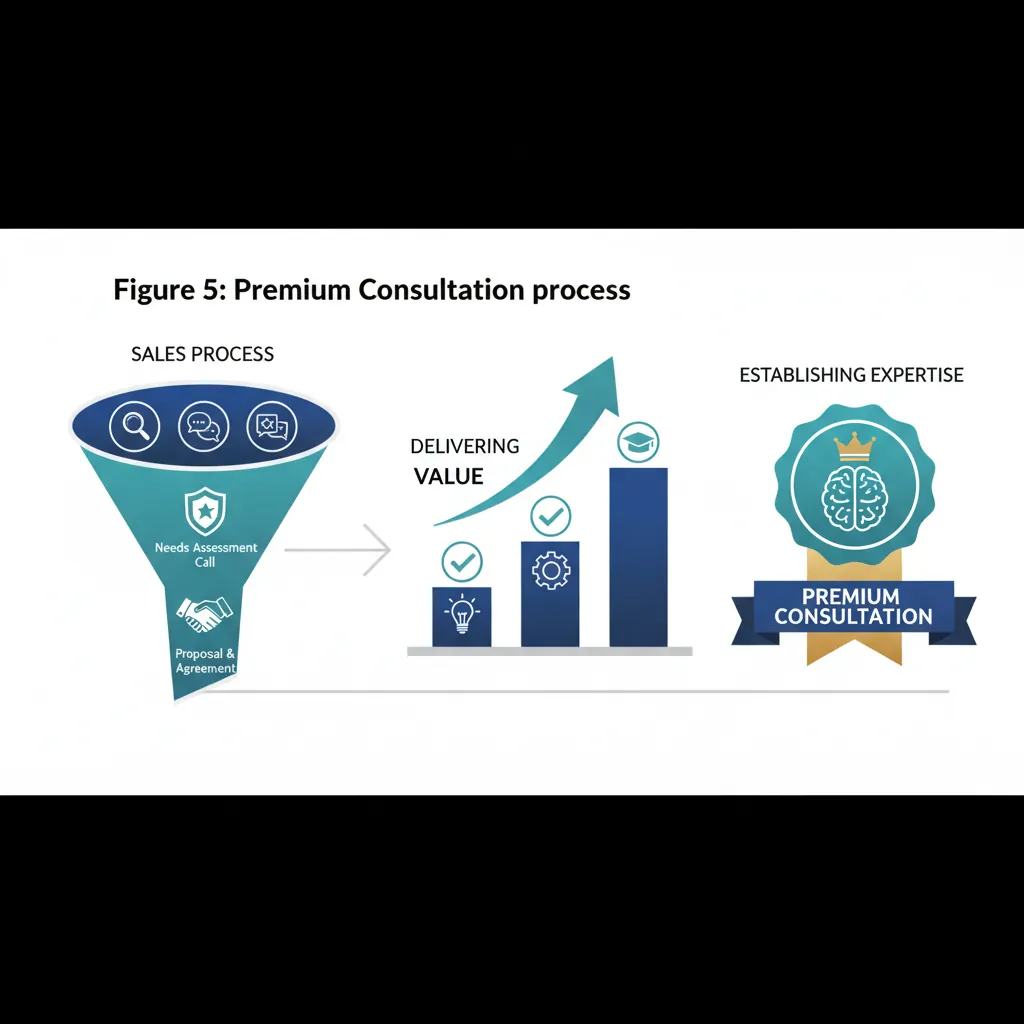
High-ticket sales require a consultation model—where the sales process itself delivers value and establishes your expertise. Buyers should feel confident in your competence before you ever present pricing.
Figure 5: Premium consultation process — delivering value through the sales process itself to establish expertise
Premium Consultation Framework
Sales ProcessDiscovery Call
Pre-Call (10 min): Research prospect, review application, prepare personalized questions
Rapport (5 min): Warm opening, establish human connection
Situation (10 min): Understand current state, context, background
Vision (10 min): Clarify desired outcome, future state they want
Fit Check (5 min): Confirm you can help, disqualify if not right
Present (10 min): Introduce solution aligned to their specific needs
Close (10 min): Address concerns, invite commitment or next step
DiscoveryConsultationProcess
Application Process: Require an application before booking calls. This filters tire-kickers, positions you as selective, and provides information for personalized conversations.
High-Ticket Objections
Premium objections differ from low-ticket resistance. Address the underlying fear, not just the surface objection.
Premium Objection Handling
Objection MasteryResponse Patterns
Objection
Hidden Fear
Response Strategy
"It's expensive"
Fear of wasted money
Reframe ROI, cost of inaction
"I need to think"
Fear of wrong decision
Surface real concern, offer certainty
"I've tried before"
Fear of repeating failure
Differentiate your approach, guarantee
"Not the right time"
Fear of commitment
Cost of delay, urgency drivers
"I'll do it myself"
Fear of dependence
Opportunity cost, time value
Price objection reframe: "I understand it's a significant investment. Let me ask—if the investment was half this amount but only delivered half the results, would that be more attractive?" This reveals if they're objecting to price or doubting value.
Closing Premium Deals
Premium closing isn't about pressure—it's about helping qualified buyers make confident decisions.
Premium Closing Techniques
CloseCommitment
The Summary Close: Recap their goals, problems, and how your solution addresses each. "Based on everything we discussed..."
The Vision Close: Paint their future state vividly. "Imagine 90 days from now when..."
The Direct Ask: Simple and confident. "Are you ready to move forward?"
The Choice Close: Offer options, not yes/no. "Would you prefer to start with the 3-month or 6-month program?"
The Partnership Close: Position as collaboration. "I'm selective about who I work with. I'd love to partner with you on this."
ClosingCommitmentDecision
Enrollment Windows: Create scarcity through limited enrollment periods, cohort starts, or capacity constraints. "I take on 3 new clients per month to maintain quality" creates natural urgency without artificial pressure.
High-Ticket Offer Canvas
Design your premium offer positioning and sales strategy. Download as Word, Excel, PDF, or PPTX.
Draft auto-saved
All data stays in your browser. Nothing is sent to or stored on any server.
Exercises
Exercise 1: Value Stack Design
Premium Positioning30 Minutes
Objective: Create a comprehensive value stack for a high-ticket offer.
Choose a service you offer (or could offer) priced at $5,000+
Define the core transformation (40% of value)
Add implementation support elements (25%)
Include access/community components (15%)
Create compelling bonuses (10%)
Design risk reversal/guarantee (10%)
Calculate total perceived value—aim for 10-20x price
Deliverable: One-page value stack with value assigned to each component.
Exercise 2: Authority Audit
Personal Brand45 Minutes
Objective: Assess and plan your authority positioning.
Rate yourself on the Authority Pyramid (Practitioner→Author)
List all current authority assets (testimonials, media, credentials)
Identify the top 3 gaps in your authority positioning
Create a 90-day plan to advance one level on the pyramid
Plan one piece of thought leadership content per category
Deliverable: Authority scorecard with gap analysis and action plan.
Exercise 3: Discovery Call Script
Sales Process60 Minutes
Objective: Create a premium discovery call framework.
Write 3 rapport-building openers for your ideal client
Create 5 situation questions (current state)
Create 5 pain questions (problems and impact)
Create 3 vision questions (desired future state)
Write your fit-check statement ("I think I can help because...")
Draft your transition to presenting ("Based on what you've shared...")
Prepare responses to your top 3 objections
Deliverable: Complete discovery call script with all question categories.
Key Takeaways
Part 10 Summary:
Premium psychology differs—high-ticket buyers seek certainty, transformation, and personal connection, not features
Value stack architecture—create 10-20x perceived value through core transformation, support, access, bonuses, and guarantees
Authority is essential—buyers purchase from trusted experts; climb the pyramid from Practitioner to Author
Thought leadership builds trust—consistent perspective pieces, case studies, and frameworks establish expertise
B2P is relationship-based—clients buy you specifically; nurture relationships for lifetime value
Referrals drive premium growth—systematize referral collection and cultivate connector relationships
Consultation model sells—deliver value in the sales process; use discovery to establish competence
Address hidden fears—premium objections stem from fear of failure; offer certainty through proof and guarantees