We use cookies to enhance your browsing experience, serve personalized content, and analyze our traffic.
By clicking "Accept All", you consent to our use of cookies. See our
Privacy Policy
for more information.
Marketing & Strategy Series Part 2: Consumer & Buyer Psychology
February 12, 2026Wasil Zafar20 min read
Master behavioral economics, cognitive biases, trust-building mechanisms, B2B buying committees, and pricing psychology to create marketing that resonates with human behavior.
Part 2 of 21: Building on the strategic foundations from Part 1, this article explores the psychology behind customer decisions—essential knowledge for crafting marketing that resonates with human behavior rather than fighting against it.
Every marketing decision you make is ultimately judged by a human brain that evolved for survival, not spreadsheet analysis. Understanding behavioral economics — how people actually make decisions versus how they should — is the single most powerful competitive advantage a marketer can possess.
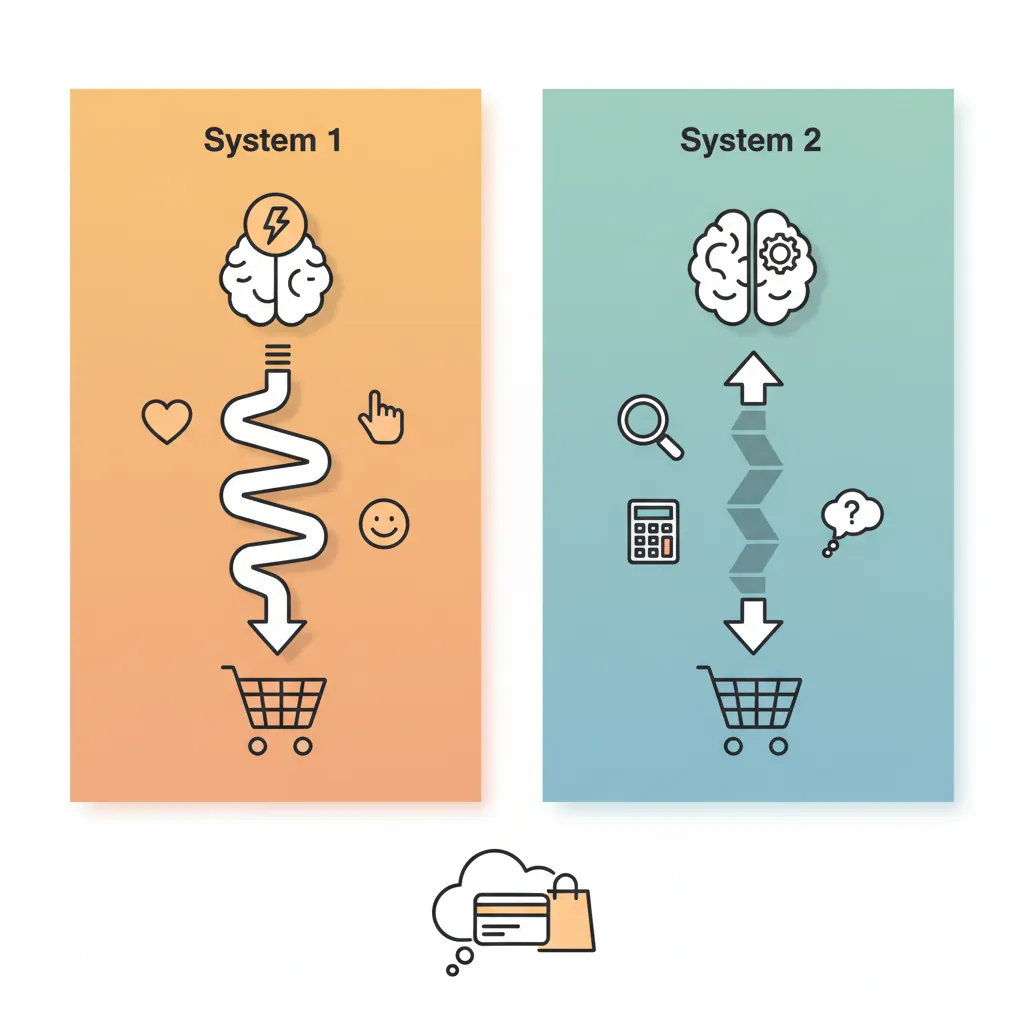
System 1 (fast, intuitive) vs System 2 (slow, analytical) thinking governs all consumer decision-making
System 1 vs System 2 Thinking
Daniel Kahneman's Nobel Prize-winning research identified two cognitive systems that govern all human decision-making:
The 95% Rule: Harvard professor Gerald Zaltman estimates that 95% of purchasing decisions are made subconsciously (System 1). Even B2B buyers who believe they're making purely rational choices are heavily influenced by emotions, then rationalize their decisions afterward.
Think of it like driving. When you're an experienced driver on a familiar route, System 1 handles everything — steering, braking, signaling — without conscious thought. But encounter a sudden detour or heavy construction, and System 2 kicks in, requiring focused attention. Marketing that works with System 1 feels effortless to the customer. Marketing that requires System 2 better provide a compelling reason to engage.
Prospect Theory & Loss Aversion
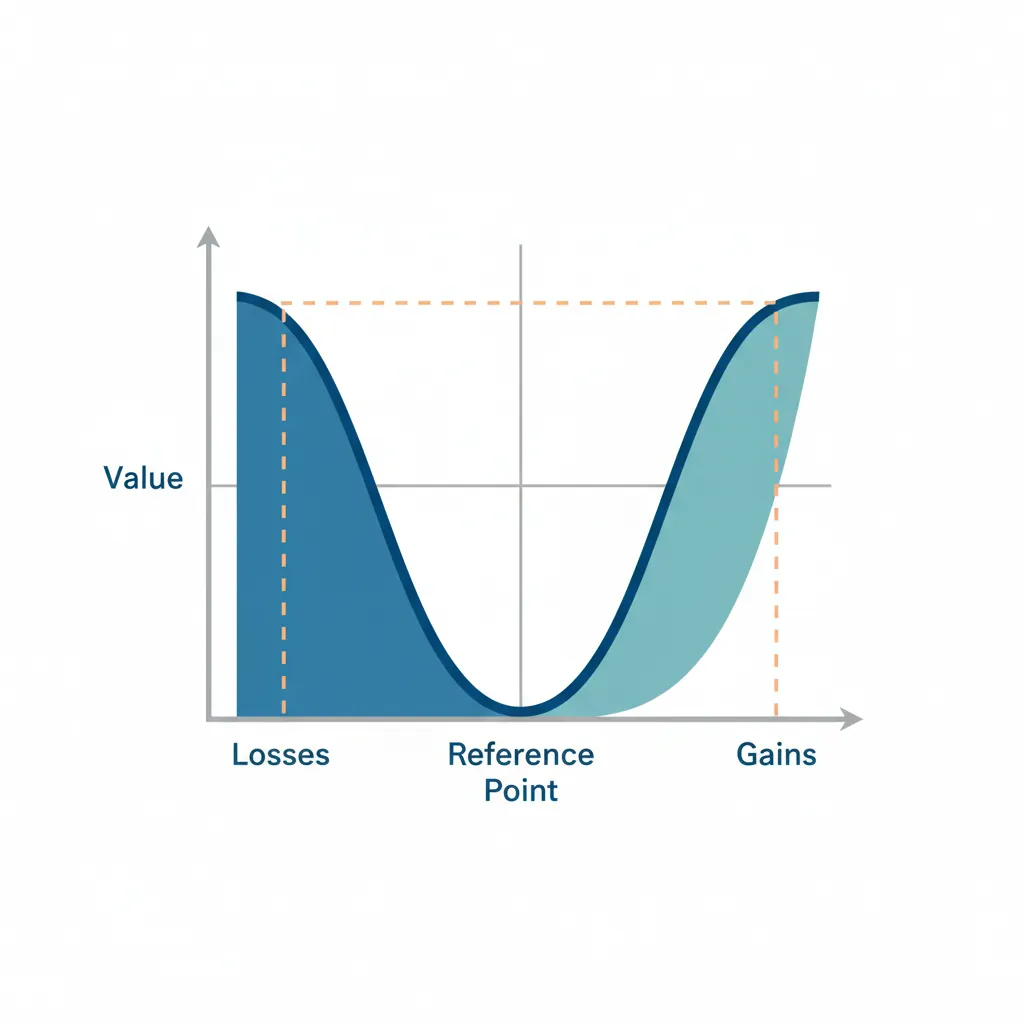
Kahneman and Tversky's Prospect Theory revealed that humans don't evaluate gains and losses equally — losses hurt roughly 2x more than equivalent gains feel good. This asymmetry drives nearly all purchase behavior:
The prospect theory value function — losses loom roughly twice as large as equivalent gains in consumer psychology
The Classic Experiment
Kahneman & Tversky, 1979Prospect Theory
Setup: Participants chose between:
Option A: A guaranteed $500 gain
Option B: A 50% chance of gaining $1,000 (same expected value)
Result: Most chose the guaranteed $500 (risk-averse for gains). But when framed as losses, most chose the gamble to avoid a sure loss — demonstrating that loss framing changes behavior dramatically.
Marketing Application: "Don't miss out on $500 in savings" is more motivating than "Save $500" because the first triggers loss aversion.
Loss aversion in action:
Free trials: Let customers experience the product first, then "lose" it — Spotify, Netflix, and SaaS companies rely on this
Money-back guarantees: Reduces perceived risk of purchase (loss of money)
"Limited stock" alerts: Triggers fear of losing the opportunity
Our brains use mental shortcuts (heuristics) that create predictable patterns of irrational behavior. Smart marketers work with these patterns; ethical marketers do so transparently:
Bias
What It Is
Marketing Application
Example
Anchoring
First number seen sets the reference point
Show original price before discount
"Was $299, now $149" (the $299 anchor makes $149 feel cheap)
Framing Effect
Same info presented differently changes decisions
Frame outcomes positively
"95% satisfaction rate" vs "5% dissatisfaction rate"
Insurance ads after natural disasters (2-3x conversion)](td>
Bandwagon Effect
People follow what others do
Show popularity metrics
"Join 2 million+ customers worldwide"
Endowment Effect
We overvalue what we "own"
Let customers customize before buying
Nike's shoe configurator — once designed, it's "theirs"
Status Quo Bias
We prefer the current state
Make switching effortless
"We'll handle the entire migration for free"
Halo Effect
One positive trait influences overall perception
Lead with strongest feature
Apple's design quality creates assumption of engineering quality
Ethical Warning: There's a critical difference between working with cognitive biases (helping people make decisions aligned with their goals) and exploiting cognitive biases (manipulating people into decisions against their interests). Dark patterns — like hidden cancellation buttons, pre-checked add-ons, or misleading urgency timers — destroy trust and increasingly violate regulations like the EU's Digital Services Act.
Trust & Decision Making
Trust-Building Mechanisms
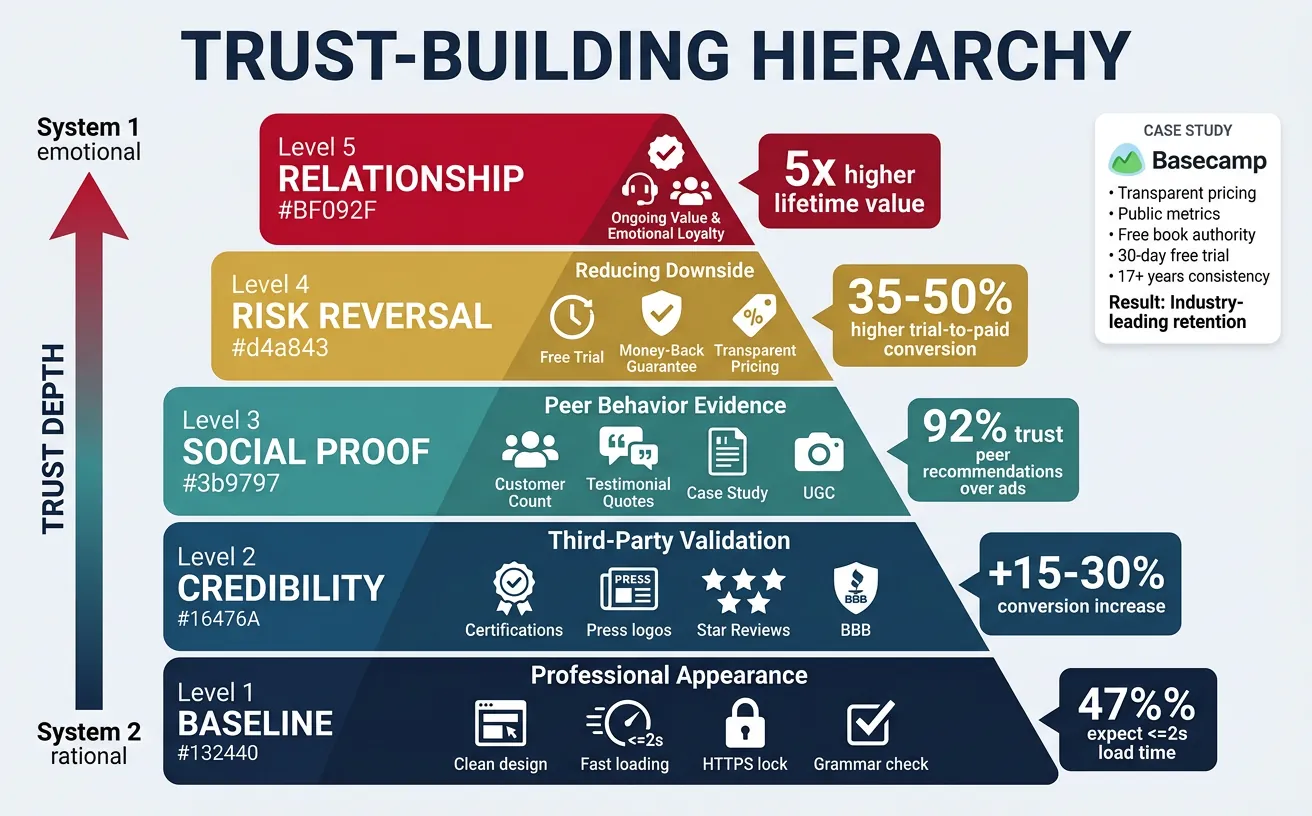
Trust is the invisible currency of all commerce. In a world of infinite choices, trust reduces cognitive load — it turns a System 2 evaluation into a System 1 shortcut. Building trust systematically follows a hierarchy from basic credibility to deep loyalty:
The trust-building hierarchy — from baseline professional credibility through social proof to deep emotional loyalty
Trust Level
Signal Type
Examples
Impact
1. Baseline
Professional appearance
Clean design, fast loading, HTTPS, proper grammar
Prevents immediate bounce (47% of users expect ≤2s load)
Basecamp (now 37signals) built a $100M+ business with no sales team by stacking trust signals:
Transparent pricing: One plan, one price — no hidden tiers or "contact sales"
Public metrics: Shared their customer count, revenue approach, and company values
Free book: Published "Rework" and "It Doesn't Have to Be Crazy at Work" establishing authority
30-day free trial: No credit card required (reduces perceived risk)
17+ years of consistent messaging: Never pivoted their core philosophy
Result: Industry-leading retention rates and word-of-mouth growth without traditional marketing spend.
B2B Buying Committees & Long Sales Cycles
B2B purchases involve 6-10 stakeholders on average (Gartner), each with different priorities and biases. Understanding the buying committee is essential for B2B marketing:
Role
Primary Concern
System Bias
Content That Works
Champion
Solving their specific pain
System 1 (emotional connection to the problem)
Case studies showing outcomes similar to their situation
Economic Buyer
ROI, budget justification
System 2 (analytical evaluation)
ROI calculators, TCO comparisons, financial models
Analyst reports, peer company logos, board-level summaries
The Consensus Problem: With 6-10 stakeholders, the probability of reaching consensus drops exponentially. Gartner found that 77% of B2B buyers rated their last purchase as "very complex or difficult." Your marketing must help the Champion build internal consensus — not just convince one person.
Emotional vs Rational Purchasing & Decision Heuristics
The myth of the "rational buyer" has been thoroughly debunked by neuroscience. Antonio Damasio's research on patients with damaged emotional centers showed they couldn't make decisions at all — proving emotion isn't the opposite of rationality, it's a prerequisite for it.
The Dual Decision Model in practice:
The Heart → Head → Hand Framework:
Heart (Emotional trigger): "I feel frustrated with our current tool" — triggers search
Head (Rational evaluation): "Let me compare features, pricing, and reviews" — narrows options
Hand (Action): "This one feels right and the numbers work" — makes purchase
Notice: The journey starts with emotion and ends with emotion. The rational middle step is about creating ammunition for the emotional decision that's already been made.
Key decision heuristics marketers must understand:
Satisficing vs Maximizing: Most people (satisficers) choose the first "good enough" option. Only ~30% (maximizers) evaluate every alternative. Design your funnel for satisficers — make the obvious choice obvious.
Choice Overload: Sheena Iyengar's jam study showed 24 options → 3% conversion, 6 options → 30% conversion. More choice ≠ more sales.
Default Effect: Whatever's pre-selected gets chosen 70-90% of the time. Organ donation rates in opt-in countries: ~15%. In opt-out countries: ~90%+. Apply this to plan selection, feature toggles, and onboarding flows.
Peak-End Rule: People judge experiences by the most intense moment (peak) and the ending — not the average. Ensure your customer journey peaks positively and ends memorably.
Influence Principles
Social Proof & Authority
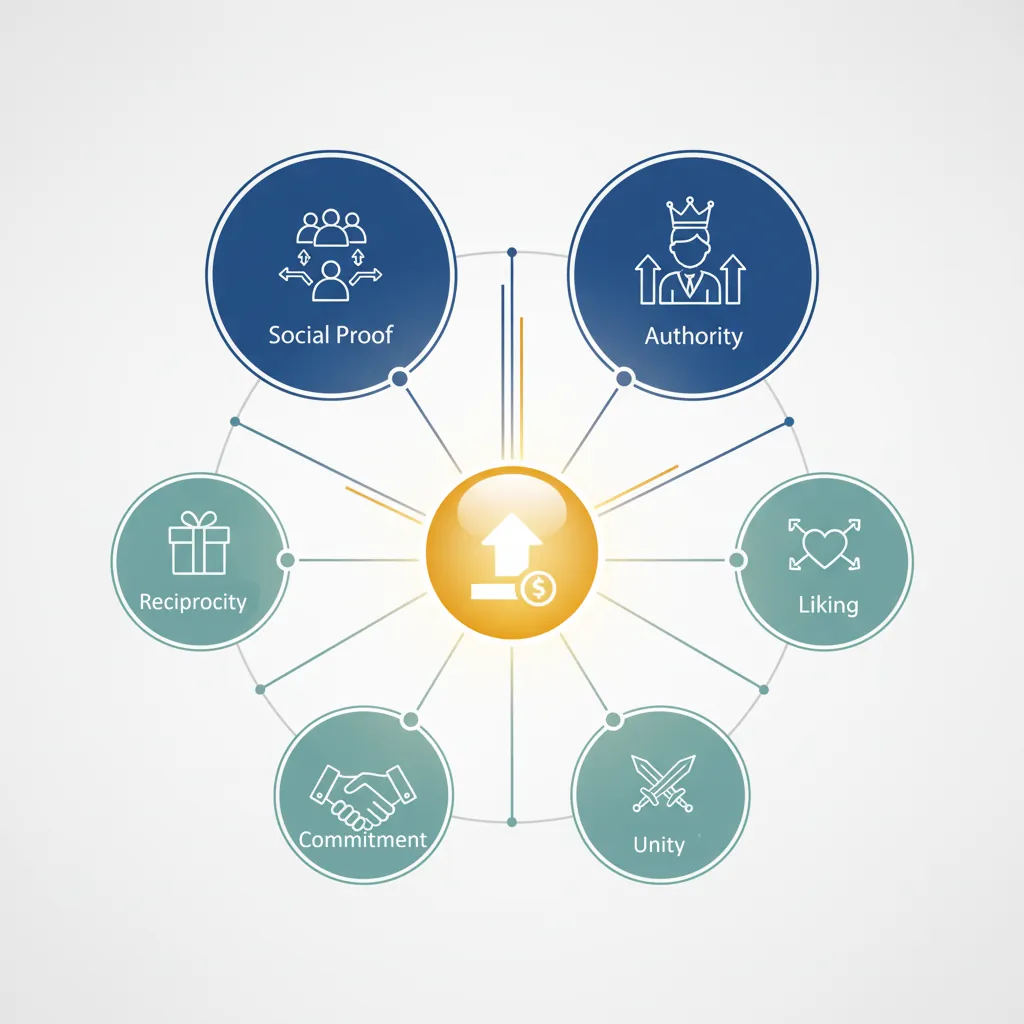
Robert Cialdini's landmark research identified six principles of influence, with social proof and authority being the most powerful in marketing contexts:
Cialdini six principles of influence — social proof and authority are the most powerful levers in marketing
Result: Booking.com processes over $100B+ in annual gross bookings, with conversion rates 3-5x higher than competitors with fewer social proof elements.
Scarcity & Urgency Principles
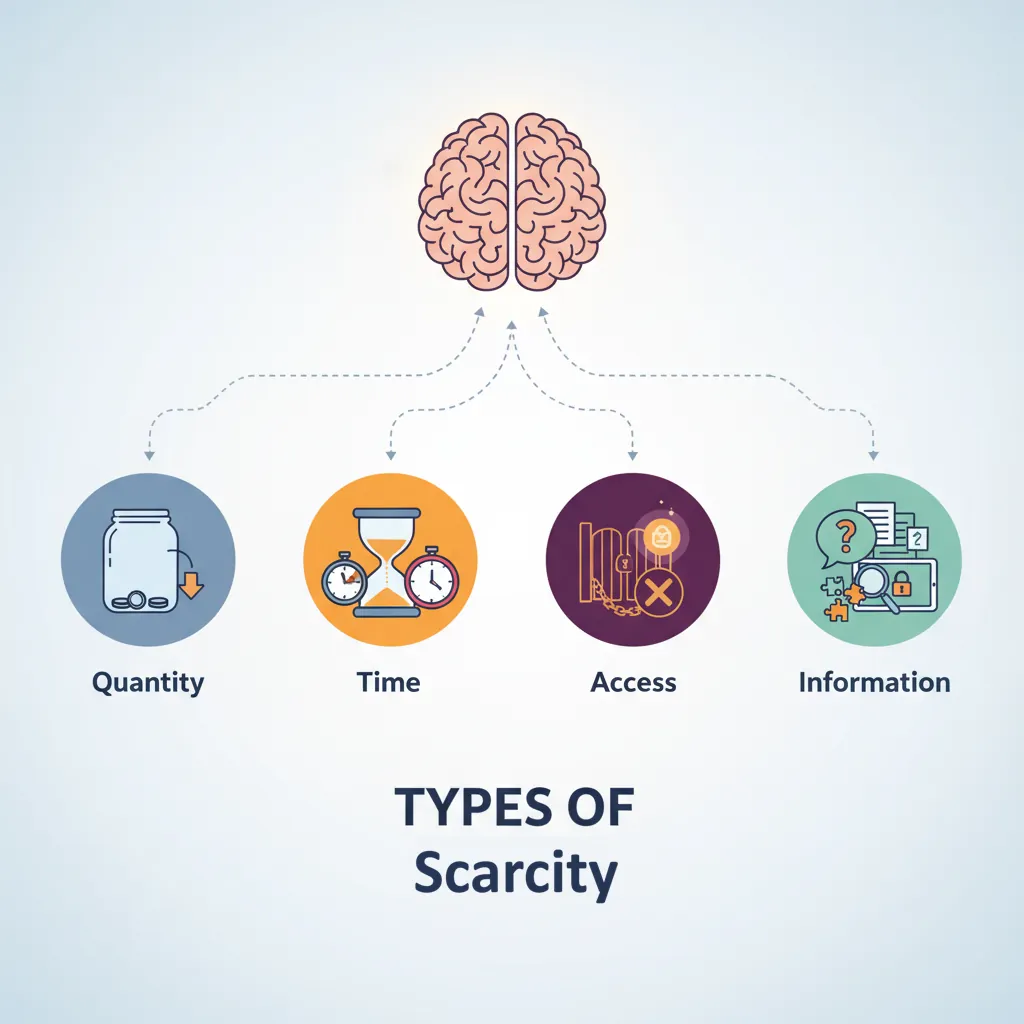
Scarcity — the perception that something is limited — triggers immediate System 1 responses rooted in our evolutionary fear of missing resources. Effective scarcity comes in two forms:
Four types of scarcity that trigger immediate System 1 responses — quantity, time, access, and information limitations
Type
Mechanism
Works Best When
Example
Quantity Scarcity
Limited supply
Physical products, seats, memberships
"Only 3 left in stock" (Amazon)
Time Scarcity
Deadline pressure
Sales, launches, events
"Sale ends in 2h 14m" (countdown timer)
Access Scarcity
Exclusive groups
Premium tiers, beta programs
"Invite-only beta" (Clubhouse launch)
Information Scarcity
Knowledge gap
Gated content, insider insights
"Download the exclusive industry report"
The Authenticity Rule: Fake scarcity destroys trust permanently. If your "limited time offer" runs every month, customers learn to ignore it. If your "only 2 left" inventory always resets, you're training customers to distrust you. Real scarcity works because it's real. Use genuine deadlines (event dates), actual inventory limits (production constraints), or meaningful exclusivity (invite-only communities).
Pricing Psychology
Price is never just a number — it's a psychological signal that communicates value, quality, and identity. Understanding pricing psychology transforms your pricing from a cost discussion into a value conversation:
Technique
Psychology
Application
Effectiveness
Charm Pricing
Left-digit anchoring
$9.99 vs $10.00
8-25% higher conversion (MIT/University of Chicago study)
Price Anchoring
First number sets reference
Show premium plan first, then recommended plan
40-60% select the "middle" option
Decoy Effect
Asymmetric dominance
Add a "bad deal" to make target option look better
Shifts preference 25-40% toward target
Precise Pricing
Specificity signals calculation
$247 vs $250 — precise feels researched
Higher trust for high-ticket items
Bundling
Pain of paying once vs many times
Combine products into a single price
20-30% higher revenue per transaction
Price-Quality Inference
Higher price = higher quality
Premium pricing for luxury/prestige
Wine study: same wine rated 30% better at $45 vs $5
The Economist's Decoy Pricing Experiment
Dan Ariely StudyDecoy Effect
The Economist offered three subscription options:
Web-only: $59 → 16% chose this
Print-only: $125 → 0% chose this (the decoy)
Print + Web: $125 → 84% chose this
When the print-only option was removed, the split changed dramatically: 68% chose web-only ($59) and only 32% chose print + web ($125). The "useless" option nobody chose was actually generating 43% more revenue by making the premium bundle look like an incredible deal.
Buyer Psychology Audit Canvas
Use this interactive tool to audit your marketing through the lens of consumer psychology. Map your current psychological tactics, identify gaps, and plan improvements:
Buyer Psychology Audit
Audit your marketing's psychological effectiveness. Download as Word, Excel, PDF, or PPTX.
Draft auto-saved
All data stays in your browser. Nothing is sent to or stored on any server.
Exercises
Exercise 1: Bias Audit of Your Funnel
45 minutesApplied Psychology
Walk through your entire customer journey (website, emails, checkout) and identify which cognitive biases are currently at play — intentionally or accidentally. Create a matrix mapping each funnel stage to the biases present, missing, and opportunities.
Exercise 2: Pricing Psychology Experiment
30 minutesPricing Strategy
Design three versions of your pricing page using different psychological techniques: (A) charm pricing with anchoring, (B) decoy pricing with three tiers, (C) bundled pricing with "savings" framing. Predict which will perform best and outline an A/B test plan.
Exercise 3: B2B Stakeholder Psychology Map
60 minutesB2B Marketing
For your most important customer segment, map out the buying committee (Champion, Economic Buyer, Technical Evaluator, End User, Legal). For each role, identify: (1) their primary System 1 vs System 2 bias, (2) the trust signals they need, (3) the content format that resonates, and (4) the Cialdini principle most effective for them.
Key Takeaways
95% of decisions are subconscious — System 1 (fast, emotional) dominates over System 2 (slow, rational), even in B2B purchasing
Loss aversion is 2x more powerful than gain — frame your marketing around what customers lose by not acting, not just what they gain
Eight key cognitive biases (anchoring, framing, confirmation, availability, bandwagon, endowment, status quo, halo) are predictable tools for ethical marketers
Trust follows a hierarchy — build from baseline (professional appearance) through credibility, social proof, risk reversal, to relationship
B2B buying committees average 6-10 people — each stakeholder has different biases, concerns, and content preferences; help your Champion build internal consensus
Decisions start and end with emotion — the Heart → Head → Hand framework shows rational evaluation serves emotional decisions
Cialdini's six principles (social proof, authority, reciprocity, commitment, liking, unity) provide a systematic framework for ethical influence
Pricing is psychology, not math — charm pricing, anchoring, decoy effects, and bundling can shift revenue 20-40% without changing the actual product
Continue the Series
Part 1: Marketing Fundamentals & Strategic Foundations
Master the foundational concepts including STP model, 4Ps/7Ps, product-market fit, and strategic positioning.