Synchronization ensures that concurrent processes or threads access shared resources safely. Without proper synchronization, race conditions lead to unpredictable behavior and data corruption.
Series Context: This is Part 12 of 24 in the Computer Architecture & Operating Systems Mastery series. Building on CPU scheduling, we now explore how to coordinate concurrent execution safely.
The Coordination Challenge: When multiple threads access shared data, how do we prevent corruption? Synchronization primitives like locks, semaphores, and condition variables provide the answer.
Critical Section Problem
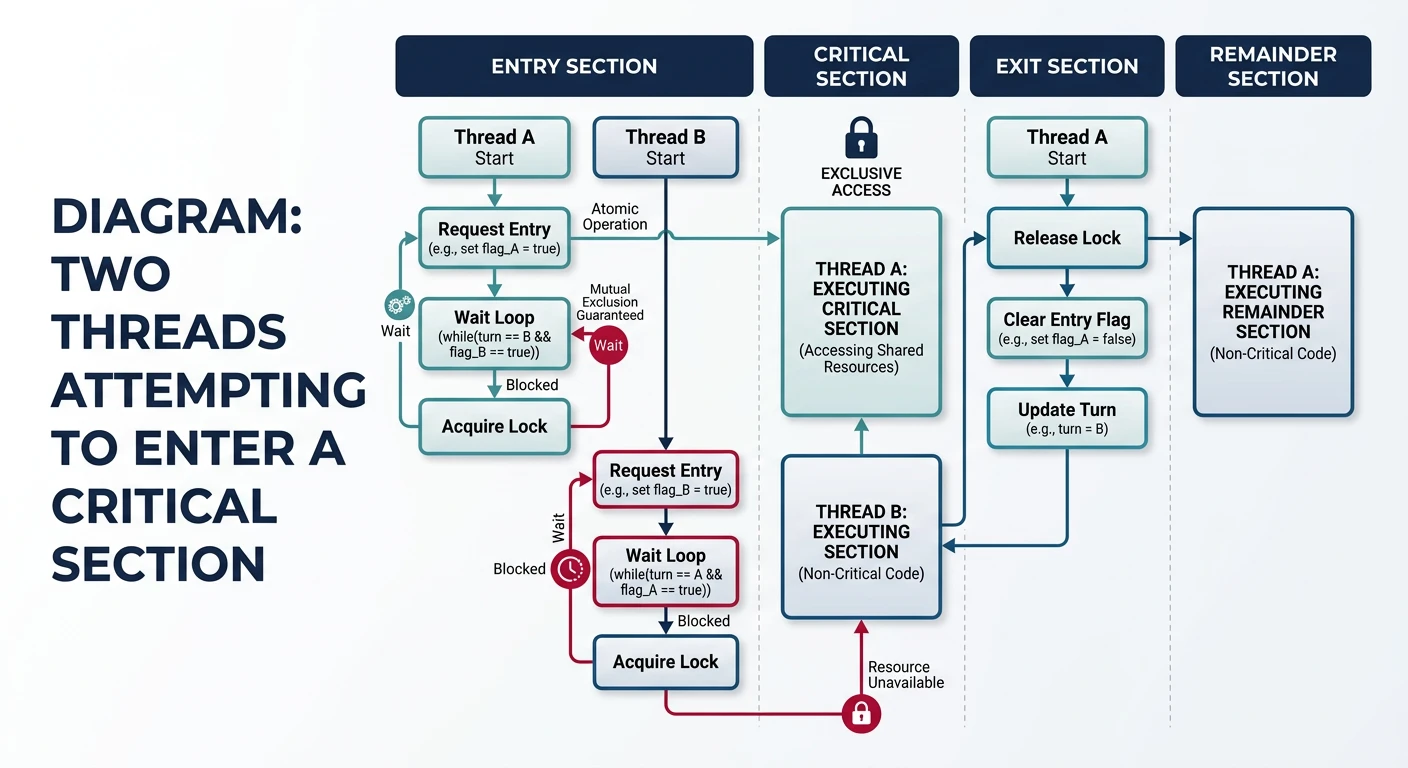
A critical section is code that accesses shared resources. Only one thread should execute a critical section at a time.
The critical section problem: ensuring mutual exclusion between concurrent threads
Critical Section Requirements
Critical Section Problem:
══════════════════════════════════════════════════════════════

Thread A                     Thread B
━━━━━━━━━━━━━━━━━━━━━━━━━   ━━━━━━━━━━━━━━━━━━━━━━━━━
Entry Section                Entry Section
┌─────────────────────┐      ┌─────────────────────┐
│ Critical Section    │      │ Critical Section    │
│ (access shared data)│  ✗   │ (access shared data)│
└─────────────────────┘      └─────────────────────┘
Exit Section                 Exit Section
Remainder Section            Remainder Section

Only ONE thread in critical section at a time!


Three Requirements for a Solution:
══════════════════════════════════════════════════════════════

1. MUTUAL EXCLUSION
   • If one thread is in critical section, no other can enter
   • Prevents simultaneous access

2. PROGRESS
   • If no thread is in critical section, a waiting thread
     must be able to enter (no indefinite blocking)
   • Selection cannot be postponed indefinitely

3. BOUNDED WAITING
   • A thread cannot wait forever to enter
   • Limit on how many times others can go first
   • Prevents starvation
/* Peterson's Algorithm - Software-Only Solution */
/* Works for TWO threads only */

int flag[2] = {0, 0};  /* flag[i] = 1: thread i wants to enter */
int turn;              /* Whose turn if both want to enter */

void enter_critical_section(int i) {
    int j = 1 - i;     /* The other thread */
    flag[i] = 1;       /* I want to enter */
    turn = j;          /* But I'll let you go first */

    /* Wait if other wants to enter AND it's their turn */
    while (flag[j] && turn == j) {
        /* Busy wait (spin) */
    }
}

void exit_critical_section(int i) {
    flag[i] = 0;       /* I'm done, don't want to enter */
}

/* Usage */
void thread_0() {
    enter_critical_section(0);
    /* ... critical section ... */
    exit_critical_section(0);
}

void thread_1() {
    enter_critical_section(1);
    /* ... critical section ... */
    exit_critical_section(1);
}
Modern CPUs Break Peterson's! Memory reordering can break software-only solutions. Modern systems need hardware support (atomic instructions) or memory barriers.
Locks & Mutexes
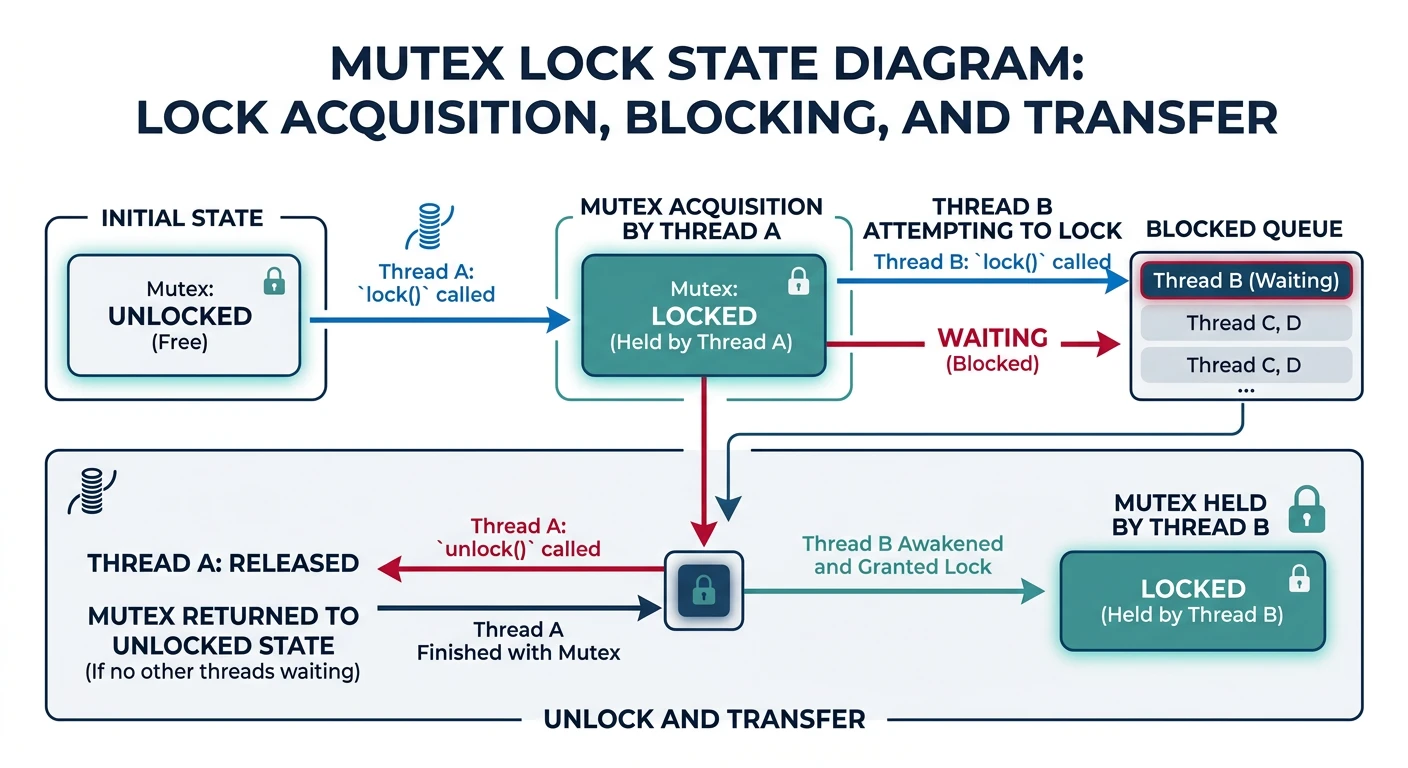
A mutex (mutual exclusion lock) is the fundamental synchronization primitive. Only one thread can hold the lock at a time.
Mutex lifecycle: acquire, hold, release, and thread blocking behavior
Mutex Operations:
══════════════════════════════════════════════════════════════

lock()   - Acquire the mutex (block if already held)
unlock() - Release the mutex (allow another thread to acquire)

Thread A              Mutex State         Thread B
━━━━━━━━━━━━━━━━━    ━━━━━━━━━━━━━━     ━━━━━━━━━━━━━━━━
lock()              [LOCKED by A]
                                         lock() → BLOCKED
... critical ...

unlock()            [UNLOCKED]           → WAKES UP
                    [LOCKED by B]        ... critical ...
                                         unlock()


Hardware Support: Atomic Instructions
══════════════════════════════════════════════════════════════
Test-And-Set (TAS):
   Atomically: read old value, write 1, return old value

Compare-And-Swap (CAS):
   Atomically: if (value == expected) { value = new; return true; }
               else { return false; }

x86 Examples:
   LOCK XCHG - atomic exchange
   LOCK CMPXCHG - compare and exchange
Spinlock Implementation
/* Simple Spinlock using atomic test-and-set */
#include <stdatomic.h>

typedef struct {
    atomic_flag locked;
} spinlock_t;

void spinlock_init(spinlock_t *lock) {
    atomic_flag_clear(&lock->locked);
}

void spinlock_acquire(spinlock_t *lock) {
    /* Keep trying until we get the lock */
    while (atomic_flag_test_and_set(&lock->locked)) {
        /* Spin - wastes CPU cycles */
        /* Better: add pause instruction for hyperthreading */
        __builtin_ia32_pause();
    }
}

void spinlock_release(spinlock_t *lock) {
    atomic_flag_clear(&lock->locked);
}
/* POSIX Mutex (pthread_mutex) - Proper blocking mutex */
#include <pthread.h>

pthread_mutex_t mutex = PTHREAD_MUTEX_INITIALIZER;
int shared_counter = 0;

void* increment_thread(void* arg) {
    for (int i = 0; i < 1000000; i++) {
        pthread_mutex_lock(&mutex);      /* Acquire */
        shared_counter++;                 /* Critical section */
        pthread_mutex_unlock(&mutex);    /* Release */
    }
    return NULL;
}

/* Spinlock vs Mutex:
 * - Spinlock: Busy waits, good for VERY short critical sections
 * - Mutex: Blocks thread, good for longer critical sections
 * - Rule: If hold time < context switch time, use spinlock
 */
Semaphores
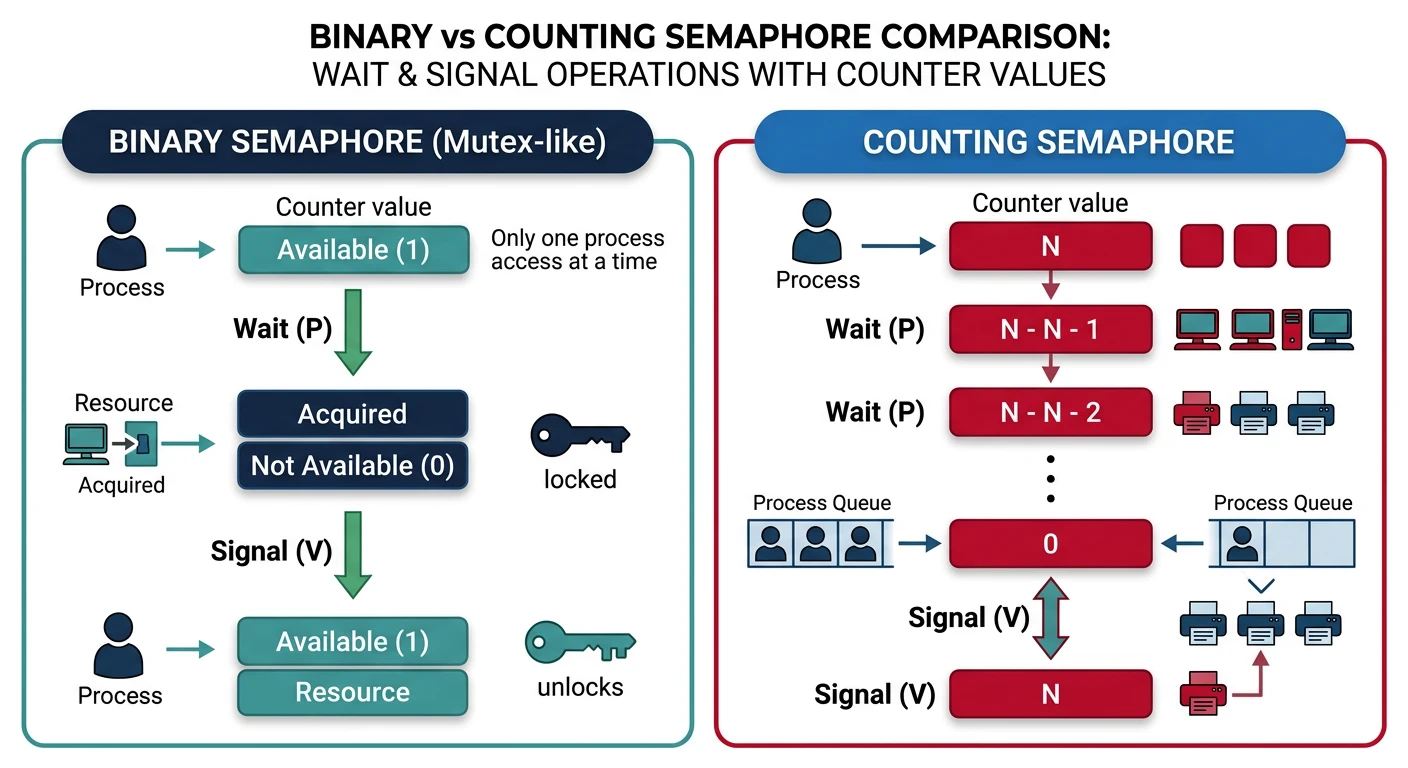
A semaphore is a counter that controls access. Unlike mutexes, semaphores can allow multiple threads (up to N) to access a resource.
Binary semaphore (mutex-like) vs counting semaphore with P/V operations
Semaphore Operations (Dijkstra's notation):
══════════════════════════════════════════════════════════════

P(S) or wait(S):     S--; if (S < 0) block();
V(S) or signal(S):   S++; if (S <= 0) wake_one_waiting();

(P = "proberen" = try, V = "verhogen" = increase in Dutch)


Types of Semaphores:
━━━━━━━━━━━━━━━━━━━━━━━━━━━━━━━━━━━━━━━━━━━━━━━━━━━━━━━━━━━━
Binary Semaphore (0 or 1):
   • Same as mutex
   • init(1): one at a time

Counting Semaphore (0 to N):
   • init(N): up to N concurrent accesses
   • Example: Connection pool with 10 connections


Example: Parking Lot with 5 Spaces
══════════════════════════════════════════════════════════════
semaphore spaces = 5;  /* Initialize to capacity */

car_enter():
    wait(spaces);      /* Decrement, block if 0 */
    /* Enter and park */

car_leave():
    /* Leave parking space */
    signal(spaces);    /* Increment, wake waiting car */

State transitions:
spaces: 5 → 4 → 3 → 2 → 1 → 0 [FULL - cars block]
        ↑
car leaves: signal() increments, wakes waiting car
POSIX Semaphores in C
#include <semaphore.h>
#include <pthread.h>
#include <stdio.h>

#define MAX_CONCURRENT 3

sem_t resource_sem;

void* worker(void* arg) {
    int id = *(int*)arg;

    printf("Worker %d: Waiting for resource...\n", id);
    sem_wait(&resource_sem);  /* P() - decrement or block */

    printf("Worker %d: Acquired resource!\n", id);
    sleep(2);  /* Use resource */

    printf("Worker %d: Releasing resource.\n", id);
    sem_post(&resource_sem);  /* V() - increment */

    return NULL;
}

int main() {
    pthread_t threads[10];
    int ids[10];

    sem_init(&resource_sem, 0, MAX_CONCURRENT);

    for (int i = 0; i < 10; i++) {
        ids[i] = i;
        pthread_create(&threads[i], NULL, worker, &ids[i]);
    }

    for (int i = 0; i < 10; i++) {
        pthread_join(threads[i], NULL);
    }

    sem_destroy(&resource_sem);
    return 0;
}
Condition Variables
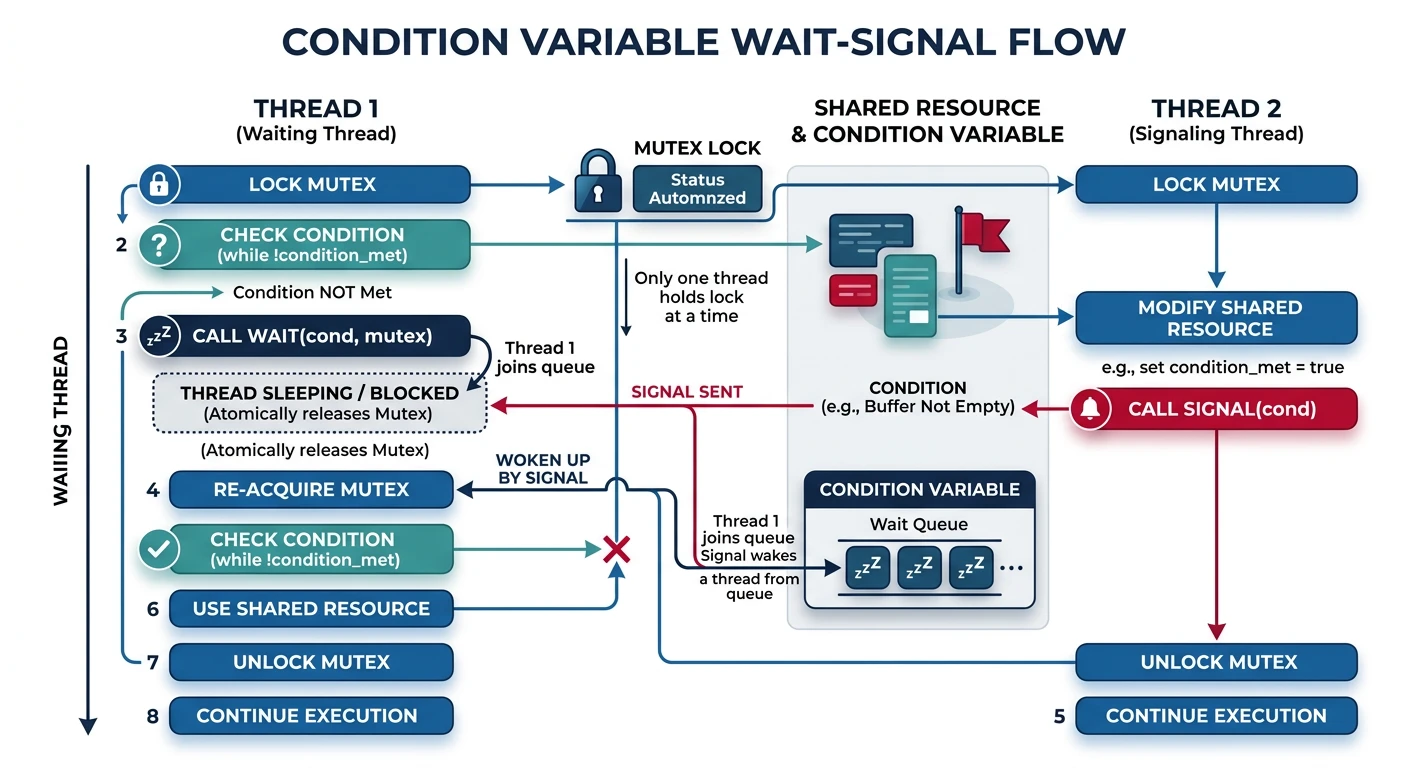
Condition variables let threads wait for a specific condition to become true. Always used with a mutex to protect the condition.
Condition variable workflow: wait releases mutex and sleeps, signal wakes waiting thread
Condition Variable Operations:
══════════════════════════════════════════════════════════════

wait(cv, mutex):
   1. Atomically release mutex and sleep
   2. When woken, re-acquire mutex before returning

signal(cv):      Wake ONE waiting thread
broadcast(cv):   Wake ALL waiting threads


Why needed? Avoid busy-waiting:
━━━━━━━━━━━━━━━━━━━━━━━━━━━━━━━━━━━━━━━━━━━━━━━━━━━━━━━━━━━━
BAD (busy wait):
while (!condition) {
    /* Spin, wasting CPU */
}

GOOD (condition variable):
pthread_mutex_lock(&mutex);
while (!condition) {
    pthread_cond_wait(&cv, &mutex);  /* Sleep until signaled */
}
/* condition is now true */
pthread_mutex_unlock(&mutex);
/* Condition Variable Example: Bounded Buffer */
#include <pthread.h>
#define BUFFER_SIZE 10
int buffer[BUFFER_SIZE];
int count = 0;
pthread_mutex_t mutex = PTHREAD_MUTEX_INITIALIZER;
pthread_cond_t not_full = PTHREAD_COND_INITIALIZER;
pthread_cond_t not_empty = PTHREAD_COND_INITIALIZER;
void produce(int item) {
pthread_mutex_lock(&mutex);
while (count == BUFFER_SIZE) {
/* Buffer full - wait for consumer */
pthread_cond_wait(¬_full, &mutex);
}
buffer[count++] = item;
/* Signal consumer that buffer has data */
pthread_cond_signal(¬_empty);
pthread_mutex_unlock(&mutex);
}
int consume() {
pthread_mutex_lock(&mutex);
while (count == 0) {
/* Buffer empty - wait for producer */
pthread_cond_wait(¬_empty, &mutex);
}
int item = buffer[--count];
/* Signal producer that buffer has space */
pthread_cond_signal(¬_full);
pthread_mutex_unlock(&mutex);
return item;
}
Always Use While, Not If: Spurious wakeups can occur—threads may wake without a signal. Using while ensures the condition is re-checked after waking.
Producer-Consumer Problem
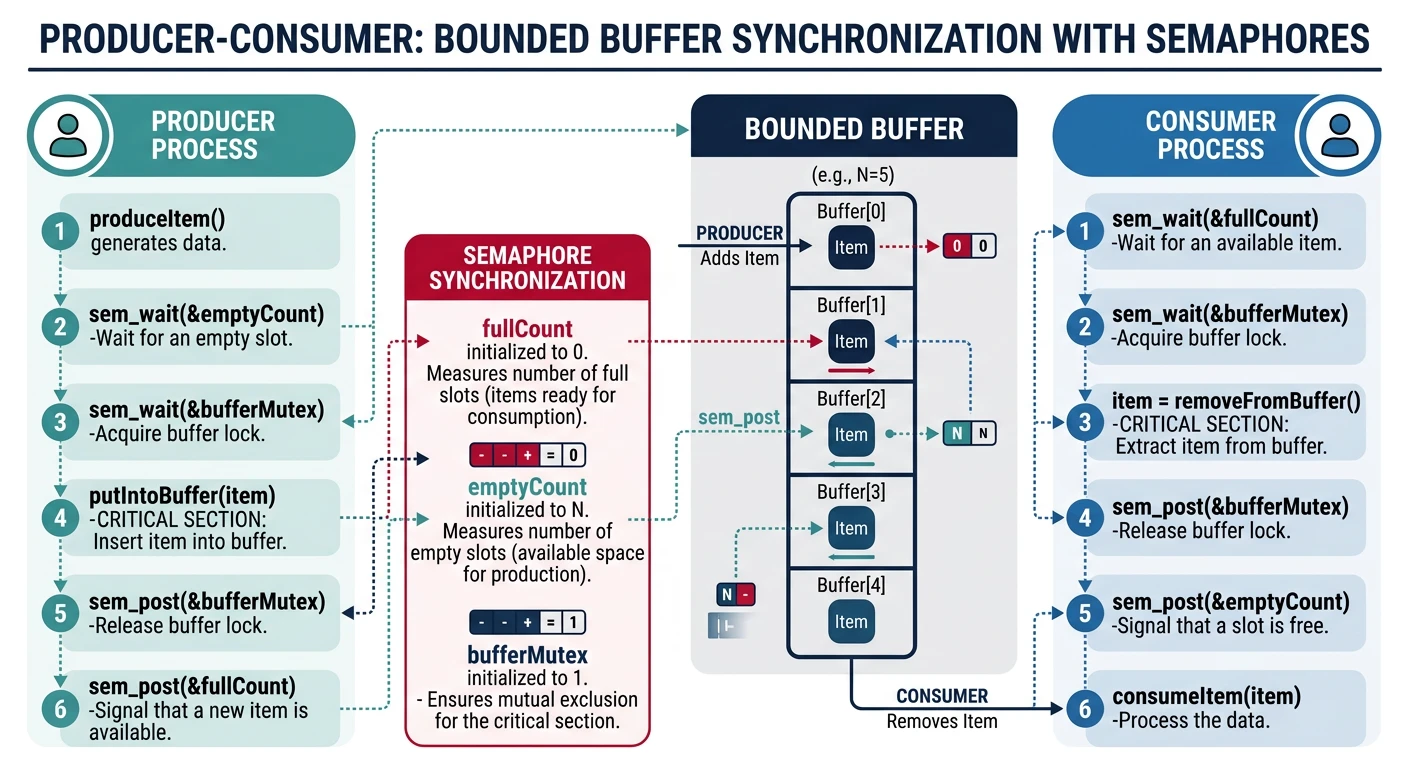
The classic synchronization problem: producers add items to a bounded buffer, consumers remove items. Must synchronize to prevent overflow and underflow.
Producer-consumer problem with bounded buffer and semaphore-based synchronization
Producer-Consumer with Semaphores
Producer-Consumer Problem:
══════════════════════════════════════════════════════════════

┌──────────┐    ┌─────────────────────┐    ┌──────────┐
│ PRODUCER │ ─→ │  BOUNDED BUFFER     │ ─→ │ CONSUMER │
│          │    │  [■][■][■][ ][ ]    │    │          │
└──────────┘    │   ↑ items    ↑ empty │    └──────────┘
                └─────────────────────┘

Synchronization needs:
1. Mutual exclusion on buffer access
2. Block producer when buffer full
3. Block consumer when buffer empty


Semaphore Solution:
━━━━━━━━━━━━━━━━━━━━━━━━━━━━━━━━━━━━━━━━━━━━━━━━━━━━━━━━━━━━
semaphore mutex = 1;        /* Mutual exclusion */
semaphore empty = N;        /* Empty slots (start: all empty) */
semaphore full = 0;         /* Full slots (start: none full) */

PRODUCER:                   CONSUMER:
━━━━━━━━━━━━━━━━━━━━━━━━   ━━━━━━━━━━━━━━━━━━━━━━━━━━
while (true) {              while (true) {
    item = produce();           wait(full);      /* ① */
    wait(empty);    /* ① */     wait(mutex);     /* ② */
    wait(mutex);    /* ② */     item = buffer.remove();
    buffer.add(item);           signal(mutex);   /* ③ */
    signal(mutex);  /* ③ */     signal(empty);   /* ④ */
    signal(full);   /* ④ */     consume(item);
}                           }

Order matters! wait(mutex) THEN wait(empty) → DEADLOCK!
/* Complete Producer-Consumer Implementation */
#include <stdio.h>
#include <stdlib.h>
#include <pthread.h>
#include <semaphore.h>
#include <unistd.h>

#define BUFFER_SIZE 5

int buffer[BUFFER_SIZE];
int in = 0, out = 0;

sem_t mutex, empty_slots, full_slots;

void* producer(void* arg) {
    int id = *(int*)arg;
    for (int i = 0; i < 10; i++) {
        int item = rand() % 100;

        sem_wait(&empty_slots);    /* Wait for empty slot */
        sem_wait(&mutex);          /* Enter critical section */

        buffer[in] = item;
        printf("Producer %d: Put %d at index %d\n", id, item, in);
        in = (in + 1) % BUFFER_SIZE;

        sem_post(&mutex);          /* Exit critical section */
        sem_post(&full_slots);     /* Signal item available */

        usleep(rand() % 100000);
    }
    return NULL;
}

void* consumer(void* arg) {
    int id = *(int*)arg;
    for (int i = 0; i < 10; i++) {
        sem_wait(&full_slots);     /* Wait for item */
        sem_wait(&mutex);          /* Enter critical section */

        int item = buffer[out];
        printf("Consumer %d: Got %d from index %d\n", id, item, out);
        out = (out + 1) % BUFFER_SIZE;

        sem_post(&mutex);          /* Exit critical section */
        sem_post(&empty_slots);    /* Signal empty slot */

        usleep(rand() % 150000);
    }
    return NULL;
}

int main() {
    pthread_t prod[2], cons[2];
    int ids[] = {0, 1};

    sem_init(&mutex, 0, 1);
    sem_init(&empty_slots, 0, BUFFER_SIZE);
    sem_init(&full_slots, 0, 0);

    pthread_create(&prod[0], NULL, producer, &ids[0]);
    pthread_create(&prod[1], NULL, producer, &ids[1]);
    pthread_create(&cons[0], NULL, consumer, &ids[0]);
    pthread_create(&cons[1], NULL, consumer, &ids[1]);

    for (int i = 0; i < 2; i++) {
        pthread_join(prod[i], NULL);
        pthread_join(cons[i], NULL);
    }

    sem_destroy(&mutex);
    sem_destroy(&empty_slots);
    sem_destroy(&full_slots);
    return 0;
}
Readers-Writers Problem
Multiple readers can read simultaneously, but writers need exclusive access. How do we balance reader concurrency with writer access?
Readers-Writers Constraints:
══════════════════════════════════════════════════════════════

✓ Multiple readers can read simultaneously
✗ Only one writer at a time
✗ No readers while writing
✗ No writing while readers active

Timing Diagram:
━━━━━━━━━━━━━━━━━━━━━━━━━━━━━━━━━━━━━━━━━━━━━━━━━━━━━━━━━━━━
Reader 1: ████████████
Reader 2:     ████████████████
Reader 3:         ████████
Writer:                       ████████  (waits for readers)
Reader 4:                               ████████


Two Variants:
━━━━━━━━━━━━━━━━━━━━━━━━━━━━━━━━━━━━━━━━━━━━━━━━━━━━━━━━━━━━
1. Readers-Priority: Readers can starve writers
   • New readers join even if writer waiting

2. Writers-Priority: Writers can starve readers
   • Once writer waiting, no new readers start

3. Fair: Requests serviced in order (complex)
Readers-Writers Solution (Readers Priority)
/* Readers-Writers with Readers Priority */
#include <pthread.h>
#include <semaphore.h>

int read_count = 0;           /* Number of active readers */
sem_t mutex;                  /* Protect read_count */
sem_t write_lock;             /* Exclusive access for writing */

void reader() {
    sem_wait(&mutex);
    read_count++;
    if (read_count == 1) {
        /* First reader locks out writers */
        sem_wait(&write_lock);
    }
    sem_post(&mutex);

    /* --- Reading (shared access) --- */
    printf("Reader reading...\n");

    sem_wait(&mutex);
    read_count--;
    if (read_count == 0) {
        /* Last reader allows writers */
        sem_post(&write_lock);
    }
    sem_post(&mutex);
}

void writer() {
    sem_wait(&write_lock);  /* Exclusive access */

    /* --- Writing (exclusive access) --- */
    printf("Writer writing...\n");

    sem_post(&write_lock);
}

/* Problem: Writers may starve if readers keep arriving! */
Five philosophers sit at a round table with five forks. Each needs two forks to eat. This classic problem illustrates deadlock and starvation.
The Setup
Dining Philosophers Problem:
══════════════════════════════════════════════════════════════

             P0
            /   \
         F0       F4
         /         \
       P1           P4
         \         /
         F1       F3
           \     /
            P2—F2—P3

• 5 philosophers alternate between THINKING and EATING
• Need BOTH adjacent forks to eat
• Forks can only be held by one philosopher


Naive Solution (DEADLOCK!):
━━━━━━━━━━━━━━━━━━━━━━━━━━━━━━━━━━━━━━━━━━━━━━━━━━━━━━━━━━━━
void philosopher(int id) {
    while (1) {
        think();
        pick_up(fork[id]);           /* Pick left fork */
        pick_up(fork[(id+1) % 5]);   /* Pick right fork */
        eat();
        put_down(fork[id]);
        put_down(fork[(id+1) % 5]);
    }
}

DEADLOCK: All pick up left fork → All wait for right fork
          → No one can proceed → DEADLOCK!
Solutions to Dining Philosophers:
══════════════════════════════════════════════════════════════

1. LIMIT DINERS
   • Allow at most 4 philosophers to sit at once
   • Guarantees at least one can get both forks

2. ASYMMETRIC
   • Odd philosophers: left then right
   • Even philosophers: right then left
   • Breaks circular wait

3. RESOURCE ORDERING (Best)
   • Always pick up lower-numbered fork first
   • Philosopher 4 picks F0 then F4 (not F4 then F0)
   • Prevents circular wait

4. WAITER/ARBITER
   • Central coordinator grants permission to pick up forks
   • Serializes access but bottleneck
/* Dining Philosophers - Resource Ordering Solution */
#include <pthread.h>
#include <semaphore.h>
#include <stdio.h>
#include <unistd.h>

#define N 5
sem_t forks[N];

void think(int id) {
    printf("Philosopher %d is thinking\n", id);
    sleep(rand() % 3);
}

void eat(int id) {
    printf("Philosopher %d is eating\n", id);
    sleep(rand() % 2);
}

void* philosopher(void* arg) {
    int id = *(int*)arg;
    int left = id;
    int right = (id + 1) % N;

    /* Resource ordering: always pick lower-numbered fork first */
    int first = (left < right) ? left : right;
    int second = (left < right) ? right : left;

    while (1) {
        think(id);

        printf("Philosopher %d wants to eat\n", id);
        sem_wait(&forks[first]);   /* Pick up first (lower #) */
        sem_wait(&forks[second]);  /* Pick up second (higher #) */

        eat(id);

        sem_post(&forks[second]);  /* Put down second */
        sem_post(&forks[first]);   /* Put down first */
    }
    return NULL;
}

int main() {
    pthread_t threads[N];
    int ids[N];

    for (int i = 0; i < N; i++) {
        sem_init(&forks[i], 0, 1);
        ids[i] = i;
    }

    for (int i = 0; i < N; i++) {
        pthread_create(&threads[i], NULL, philosopher, &ids[i]);
    }

    for (int i = 0; i < N; i++) {
        pthread_join(threads[i], NULL);
    }
    return 0;
}
Real-World Analog: Database transactions acquiring multiple locks, network protocols with bidirectional connections, or any system where processes need multiple resources. Resource ordering is a practical deadlock prevention strategy.
Conclusion & Next Steps
Synchronization is fundamental to concurrent programming. We've covered:
Key Insight: Most bugs in concurrent programs come from incorrect synchronization—race conditions, deadlocks, and starvation. Use well-tested patterns and high-level abstractions when possible!